
Beyond the Reject Button: How Self-Reflection Rescues Worker Morale in Crowdsourcing
Improving Reactions to Rejection in Crowdsourcing Through Self-Reflection
This paper introduces an explicit self-reflection mechanism for crowdsourcing platforms to mitigate the negative emotional impact of task rejections. Using a modular questionnaire approach, the authors demonstrate that integrating a self-reflection stage—particularly before the rejection decision is communicated—significantly improves worker emotions (Valence) and fosters a healthier requester-worker relationship.
TL;DR
Rejection is a fundamental, yet painful, part of crowdsourcing. This study finds that by simply asking workers to self-reflect on their performance before they receive a rejection, we can significantly boost their emotional well-being (happiness/valence). It’s a modular, low-cost design intervention that addresses the "power asymmetry" between requesters and workers.
The Hidden Cost of "Power Asymmetry"
In the world of Amazon Mechanical Turk (MTurk), the requester holds all the cards. They can reject work based on performance thresholds or attention checks, often leaving the worker without pay and with a damaged reputation. This "invisible labor" comes with a high emotional price tag: frustration, sadness, and a sense of lack of control.
Prior research (Gadiraju & Demartini, 2019) tried to fix this by giving workers explanations for rejections, but it didn't help. The current authors took a different route: Psychological Self-Reflection. If we can't change the rejection, can we change how the worker processes it?
Methodology: The "Modular" Reflection
The researchers designed a simple, modular questionnaire that could be plugged into any HIT. It asks workers to evaluate:
- Understanding: Did they get the task?
- Effort: Did they work to the best of their abilities?
- Justification: Do they find the criteria reasonable?
The study compared three workflows to find the "Goldilocks" timing for this intervention:
- Control: Standard task -> Decision -> Emotion measure.
- SR-Rej: Task -> Self-Reflection -> Decision -> Emotion measure.
- Rej-SR: Task -> Decision -> Self-Reflection -> Emotion measure.
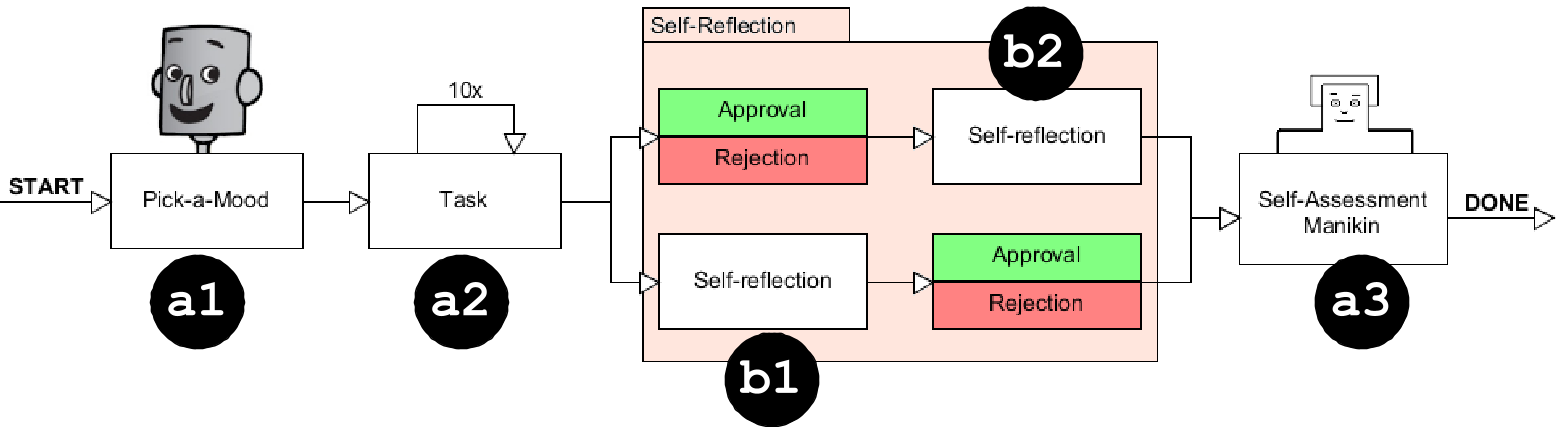 Figure 1: Comparison of the three experimental conditions: Control, SR-Rej, and Rej-SR.
Key Finding: Timing is Everything
The most striking result was that reflecting BEFORE the rejection was the clear winner.
1. The Happiness Boost (Valence)
Workers in the SR-Rej group were significantly happier (lower valence score on the SAM scale) than those in the control group. Why? The authors suggest that self-reflection allows workers to "brace" for the emotional impact or realize their own mistakes before being "judged" by the system.
2. No Harm to Success
Crucially, for workers whose work was accepted, the self-reflection step didn't hurt their mood. It is a "safe" intervention that requesters can apply to everyone without fear of annoying their high-performing workers.
3. Emotion vs. Accuracy
Interestingly, the study found no significant correlation between how well a worker actually did (accuracy) and their emotional state. This suggests that emotions in crowd work are dominated by the experience of the platform dynamics rather than just the objective quality of output.
 Table 1: Emotion scores (Valence, Arousal, Dominance) across conditions. Note the significant drop in Valence for rejected workers in the SR-Rej condition.
Critical Insight: The Design Implication
This paper shifts the focus from "improving the algorithm" to "improving the human environment." By adding a 1-minute reflection step, platforms can:
- Reduce Churn: Happy workers are more likely to stay.
- Build Trust: When workers feel like their effort is acknowledged (even by themselves), the "us vs. them" mentality between workers and requesters softens.
- Encourage Quality: Reflection is a learning tool. Over time, this could help workers identify where they are struggling.
Conclusion & Future Work
The study proves that psychological interventions can mitigate the harsh reality of algorithmic management. However, the authors note a limitation: they "rejected" workers by denying them extra tasks, not by blocking pay (which would be unethical in a study).
Future research should investigate if different types of reflection (e.g., focusing on growth vs. focusing on task clarity) yield even better results. For now, the takeaway for AI and crowdsourcing architects is clear: Give the worker a voice, even if it’s just a voice heard by themselves.