
GMPN: Breaking Path Scarcity in P2P Indoor Navigation via Crowdsourcing
Improving the Applicability of Visual Peer-to-Peer Navigation with Crowdsourcing
GMPN (Global Map P2P Navigation) is a visual indoor navigation system that uses a novel crowdsourcing scheme to merge independent leader paths into a unified global map. It achieves a 100% navigation success rate and sub-3.2m spatial accuracy by leveraging mobile-edge Visual-Inertial Odometry (VIO) to overcome the scale ambiguity and path scarcity typical of peer-to-peer (P2P) systems.
TL;DR
Visual Peer-to-Peer (P2P) navigation has long promised infrastructure-free indoor guidance, but it has been crippled by "path deficiency"—the inability to navigate between points if a leader hasn't walked that specific route. GMPN (Global Map P2P Navigation) solves this by splicing disparate user trajectories into a unified global map. By leveraging a Mobile-Edge VIO architecture, it eliminates scale ambiguity and enables bidirectional navigation with 100% success rates.
The "Disconnected Islands" Problem
Most P2P navigation systems function as "follow-the-leader" setups: User A (Leader) records a path, and User B (Follower) replicates it. While cost-effective, this creates a major bottleneck in large shopping malls. If Shop X has a path from the entrance, and Shop Y has a path from the entrance, navigating between Shop X and Shop Y is impossible unless a third leader records that specific link.
Furthermore, monocular vision is unidirectional. If you record a path walking forward, the visual features look entirely different when walking backward, rendering traditional visual relocalization useless for return trips.
Methodology: The Global Map Crowd-Engine
GMPN transforms these isolated paths into an interconnected graph through three core innovations:
1. Unified Scale via VIO
Standard Monocular SLAM doesn't know "meters"; it only knows relative pixels. GMPN uses Visual-Inertial Odometry (VIO), integrating IMU data to provide absolute metric scale. This allows the system to stitch two different user paths together because they now share a common physical scale.
2. Bidirectional Navigation Strategy
To solve the "one-way" limitation of visual paths, GMPN uses VIO as a "dead-reckoning" anchor. Even if the follower faces the opposite way (precluding relocalization), the VIO continues to track their pose. Once the user turns or reaches a point where the camera matches the original leader's perspective, the system triggers a relocalization, instantly zeroing out any accumulated drift.
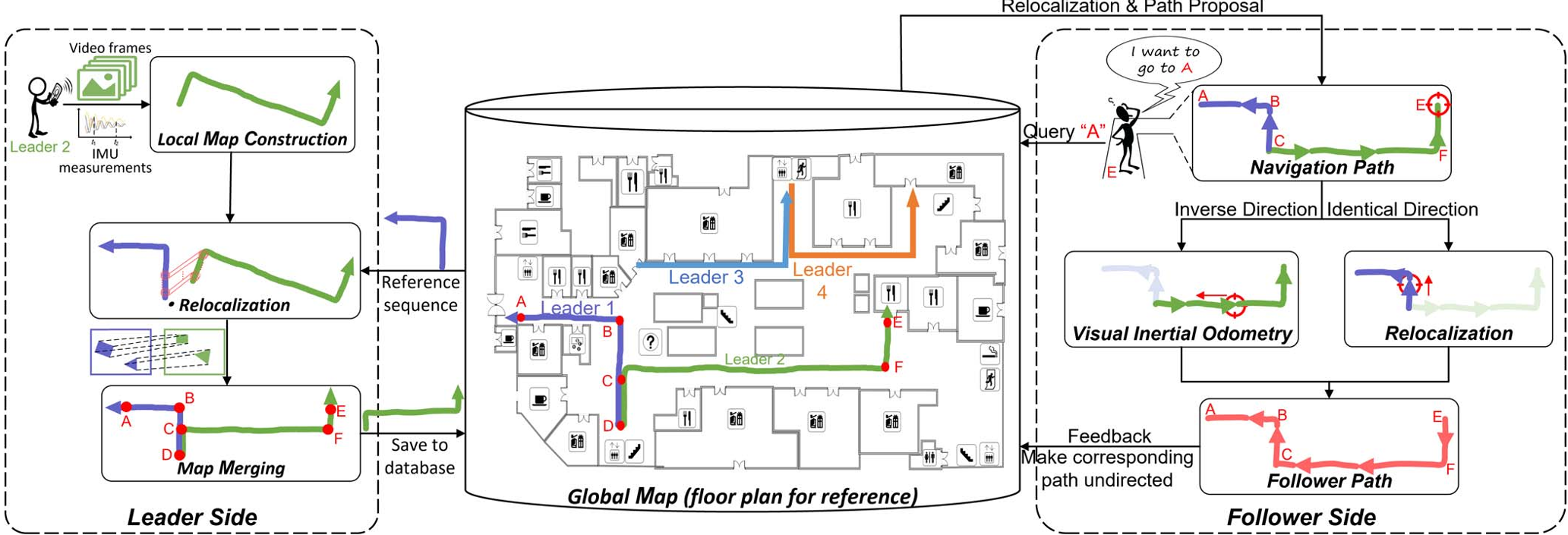 Figure 1: The dual interaction loop where leaders contribute local maps and followers utilize/enrich the global map.
3. Mobile-Edge Architecture
Running a high-dimensional sliding window optimization in real-time would melt a standard smartphone battery. GMPN splits the workload:
- Mobile Side: Feature point extraction, optical flow tracking, and RANSAC-based "fundamental culling."
- Edge Side: Heavy lifting, including sliding window optimization and the global sequence manager.
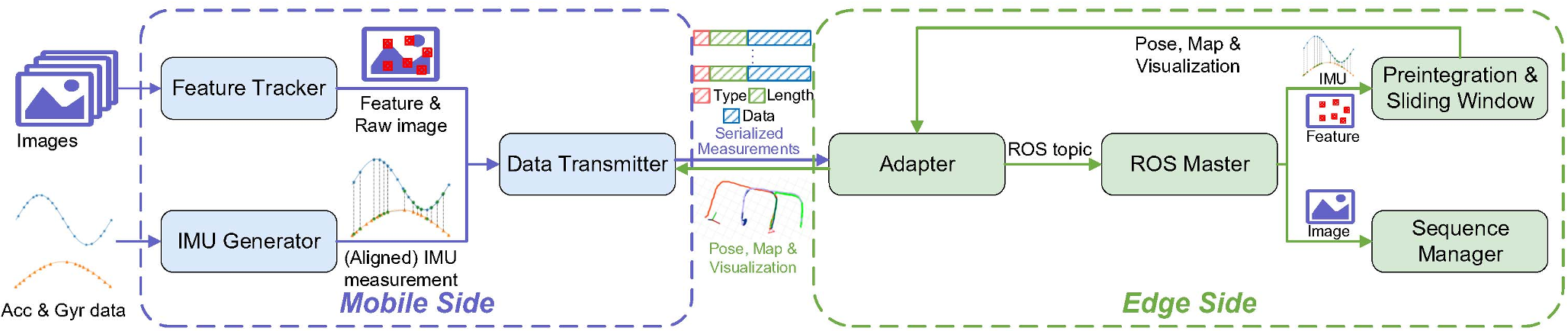 Figure 2: System architecture optimizing the trade-off between bandwidth (transmitting features, not raw video) and computational accuracy.
Experimental Results: Precision and Efficiency
The authors tested GMPN across diverse environments, including 2000m² shopping malls and supermarkets.
- Path Expansion: In a teaching building, while only 13 raw sequences were recorded, the crowdsourcing logic generated 110 available navigation paths.
- Accuracy: In 90% of cases, the spatial offset was less than 1.1m, significantly outperforming magnetic-based methods like FollowMe.
- Performance: The system achieved 30fps with an end-to-end delay of 100ms, capable of supporting up to 300 simultaneous users on a single edge server.
| Metric | GMPN | Pair-Navi | FollowMe |
|---|---|---|---|
| Success Rate | 100% | 98.6% | 92.0% |
| Spatial Offset | < 3.2m | 0 (Limited) | ~4-5m |
| Path Count | High (Spliced) | Low (Direct) | Medium |
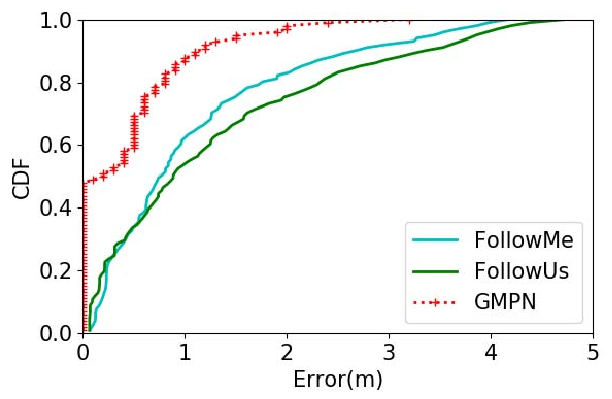 Figure 3: Accuracy comparison showing GMPN's superior performance in various indoor textures.
Critical Insight & Evaluation
The brilliance of GMPN lies in its treatment of the "follower" as a "secondary leader." By feeding follower data back into the global map, the environment becomes increasingly "undirected" over time. As more users walk a corridor in the opposite direction, the map naturally gains the ability to support bidirectional relocalization.
However, the system still faces challenges in textureless environments (like long, featureless white hallways) where VIO drift can accumulate significantly before the next relocalization point. Future research into semantic landmarks (door signs, lighting patterns) could likely mitigate this.
Conclusion
GMPN proves that visual P2P navigation is ready for prime time. By moving away from rigid point-to-point sequences toward a dynamic, crowdsourced global graph, the authors have solved the industry's biggest hurdle to adoption: the cold-start problem of map coverage.