
INBAR: Engineering Social Chemistry for Reliable Vehicular Routing
INBAR: A new interest-based routing framework in vehicular social networks
This paper introduces INBAR, a novel Interest-Based Routing framework designed for Vehicular Social Networks (VSNs). It leverages a new metric called "Community Energy," inspired by molecular chemistry, to quantify social proximity and optimize data forwarding in intermittently connected environments.
TL;DR
Vehicular Social Networks (VSNs) often struggle with "broken" links due to the fast movement of cars and pedestrians. INBAR (INterest-BAsed Routing) treats these nodes like molecules in a chemical system. By introducing Community Energy, it determines which node is "attracted" to a destination's interest group, achieving a 64.31% delivery ratio while keeping overhead significantly lower than traditional flooding methods like Epidemic routing.
Background: The Social Side of Vehicles
In the world of Delay Tolerant Networks (DTNs), we rely on the "store-carry-forward" paradigm. However, choosing the right carrier is the billion-dollar question. Traditional methods like PRoPHET rely on encounter history, but they often miss the "why" behind the movement. INBAR posits that nodes move based on interests (shopping, work, hobbies), and these interests form the stable foundation for routing in a sea of chaotic mobility.
Motivation: Why Energy?
Existing community-based protocols often suffer from two extremes:
- High Maintenance: Constantly recalculating community graphs consumes massive resources.
- Identity Blindness: They ignore that a car passing a mall is a better carrier for "shopping" data than a bus on a highway.
The authors solve this by using the Molecular Chemistry intuition: nodes (atoms) that spend time together share energy. This energy decays over time (evaporation) if they don't meet, naturally reflecting the dynamic nature of social ties.
Methodology: The Core of Community Energy
The INBAR framework splits social proximity into two mathematical components:
1. Inter-community Energy (Node-to-Node)
This measures the strength of the tie between two specific nodes. It follows a transitive property: if Node A knows Node B, and Node B knows Node C, Node A effectively has a "potential" energy link to Node C.
2. Intra-community Energy (Node-to-Group)
This measures how active a node is within a specific interest group (e.g., "Fishing"). It is calculated via average degree centrality over time, ensuring that a node that stayed in a community is prioritized over one that just passed through.
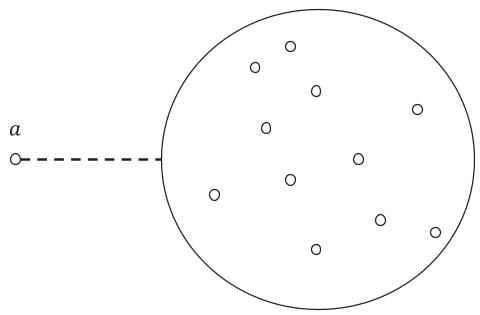 Figure 1: Visualization of (a) Inter-community and (b) Intra-community energy interactions.
The Forwarding Strategy
When two nodes meet, they compare energies. A message is handed over only if the "encountering" node has a higher energy level toward the destination's interest community than the current carrier.
Experiments & Results
The researchers used the ONE (Opportunistic Network Environment) simulator to test INBAR against three major baselines: BEEINFO, PRoPHET, and Epidemic.
Performance Gains:
- Delivery Ratio: INBAR consistently stays at the top. At a 50MB buffer, it successfully delivers over 64% of messages.
- Overhead Reduction: By being "smart" about who gets the data, INBAR avoids the message-spamming problem of the Epidemic protocol.
- Scalability: As the buffer size increases, INBAR's latency decreases, meaning it manages memory more effectively than older protocols.
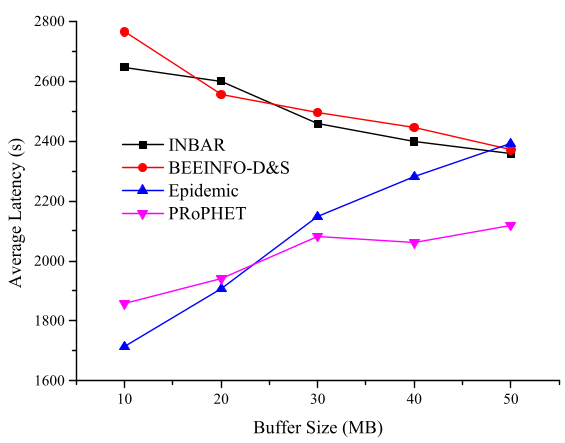 Figure 2: Delivery Ratio (a) and Overhead comparison (b) across different buffer sizes.
Critical Insight & Conclusion
The genius of INBAR lies in its simplicity. By mapping complex social behaviors to a decaying "energy" value, it bypasses the need for complex graph theory calculations.
Takeaway: In the era of autonomous vehicles, your car's "interests"—represented by its destination and the habits of its passengers—are the most reliable predictors of its future location. INBAR successfully turns these social habits into a robust routing backbone.
Limitations: The current model assumes each node has only one interest. Real-world mobility is multi-faceted, and future iterations should explore multi-community energy levels to handle more complex human behaviors.