
DWI: Sustaining Long-Term Crowd Sensing through Heterogeneous Beliefs and Restless Bandits
An incentive scheme based on heterogeneous belief values for crowd sensing in mobile social networks
The paper proposes DWI (Debt-Weighted Whittle Index), an incentive scheme for continuous crowd sensing in Mobile Social Networks (MSNs). It models the interaction between a server and heterogeneous participants as a Restless Multi-Armed Bandit Process (RMBP) to maximize social welfare over an infinite horizon.
TL;DR
Mobile Social Networks (MSNs) rely on "crowd sensing" to gather data, but how do you keep selfish users engaged over months or years? This paper introduces DWI, a scheme that treats users like time-varying communication channels. By using heterogeneous belief values and the Restless Multi-Armed Bandit (RMAB) framework, it ensures a near-optimal balance between high-quality data collection and fair user compensation, preventing the "starvation" of high-value participants.
Problem & Motivation: The Fatigue of Reverse Auctions
Most existing crowd sensing incentives use reverse auctions. In these models, users bid, the server picks the lowest costs, and the task ends. However, real-world applications (like traffic monitoring or pollution mapping) require continuous data.
If a server always picks the lowest bidder, participants with slightly higher costs eventually lose interest and drop out. Furthermore, existing models often assume we know exactly how reliable a user is. In reality, reliability fluctuates—a concept the author maps to social states.
Methodology: Users as "Restless" Channels
The core innovation lies in treating each user as an "arm" of a Restless Multi-Armed Bandit. Unlike a regular bandit, the state of the arm (the user's willingness and reliability) changes even if the arm is not pulled.
1. The Belief Value Mechanism
The author models the user’s reliability as a Markov process with two states: ACK (1) for successful sensing and NACK (0) for failure.
- Belief Value (): This represents the probability that a user will successfully deliver data at time .
- Evolution: If a user is chosen and succeeds, their belief value goes up; if they aren't chosen, their state still evolves according to a transition matrix .
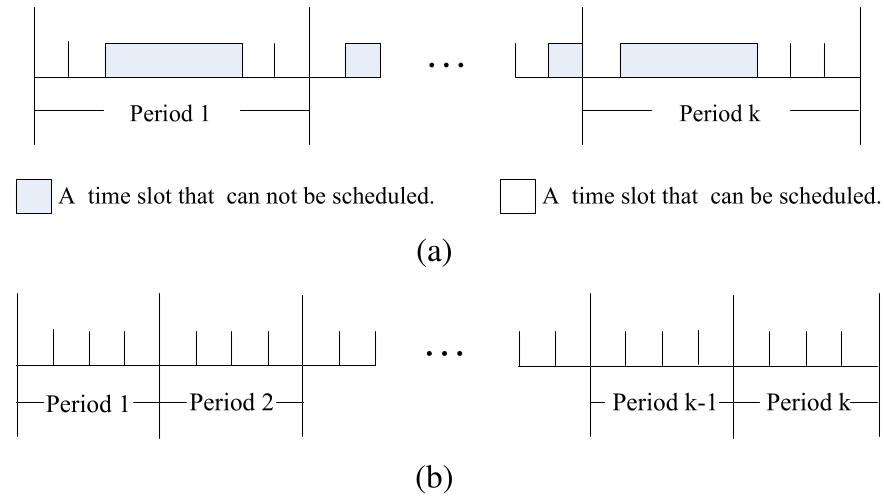 Fig 1. Markovian evolution of a user's social state within class 'c'.
2. The Debt-Weighted Whittle Index (DWI)
To solve the complex RMAB problem, the author uses Whittle’s Index, which assigns a value to each user representing the "subsidy for passivity" required to keep them in the system. The paper adds a debt weight (): if a user hasn't been picked for a while and the system "owes" them a task to meet throughput requirements, their priority increases.
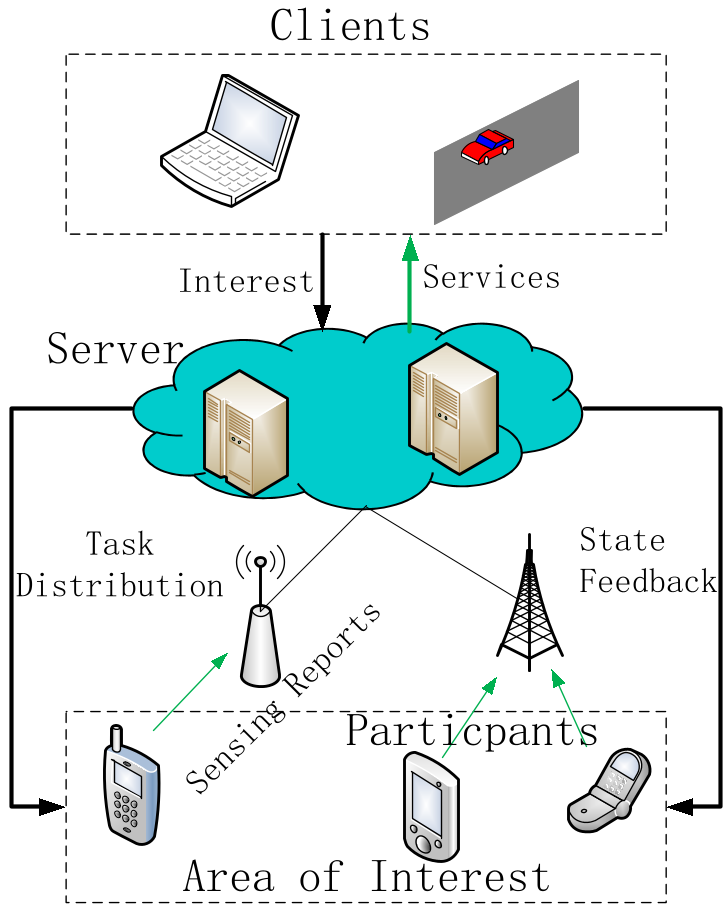 Fig 2. The proposed framework: Servers update social state tables to maximize long-term profits.
Experiments & Core Insights
The paper provides a rigorous mathematical proof of the algorithm's performance across four pillars:
- Computational Efficiency: The selection process is strictly O(N), making it feasible for thousands of mobile users.
- Truthfulness: Because the index is based on persistent belief states rather than just immediate bids, users cannot "game" the system by unilaterally changing their behavior.
- Individual Rationality: The introduction of a "subsidy for passivity" () ensures that even if a user isn't picked, their expected utility remains non-negative, which is critical for preventing churn.
The Sustaining Incentive Condition derived in the paper () establishes the floor for how much a user must be compensated to counteract their sensing costs ().
Critical Analysis & Conclusion
Takeaway
The DWI scheme successfully bridges the gap between wireless communication theory (channel states) and behavioral economics (incentive design). By focusing on the belief of a user's state rather than a static profile, it handles the inherent uncertainty of mobile social networks.
Limitations
While the Markovian model is elegant, real human behavior might not follow strict transition probabilities (). Future work needs to address how these probabilities are estimated in real-time when users enter/leave the network frequently. Additionally, the current model does not deeply explore Privacy-Awareness—users might be reluctant to share their "social states" if it reveals too much about their daily patterns.
Future Outlook
As MSNs evolve toward "Social Internet of Things" (SIoT), the ability to manage long-term reputation through belief values will be essential for autonomous sensing agents.