
InCognitoMatch: Beyond the "Black Box" of Human Crowdsourced Matching
InCognitoMatch: Cognitive-aware Matching via Crowdsourcing
InCognitoMatch is the first cognitive-aware crowdsourcing application designed for schema matching tasks. It integrates psychological metrics, such as confidence levels and intelligence tests, with behavioral tracking to calibrate human matching decisions and mitigate inherent cognitive biases.
TL;DR
Schema matching—the process of identifying correspondences between different data structures—has long relied on the "human-in-the-loop" as the gold standard for accuracy. However, humans are not perfect; we are biased, overconfident, and prone to fatigue. InCognitoMatch is a pioneering framework that treats human matchers not as infallible experts, but as cognitive agents whose biases must be measured, analyzed, and calibrated to ensure data integrity.
The "Human Superiority" Myth
In the era of Big Data, we have historically assumed that while algorithms handle scale, humans handle nuance. Conventional crowdsourcing platforms (like Prolific or Figure Eight) facilitate this by treating workers as simple input-output processors.
The authors of InCognitoMatch challenge this by highlighting a counter-intuitive reality: Human judgment is often as flawed as algorithmic matching. Specifically, human matchers suffer from overconfidence and struggle with the ambiguity of heterogeneous data descriptions. To fix this, we need a system that understands how a human reached a decision, not just what the decision was.
Methodology: Peering into the Matcher's Mind
InCognitoMatch functions as a bridge between matching algorithms and human workers. It doesn't just ask "Is A equal to B?"; it tracks the entire cognitive journey of the worker.
1. The Multi-Dimensional Sensor Suite
The system captures a rich set of cognitive metadata during every session:
- Intelligence & Engagement: Psychometric riddles and "senseless" questions (e.g., matching 'Address' to 'Birthday') filter for attention.
- Metacognitive Monitoring: Workers report their confidence for every match.
- Behavioral Tracking: The system logs mouse movements every 0.25 seconds and tracks exact decision timestamps.
2. Context Control
The administrator can manipulate the "Cognitive Load" by showing or hiding information such as:
- Algorithmic Assistance: Showing the matcher what the AI thinks.
- Wisdom of Crowds: Showing how other workers voted.
- Structural Context: Providing instance samples or the position of a term within a schema hierarchy.
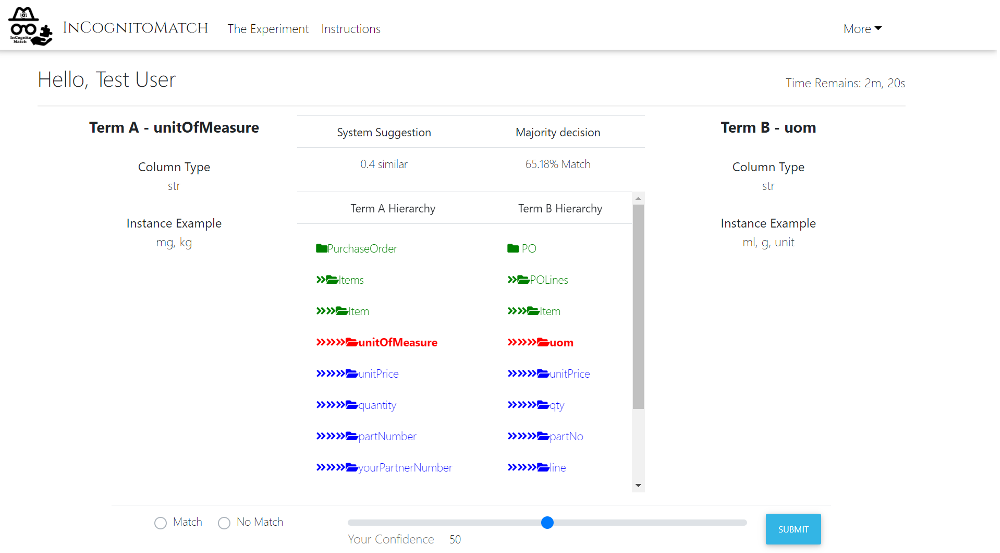 Figure 1: The InCognitoMatch Workflow—from Schema Pair to Admin Analytics.
Experimental Insights: The Cost of Thinking Too Long
The beauty of InCognitoMatch lies in its analytical power. By visualizing worker behavior, the authors uncovered several "Cognitive Red Flags":
- The Latency-Accuracy Paradox: Contrary to the idea that "more thought equals better results," the system found that when a user spends more time on a match, the likelihood of an error actually increases. This suggests a point of diminishing returns where cognitive fatigue or confusion takes over.
- Overconfidence Bias: Workers often report 90%+ confidence on matches that are objectively wrong.
- Hierarchy Neglect: Heat-maps show that most workers focus exclusively on term names and instance examples (e.g., 'kg' vs 'g'), almost entirely ignoring the structural hierarchy of the data (e.g., the parent 'Item' node).
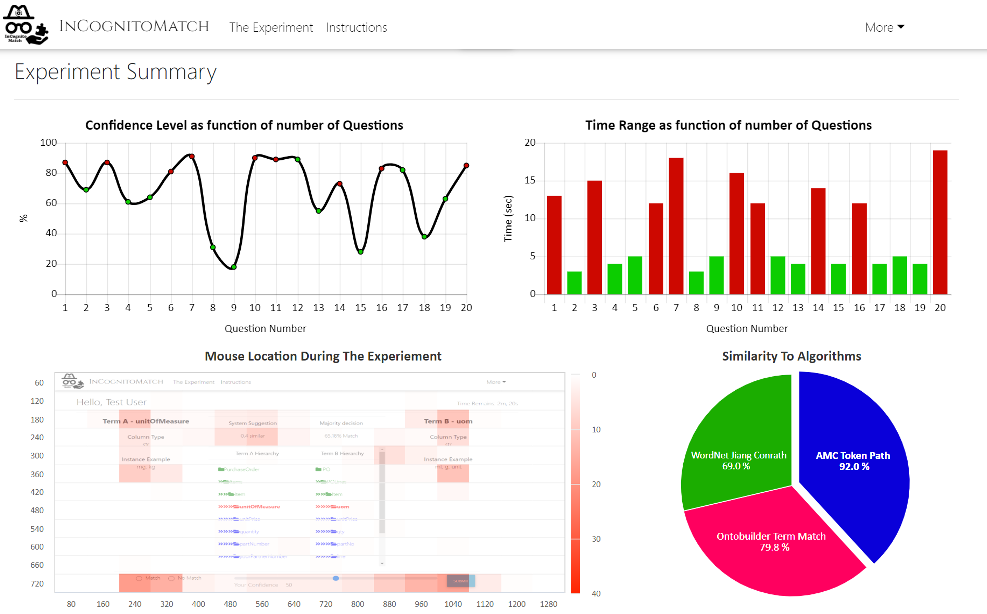 Figure 2: Analysis showing the correlation between confidence (green/red dots) and mouse activity heat-maps.
The Administrator's Dashboard: From Data to Wisdom
For the system administrator, InCognitoMatch provides a high-level view of group performance. By comparing different groups (e.g., those given algorithmic hints vs. those working "blind"), admins can determine which context helps humans most and which actually introduces more bias.
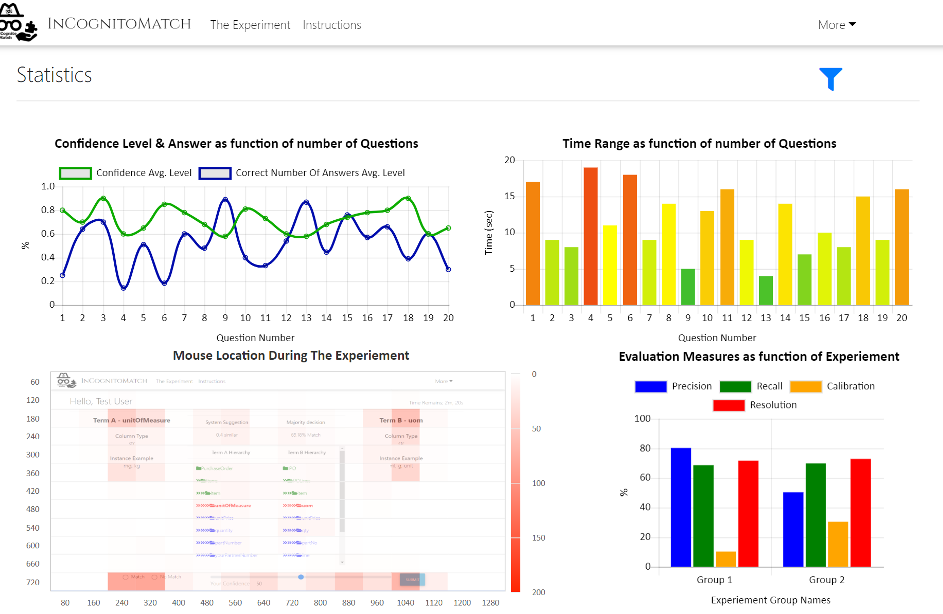 Figure 3: Global statistics comparing precision, recall, and calibration across different task difficulties.
Conclusion and Future Outlook
InCognitoMatch marks a shift from "Passive Crowdsourcing" to "Active Cognitive Monitoring." By treating human behavior as a data point in itself, the system allows for the creation of more robust and reliable data integration pipelines.
Takeaway: In an age where human expertise is a scarce and expensive resource, we cannot afford to trust human input blindly. We must design interfaces that not only collect answers but also evaluate the quality of thought behind those answers.
Limitations: While the system identifies biases, a primary challenge remains in "online correction"—how to automatically adjust a score in real-time based on a detected bias without frustrating the worker.