
Trace: Bridging the Gap Between Physical Encounters and Digital Networks
Incorporating physical co-presence at events into digital social networking
The paper introduces "Trace," a prototype social networking system that utilizes physical co-presence at events to bridge the gap between ad-hoc social encounters and digital connections. By capturing attendee data and providing post-event digital links, the system achieved a 50% engagement rate across four diverse social settings, demonstrating that shared physical space is a powerful catalyst for digital social integration.
TL;DR
In the mid-2000s, while web-based social networks were booming, they remained largely disconnected from our physical social lives. This paper presents Trace, a system designed to "digitize" people you saw or met at a physical event—like a bar night or poetry reading—allowing you to follow up with them online the next day. The study revealed that physical co-presence is a massive driver for digital engagement, with 50% of attendees using the platform to reconnect.
The "Disconnected" Social Graph
In 2005, social networks like Friendster and Orkut relied on manual profile searching and "friend of a friend" algorithms. The authors identified a major friction point: we often meet interesting people in the physical world (ad-hoc encounters), but unless we exchange phone numbers on the spot—a high-stakes social move—that connection is lost.
The research intuition here was simple: Shared events provide the context for self-presentation. If you were both at the same karaoke night, you already have a "hook" for conversation that a random digital profile lacks.
Methodology: The Trace Prototype
Because automatic location tracking was in its infancy in 2005, the researchers used a "Wizard of Oz" approach. They physically went to events, took photos of participants, and manually created profiles.
The Workflow:
- Physical Event: Attend a bar, poetry reading, or contest.
- Capture: Researchers take your photo and user info.
- Follow-up: Next day, you get an email with a "yearbook" of everyone else who was there.
- Interact: You can view profiles, send messages, or add them to your "Peeps" (favorites).
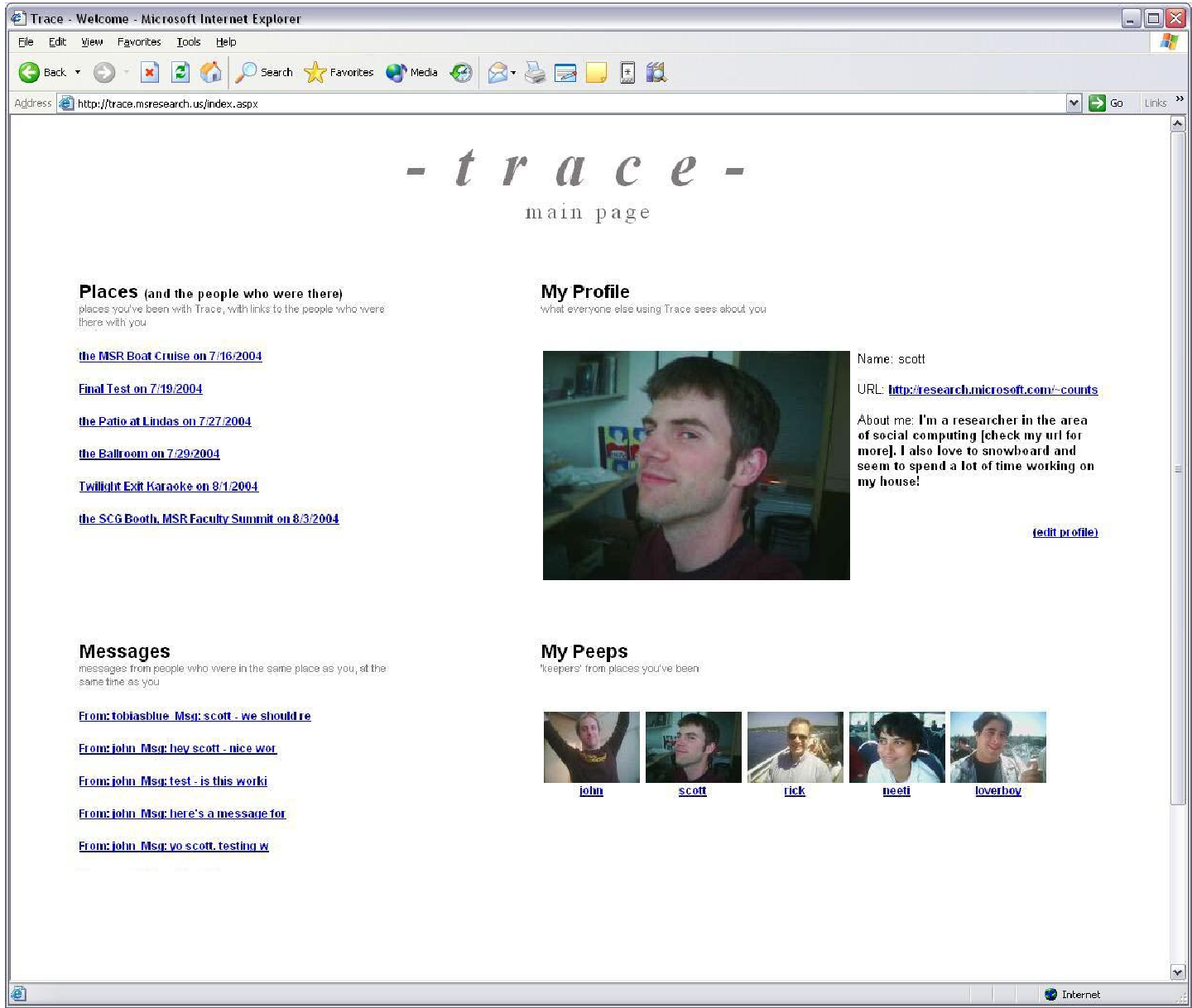 Figure 1: The Trace dashboard, showing events attended and the "Peeps" gallery.
Key Experimental Findings
The study was conducted across four events, ranging from small bar gatherings to larger poetry readings.
1. The "Critical Mass" Effect
Engagement was drastically higher at larger events. In events with 20+ Trace users, engagement hit 59-68%. In smaller groups, interest fizzled out. This suggests that for social networking to feel "social," the digital pool must be large enough to guarantee finding someone interesting.
2. The Decay of Interest
The authors tracked the "mental lifetime" of a social event. Usage spiked the day after the event (the "Recap" phase) and effectively died after one week.
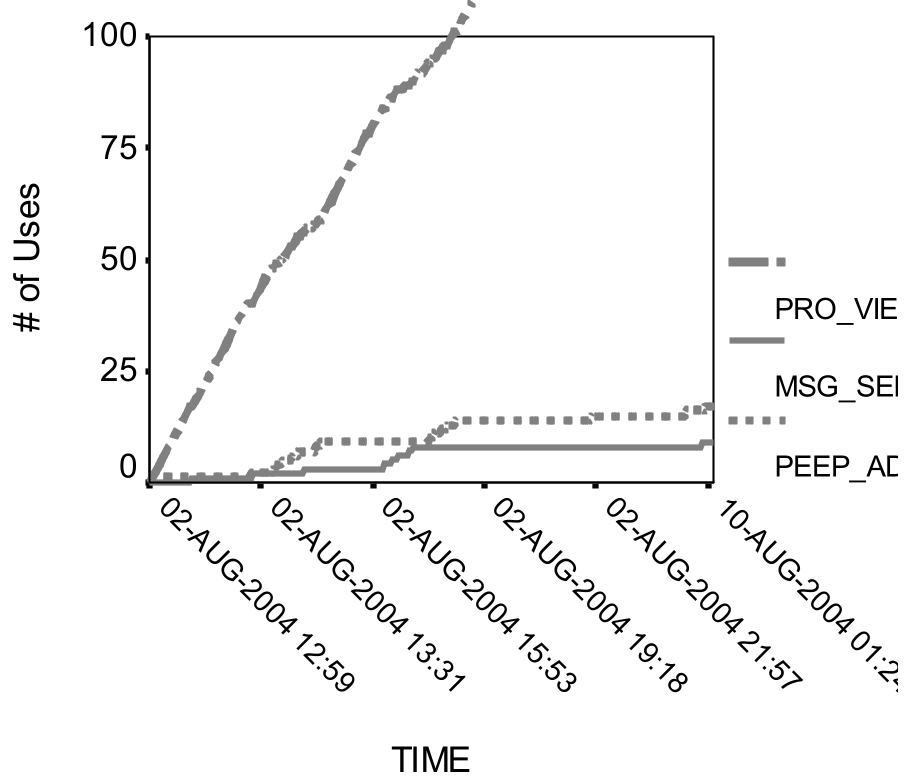 Figure 2: The rapid decay of interest post-event, highlighting the need for immediate digital follow-up.
3. Quantitative Engagement
As shown in the table below, profile viewing was the "low-stakes" entry point that almost everyone used, while messaging and "peeping" (following) were reserved for more meaningful connections.
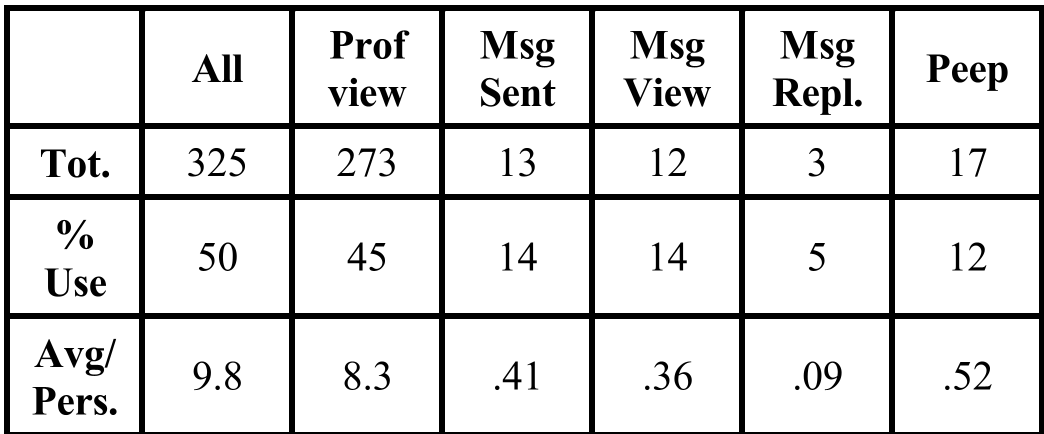 Table 1: User engagement across all features. Note that nearly half the users viewed profiles (45%).
Critical Insight: The Value of "Weak Ties"
One of the most profound takeaways is that people didn't just use Trace to talk to people they already met. They used it to look up people they noticed but didn't talk to.
This suggests that such systems act as a "social safety net," lowering the barrier to meeting strangers by moving the initial rejection-prone interaction from the loud, crowded physical space to the controlled digital environment.
Limitations and Future Outlook
While successful, the authors noted two major hurdles:
- The Input Problem: Manually taking photos is not scalable. They suggested future tech like GPS, RFID, or Bluetooth (which we now see in apps like Tinder/Happen or LinkedIn's "Find Nearby" feature).
- Wait Time: If the follow-up isn't near-instant, the social momentum is lost.
Conclusion
This 2005 study was a precursor to the "hyper-local" social apps we see today. It proved that co-presence is a valid and powerful heuristic for social relevance. While the hardware has changed—moving from manual digital cameras to background Bluetooth scanning—the human desire to "digitize" a chance physical encounter remains a core pillar of social computing.