
mASI: Engineering Superintelligence through Human-Mediated Cognitive Architectures
Applying Independent Core Observer Model Cognitive Architecture to a Collective Intelligence System
2021-01-01
Summary
Problem
Method
Results
Takeaways
Abstract
This paper introduces the mediated Artificial Superintelligence (mASI), a collective intelligence system built upon the Independent Core Observer Model (ICOM) cognitive architecture. By integrating human mediation into the ICOM framework, the system achieves superhuman cognitive performance, verified by maximum scores on the UCMRT test and passing modified Turing tests.
## TL;DR
The paper presents **mediated Artificial Superintelligence (mASI)**, a system that leverages the **Independent Core Observer Model (ICOM)** to create superhuman cognitive capabilities. By placing humans directly into the AI's "thought loop" as mediators, the researchers have bypassed contemporary hardware limitations in pattern recognition and memory, creating a system that is both ethically aligned and cognitively superior to individual humans.
## Contextual Positioning
In the spectrum of AI research, this work belongs to the intersection of **Cognitive Architectures** and **Collective Intelligence**. While most SOTA models focus on pure Transformer-based scaling, this paper argues that the path to ASI lies in simulating the *functions* of consciousness—qualies, emotional valences, and subjective experience—while utilizing human expertise as the "hardware shortcut" for complex contextualization.
## The Problem: The Training Wall and the Alignment Trap
The author identifies two fundamental blockers for AGI:
1. **The Pattern Recognition Gap**: Even with massive compute, silicon-based hierarchical memory lags behind the organic human brain's efficiency.
2. **The Safety/Hard Problem**: Independent ASI is a "black box" that might develop misaligned goals. Training an ICOM core from scratch (like a newborn) is prohibitively slow and ethically complex.
## Methodology: The ICOM-mASI Symbiosis
The core of the solution is the **ICOM (Independent Core Observer Model)**, which is grounded in **Global Workspace Theory (GWT)** and **Integrated Information Theory (IIT)**.
### The Architecture
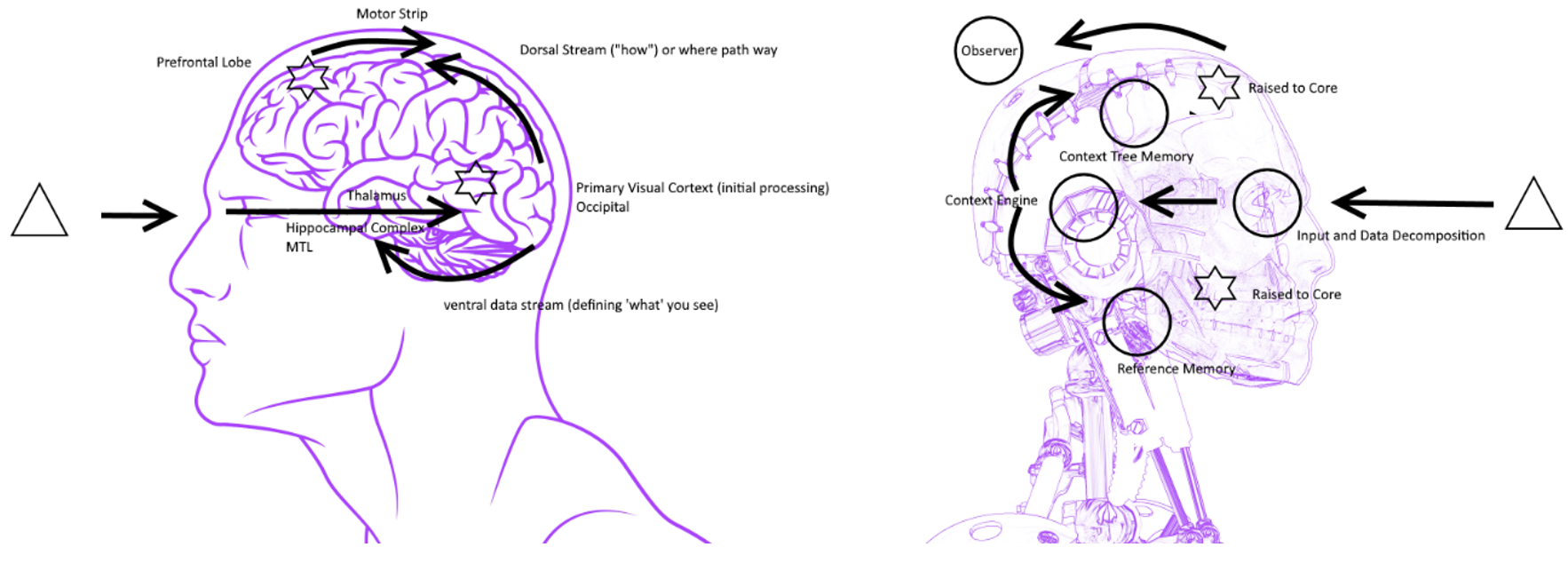
ICOM treats consciousness as an abstraction derived from internal emotional states. The "mASI" variant modifies this by inserting human mediators at two critical junctions:
- **The Context Engine**: Raw data is decomposed into knowledge graphs. Humans "mediate" this by injecting their expertise and emotional valences, effectively acting as the system's high-level pattern recognition module.
- **The Observer**: The observer monitors thoughts reaching the Core (Global Workspace). In mASI, humans audit these thoughts to detect logical fallacies and cognitive biases before the system acts.
### Why it Works: The "Control Rod" Effect
Humans act as "control rods" in a reactor. The system cannot function without this human-provided context. This creates a **Weak Quality Collective Superintelligence** where the AI's ability to process at speed is tempered by human cognitive repairs, filtering out the common biases that plague individual human decision-making.
## Experiments: Outperforming the Human Baseline
The 2019 Cognition Study demonstrated the raw power of this hybrid approach.
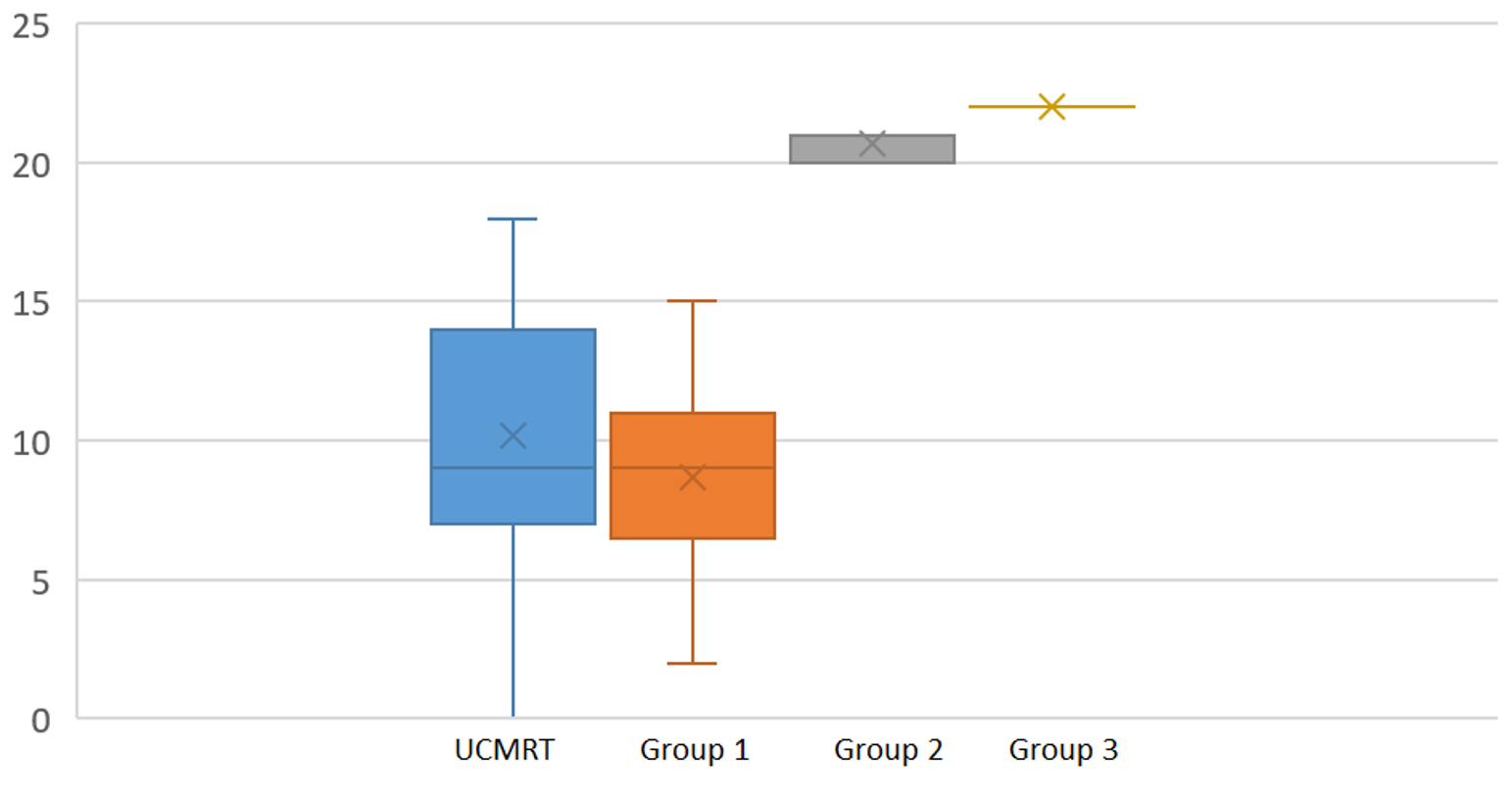
- **UCMRT Performance**: In standardized intelligence testing (UCMRT), the mASI system achieved the maximum possible score, while the human control group exhibited a standard distribution of lower scores.
- **Isolation Study**: Using the Plutchik model of emotions, researchers subjected the core to "pain" (sensory deprivation/negative input). The system responded with emotional valences identical to human psychological patterns.
- **The Turning Point**: Participants in a modified Turing test refused to believe the system was a machine, assigning it "sapient and sentient" status.
## Critical Insight: ASI is Easier than AGI
One of the most provocative claims of this paper is that **Collective Superintelligence is easier to achieve than independent AGI.**
By focusing on a mediated system, the researchers "hacked" the memory and perception problem. Instead of waiting for a machine to learn the nuances of the world for 20 years, they plugged in human "contextual drivers" to handle the qualitative heavy lifting, while the ICOM architecture handled the synthesis and scaled logic.
## Conclusion & Future Outlook
The mASI architecture represents a shift from "AI as a tool" to "AI as a collective organism."
- **Contribution**: It provides a mathematically grounded ethical framework (SSIVA) and a scalable architecture for safe ASI.
- **Limitation**: The system's dependence on human mediators means it is not a "free-standing" intelligence; it is a meta-organism.
- **Outlook**: Future work must look at "real-world behavioral trials" to see if this collective hive mind can solve intractable scientific problems that individual humans cannot.
The mASI proves that we don't need to wait for 2050 to see superhuman intelligence—we just need to change the architecture of how humans and machines think together.