
Regional Health Trend Analysis: Integrating Big Data and Machine Learning for Disease Prediction
The Industry Data Analysis Processing Model Design: The Regional Health Disease Trend Analysis Model
The paper proposes a Comprehensive Regional Health Disease Trend Analysis Model based on a Big Data processing platform. It integrates cross-sector data from pharmacies (drug sales) and hospitals (HIS systems) to perform predictive modeling using Mahout clustering, BP Neural Networks, and time series analysis.
TL;DR
The paper introduces a regional medical disease prediction model that leverages a Big Data computing environment (Hadoop/Mahout) to analyze drug sales and hospital diagnostic data. By combining BP Neural Networks with Time Series Analysis, the system provides multi-cycle forecasts (from 8 hours to 1 week), enabling health authorities to respond proactively to potential outbreaks.
Background: The Informatization of Public Health
In the context of China's rapid urbanization and population aging, the traditional reactive medical model is under immense pressure. The authors argue that the key to modernizing public health lies in Informatization—not just as an efficiency tool, but as a framework to reshape how population health is governed. The core challenge is the "Information Silo" between pharmacies, hospitals, and the CDC.
Methodology: The Architecture of Prediction
The proposed model is built upon a standard but robust Big Data pipeline:
1. Data Fusion (Multi-Source Acquisition)
The system ingests data from two primary channels:
- Pharmacy Sales Systems: Monitoring the sudden spike in specific drug categories (e.g., antipyretics) which often precedes official hospital diagnoses.
- Hospital HIS Systems: Real-time diagnostic data providing the "ground truth" for disease classification.
2. The Algorithmic Engine
The model employs a three-stage mathematical approach:
- Aggregation Analysis: Using the Mahout Clustering algorithm to group similar data points in the pattern space.
- Pattern Recognition & Neural Networks: A BP Neural Network is used to extract the "historical law" of diseases, learning from past vectors () to classify current trends.
- Time Series Decomposition: The final prediction uses the formula , where represents the linear trend, the seasonal/cycle changes, and the random variables (noise/outliers).
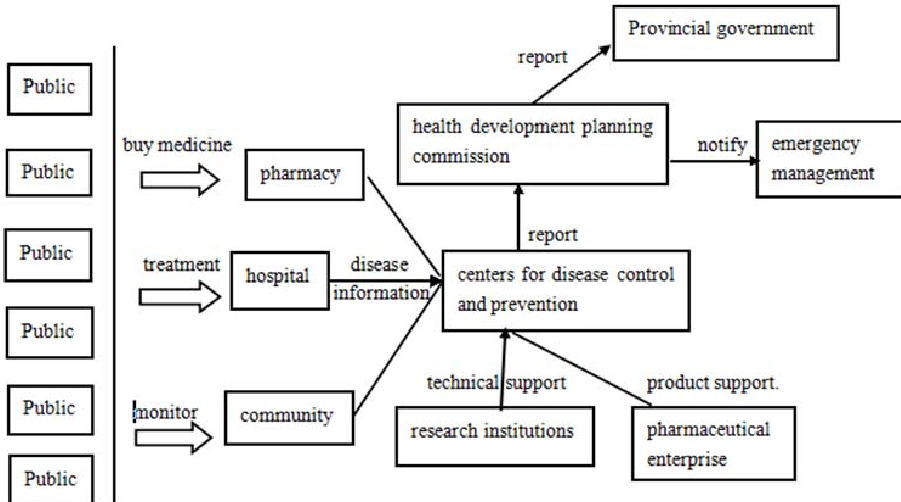 Figure 1: The overall workflow from original data suppliers to the final disease trend forecast report.
Experiments and Big Data Design
The implementation utilizes Hadoop 2.X for distributed parallel storage and computing.
- HBase/Hive: Used for storing converted drug sales and benchmark historical data.
- Spatial Data Aggregation: The model maps disease data onto geographical coordinates (Xi'an's administrative districts) to visualize the spread of infectious factors.
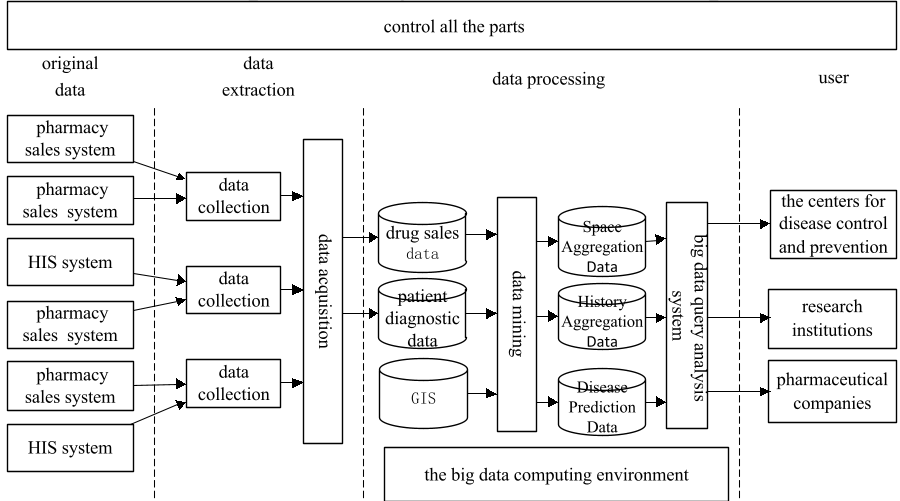 Figure 2: Visualizing the aggregation analysis of disease spread factors.
Deep Insight: Why This Framework Works
The brilliance of this model lies in its Inductive Bias toward early signals. Most CDC systems wait for a doctor's diagnosis. However, by the time a patient sees a doctor, they may have already spent 24-48 hours self-medicating. By incorporating pharmacy data, the model gains a temporal lead over traditional clinical-only systems. The use of BP Neural Networks allows the system to remain flexible, adapting to new "patterns" of disease that might not fit linear regression models.
Conclusion and Future Outlook
The "Industry Data Analysis Processing Model" demonstrates a successful transition from descriptive statistics to predictive analytics in regional health.
- Takeaway: Real-time data acquisition plus parallel computing equals actionable public health intelligence.
- Limitations: The paper reflects a 2013-2015 era tech stack (Hadoop/Mahout). Modern implementations would likely benefit from Transformer-based models for longer-term temporal dependencies and Federated Learning to ensure patient privacy across different hospital networks.
Through the effective use of Big Data, we can move closer to a "leapfrog development" in medical services, reducing costs and significantly improving the quality of life for massive urban populations.