
Beyond the Screen: Unmasking Digital Inequalities in Facebook Use
Inequalities in Facebook use
This study investigates digital inequalities in social networking by examining how college students' background factors (gender, race, and SES) influence Facebook usage. Using a canonical correlation analysis on a sample of 2,359 students, it identifies distinct behavioral patterns despite uniform access and time spent on the platform.
TL;DR
Access is no longer the issue—it's the action that counts. This study reveals that while college students spend similar amounts of time on Facebook regardless of their background, their activities differ sharply along gender, racial, and socioeconomic lines. Women lead in social bonding, while lower-SES students are less likely to use the platform for the very communication and sharing features that drive social capital and academic success.
Background: The Myth of the Universal Digital Native
For years, the "Digital Native" narrative suggested that being born into a wired world made all youth tech-savvy. However, this paper argues that a second-level digital divide exists. It's not about who is online, but what they are doing. In the context of higher education, where Facebook (at the time of the study) served as a vital social and academic hub, these differences in usage can create an "engagement disadvantage."
The "Why": Why Should We Care About "Tagging Photos"?
The author, Reynol Junco, posits that specific Facebook activities aren't just hobbies—they are instruments of Social Integration.
- Social Capital: Checking up on friends and sharing links are positively predictive of GPA.
- Persistence: Following Vincent Tinto’s model, students who build stronger social ties are more likely to stay in school and graduate.
If certain groups (like lower-SES or minority students) aren't using these features, they are effectively excluded from the "hidden curriculum" of digital networking.
Methodology: The Canonical Correlation Approach
Instead of looking at just one variable at a time, the study used Canonical Correlation Analysis (CCA) to look at "Variable Sets."
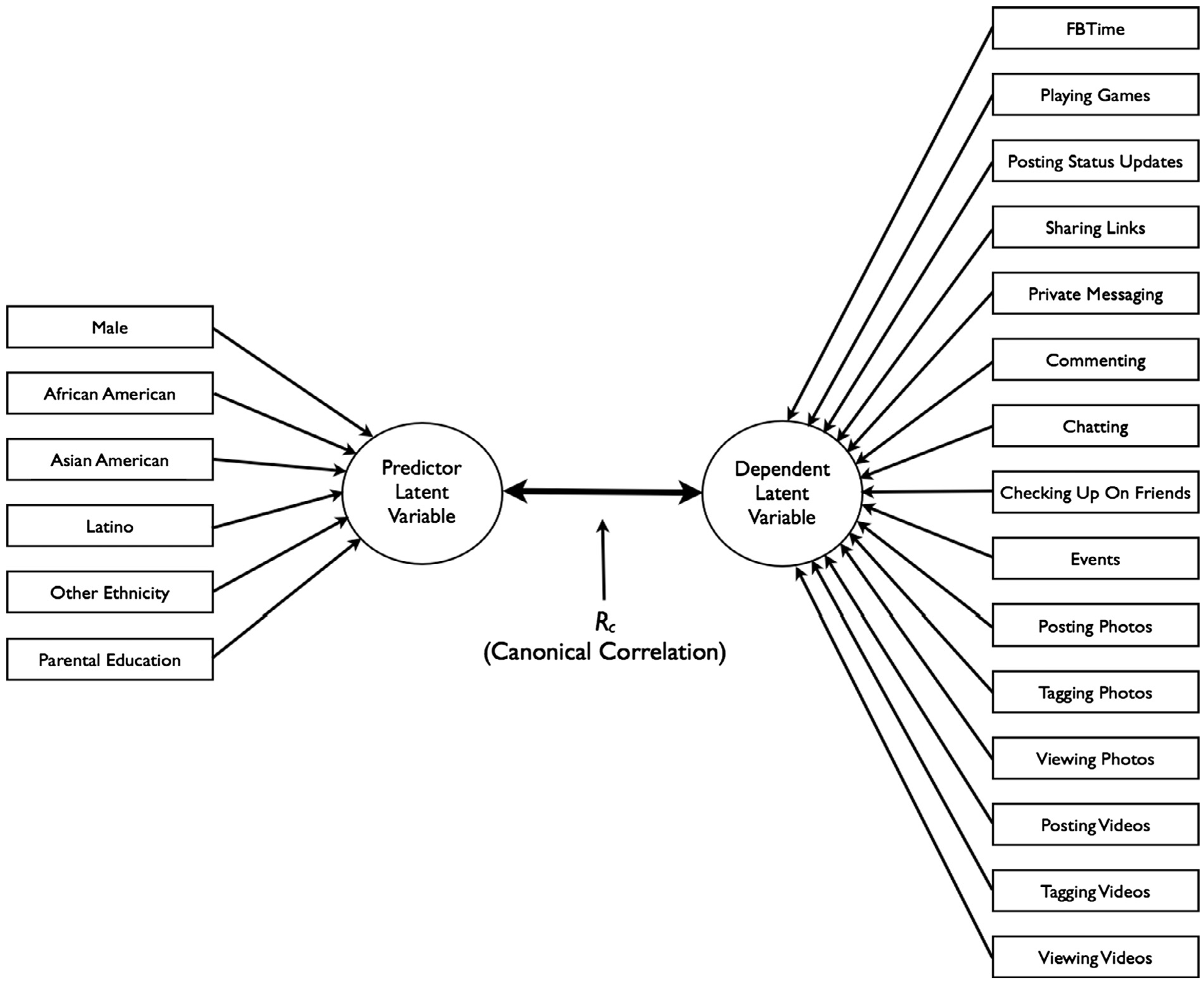 Figure 1: Conceptual model of the relationship between background characteristics and Facebook use.
The researcher analyzed 14 distinct activities ranging from "playing games" to "tagging videos" to see how they clustered around demographic predictors.
Key Insights: Who Does What?
The results categorized three major "Effect Functions":
1. The Gender Effect (The Strongest Path)
Women are the "Connectors" of the digital world. They are significantly more likely to engage in:
- Posting and Tagging Photos (Relationship maintenance).
- Commenting and Status Updates (Public communication).
- Checking up on friends (Social information seeking).
2. The Race Effect
The study found that African American students used the platform differently, notably being less likely to use "checking up on friends" or photo tagging. In the context of 2013, these were primary ways of maintaining social ties.
3. The SES Effect (Socioeconomic Status)
This is perhaps the most critical finding for social equity. Students whose parents had lower education levels were significantly less likely to use Facebook for its original purpose: communication.
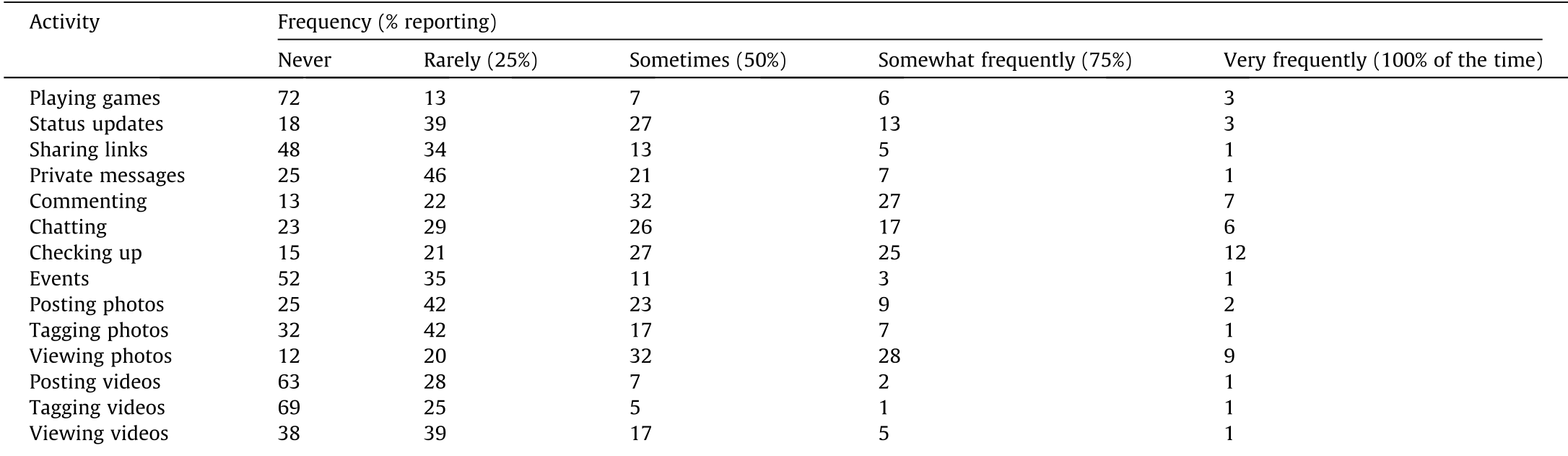 Table 1: Descriptive statistics of how frequently students perform specific tasks.
Detailed Results Analysis
The CCA showed that parental education (SES proxy) was positively related to private messaging and RSVPing to events.
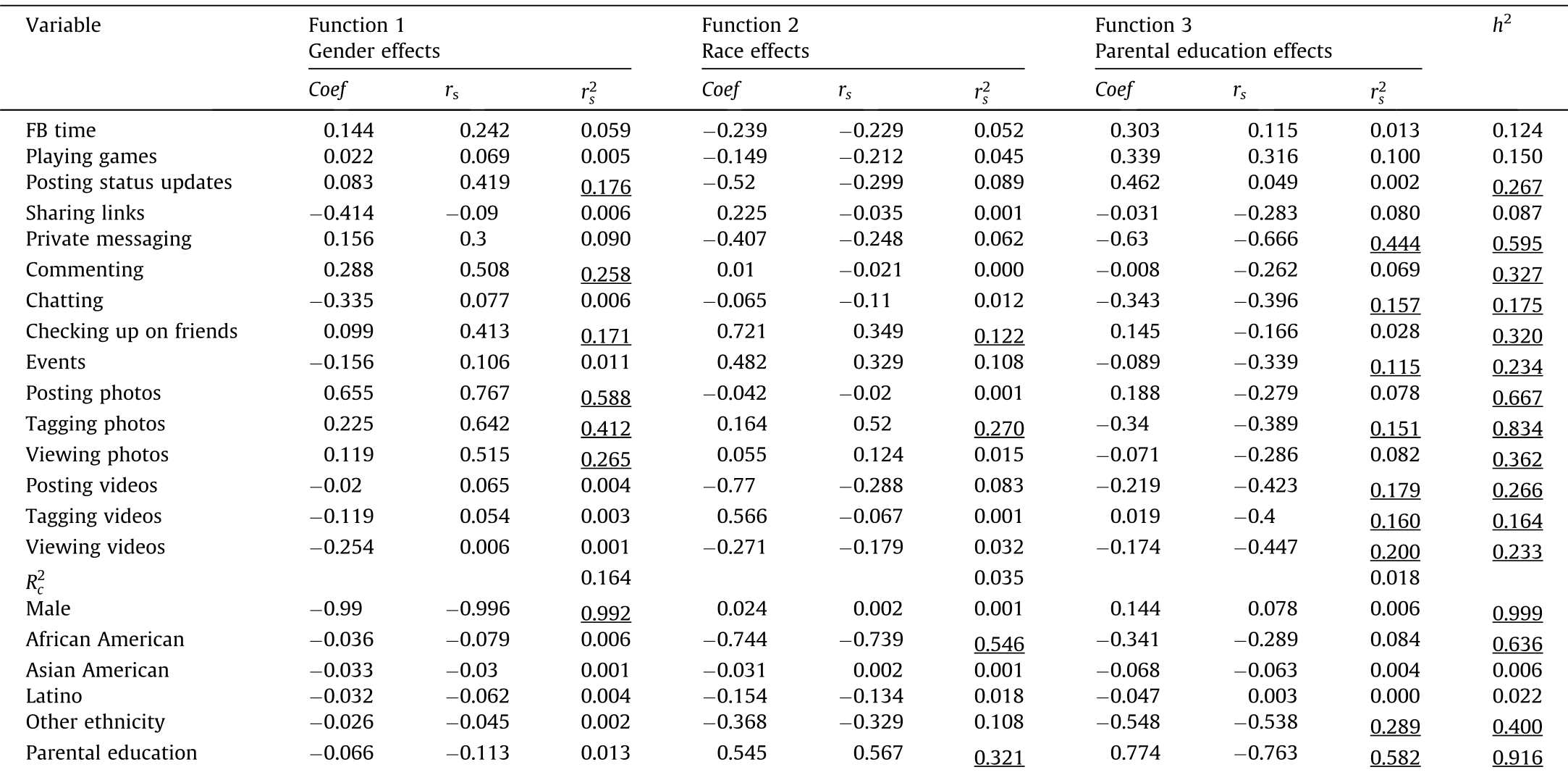 Table 2: Standardized canonical coefficients showing the weight of each predictor.
Students from lower-SES backgrounds were less likely to "share" or "send private messages." This suggests a lack of comfort or familiarity with the "participatory culture" that higher-SES students take for granted.
Critical Insight: The "Engagement Disadvantage"
The paradox of this study is that Time Spent is not the differentiator. A student from a low-income family and a student from a wealthy family both spend about 101 minutes a day on Facebook. However, the wealthy student uses that time to build a professional and social network (social capital), while the low-income student may not be leveraging the same tools.
Implications for Educators
If faculty members assume all students know how to use social media for collaboration, they unknowingly punish those from lower-SES or minority backgrounds.
- Teach the "Netiquette": Don't just assign a Facebook group; teach the social mores and communication expectations.
- Bridge the Skill Gap: Recognize that "Internet Skills" are not distributed equally.
Conclusion & Limitations
While the study is a milestone in identifying usage inequality, it has limitations:
- Self-Reported Data: Modern studies show students often overestimate their screen time.
- Context-Specific: The sample was majority Caucasian (89%), potentially narrowing the generalization of the "Race Effects."
Overall, Junco’s work serves as a stark reminder: in the digital age, equality of access is only the first step. True equity requires equality of competency and engagement.
Takeaway: Digital inequality has moved from the "hardware" phase to the "behavioral" phase. Ownership of a smartphone doesn't bridge the gap—knowing how to use it to gain social capital and academic support does.