
Beyond the Absolute Gap: Why 'Deservedness' Dictates Effort in Social Networks
Inequity-averse agents’ deserved concerns under the linear contract: a social network setting
This paper models behavioral interactions in social networks using a linear contract framework. It introduces "deserved concerns" (individual perception of fair pay based on social attributes) into an inequity-aversion model. The study achieves a more nuanced understanding of how heterogeneity and perceived fairness dictate agent effort and optimal incentive design.
TL;DR
In the modern workplace, fairness isn't just about getting the same pay as a colleague; it’s about getting what you feel you deserve. This paper redefines behavioral agency theory by showing that an agent's effort is driven by their perception of "deserved" contract elements (fixed wage and incentive sharing). The core insight: Social heterogeneity can either be a powerful motivator or a productivity killer, depending on whether the overall incentive system meets the team’s collective expectations.
Background: The Limits of Traditional Fairness
Standard economics often relies on the Fehr-Schmidt model, where agents hate being paid less than their peers (envy) or feel uncomfortable being paid more (compassion). However, this "one-size-fits-all" view ignores the reality of social networks. In a network, agents have different seniority, skills, and backgrounds. A senior engineer doesn't just compare their bank account to a junior hire; they compare their contract coefficients to what they believe their status warrants.
Methodology: The Deserved Pay Gap
The authors move from comparing absolute pay to comparing perceived deservedness. They define a linear contract (fixed wage + output sharing).
An agent develops four internal benchmarks:
- : What I deserve.
- : What I think my colleague deserves.
This creates a deserved pay gap. The agent's utility is no longer just "Pay - Effort Cost," but includes an "Inequity Premium" based on whether they are receiving their due relative to their peers.

Core Insights: The "Network Fairness" Effect
1. The Mutual Motivation Trap
One of the most striking findings is the reversal of effort interaction.
- Relative Fairness: If both you and your colleague are paid more than you think you deserve (over-incentivized), you will work harder if they work harder. You compete on performance.
- Relative Inequity: If you feel under-incentivized while your colleague is over-incentivized, their hard work will actually make you reduce your effort. The focus shifts from "winning the game" to "protesting the unfair system."
2. Heterogeneity as a Double-Edged Sword
The study finds that the diversity of the network (heterogeneity) acts differently based on the pay scale:
- In Over-Incentivized Networks: Diversity stimulates competition. Seeing someone different/superior succeed pushes others to work harder.
- In Under-Incentivized Networks: Diversity breeds resentment. In "low-pay" environments, agents only tend to compete with those similar to themselves (homophily); significant differences in social attributes lead to effort withdrawal.
Experimental & Simulation Results
The paper utilizes equilibrium analysis to find the optimal (incentive level).
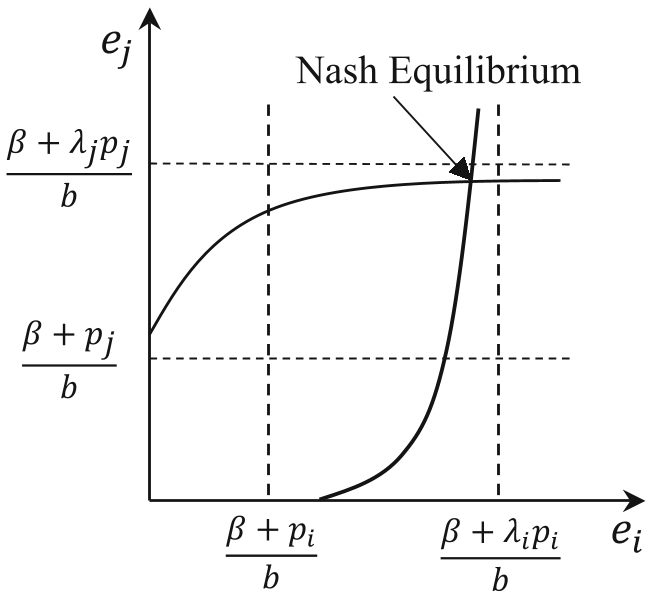 In Fig (a), both feel over-incentivized, leading to positive slopes (mutual motivation). In (b), a clash of perceptions leads to a negative slope for the under-incentivized agent.
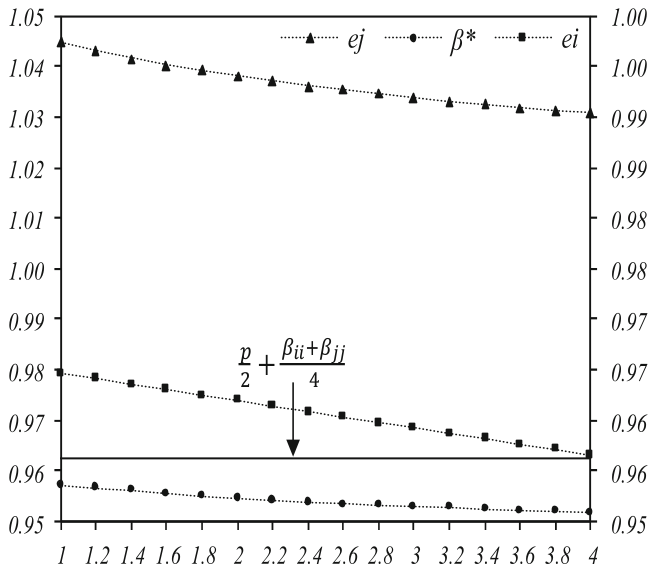
Numerical simulations confirm that as inequity aversion increases, the optimal incentive level typically undergoes "wage compression," but the study identifies a specific "safe zone" for to ensure maximum productivity.
Critical Analysis & Managerial Implications
The "Takeaway" for leadership is clear:
- If you provide strong incentives: Hire a heterogeneous team. The variety in backgrounds will fuel healthy performance competition as agents try to justify their "deserved" status.
- If you must provide weak incentives: Hire for similarity. To keep productivity stable in low-reward environments, "birds of a feather" work better together because the perceived inequity gap is minimized.
Limitations: The model assumes agents are risk-neutral and that their "deserved" perceptions are static. In real-world social networks, what one "deserves" often shifts dynamically based on social media influence and evolving peer status.
Conclusion
By integrating social network perceptions into linear contracts, Luo et al. prove that fairness is a subjective moving target. To optimize an operating system, one must not only design the math of the contract but manage the psychology of the network.