
Unmasking the Social Web: Inferring Network Topology Amidst Confirmation Bias
11706_On Inference of Network Topology and Confirmation Bias in Cyber-Social Networks.
This paper investigates the joint inference of network topology and confirmation bias parameters in directed cyber-social networks using opinion dynamics models. The authors propose an exact inference methodology for piece-wise linear bias models and an approximate algorithm for unknown nonlinear bias functions, achieving exact recovery of communication weights for non-followers of information sources.
TL;DR
In the age of echo chambers, what we see is often a filtered version of reality. This paper addresses a critical challenge in social computing: how to reconstruct the hidden "who-influences-whom" map (topology) of a social network when the agents involved are plagued by confirmation bias. The researchers provide a mathematical toolkit to exactly infer network structures and individual bias parameters by observing opinion evolution over time.
Background Positioning
While previous literature on network inference often relies on the simpler DeGroot or Friedkin-Johnsen models (where actors simply average their neighbors' views), this work sits at the intersection of Control Theory and Cognitive Science. It moves beyond the assumption of objective interactions, treating the network as a "Cyber-Social" system where information sources (the cyber layer) and individuals (the social layer) interact through a lens of cognitive distortion.
The Motivating Pain Point
Why can't we use standard tools?
- Directionality: Most exact inference tools work only for undirected graphs. In real social media, influence is often a one-way street (e.g., following a celebrity). This paper proves that for , traditional Lyapunov-based methods fail to provide a unique solution for directed networks.
- The Bias Hidden Variable: Confirmation bias is a nonlinear force. If an individual only listens to people they already agree with, their state transitions are no longer linear, making the underlying influence weights () virtually invisible to standard regression.
Methodology: The Core Insight
The authors model opinion evolution as a discrete-time dynamical system where the influence of an information source on individual is a function of the distance between their opinions .
1. The Piece-wise Linear Bridge
The core methodology relies on a "cyber-physical" trick: if we can control the information sources (e.g., setting official news feeds to a specific stance), we can linearize the system. They define a measurement matrix based on the difference between consecutive opinion states:
2. Exact vs. Approximate Inference
- Exact Inference: If , the authors prove that the influence matrix can be uniquely recovered via , where is a shifted cross-correlation matrix.
- Approximate Inference: When the bias model is a "black box" (e.g., unknown nonlinear functions), they use Lipschitz approximation. Interestingly, they prove that while you cannot perfectly recover everything, you can still exactly infer the communication weights for anyone who is not a direct follower of the distorted information source.
Note: The paper utilizes the relationship between state differences to bypass the need for external stimulation of every node, a significant upgrade over "node knockout" methods.
Experiments & Results
The authors validated their theory on the Krackhardt’s Advice Network, a famous dataset involving 21 managers.
Key Findings:
- Exact Recovery: In synthetic tests, the algorithm perfectly identified both the weights of social ties and the specific bias parameters () of individuals.
- The Follower Penalty: In the approximate inference scenario (Figure 3), the error rates for "non-followers" remained near zero, while "followers" of information sources had higher errors. This reveals a fundamental limit: Information sources act as "noise generators" in the topology inference process.
- Saturation Effect: Increasing the length of observation doesn't always help. Once opinions reach a steady state (Figure 4), the "signal" in the opinion changes disappears, and the matrix loses rank.
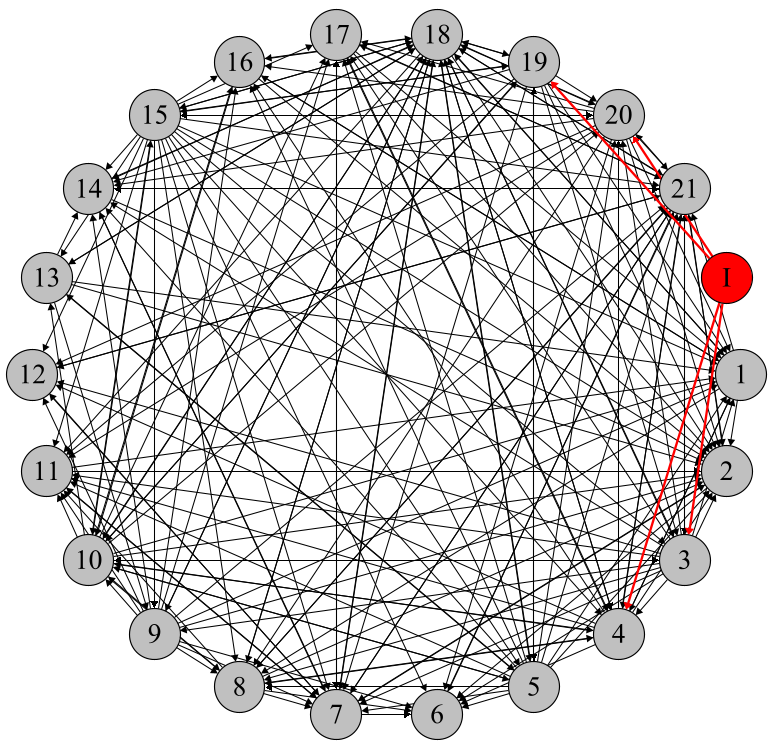 Fig 3. Performance showing significantly higher accuracy for non-followers in complex bias scenarios.
Critical Analysis & Conclusion
Takeaway
This research is a major step toward Social Network Forensics. By mathematically separating the "innate opinion" and "confirmation bias" from the "structural influence," it allows researchers to see the true skeleton of a social network that was previously obscured by cognitive noise.
Limitations
- Scalability: The reliance on matrix inversion () means this is currently suited for networks of hundreds or thousands, not millions (like Global Twitter).
- Global Observability: The method requires knowing the opinions of all nodes involved, which is often difficult in private or partially observed networks.
Future Outlook
The next frontier is Adversarial Inference: how does the topology reconstruction hold up if an adversary is actively trying to hide the network structure by manipulating information sources? The authors hint at this as a burgeoning area of "Social Control Theory."