
Decoding the Social Pulse of the Internet: Inferring Social Networks from IP Traffic
Inference of social network behavior from Internet traffic traces
The paper introduces a framework to infer social network characteristics from anonymized IP traffic traces using the "Antraff" system. It leverages frequency analysis and Singular Value Decomposition (SVD) on mean, variance, and covariance traffic matrices to reveal heavy-tailed distributions and correlated end-to-end communication patterns.
TL;DR
Is Internet traffic just a stream of packets, or is it a blueprint of human society? This paper argues the latter. By analyzing massive CAIDA datasets through a new tool called Antraff, researchers have demonstrated that we can estimate social network behaviors—like community "gatekeeping" and correlated group activities—by applying Singular Value Decomposition (SVD) to traffic matrices, even when IP addresses are anonymized.
Background: Beyond the TCP Flow
In traditional networking, a "flow" is a technical construct: it starts with a SYN, ends with a FIN, and is measured by its duration. However, this study shifts the perspective to the Social Network Layer. Here, a flow is defined as all traffic between a specific Origin (O) and Destination (D), regardless of time. This approach seeks to answer: Who is talking to whom, and are they part of a larger, correlated community?
The "Antraff" Methodology: Handling Big Data with SVD
The primary challenge in mapping social behavior from backbone traffic is scale. With millions of IP addresses, a standard traffic matrix would be impossible to compute. The authors solve this through Statistical Ranking:
- Frequency Analysis: Ranking IPs by bytes sent/received and focusing only on the "heavy hitters."
- Matrix Triangulation: They construct three types of matrices:
- Mean Matrix: Captures average volume.
- Variance Matrix: Captures burstiness/volatility.
- Covariance Matrix: Identifies O-D pairs that behave similarly over time.
- Eigenflow Extraction: Using SVD/PCA to find the "features" of the network—mathematical abstractions of shared social goals.
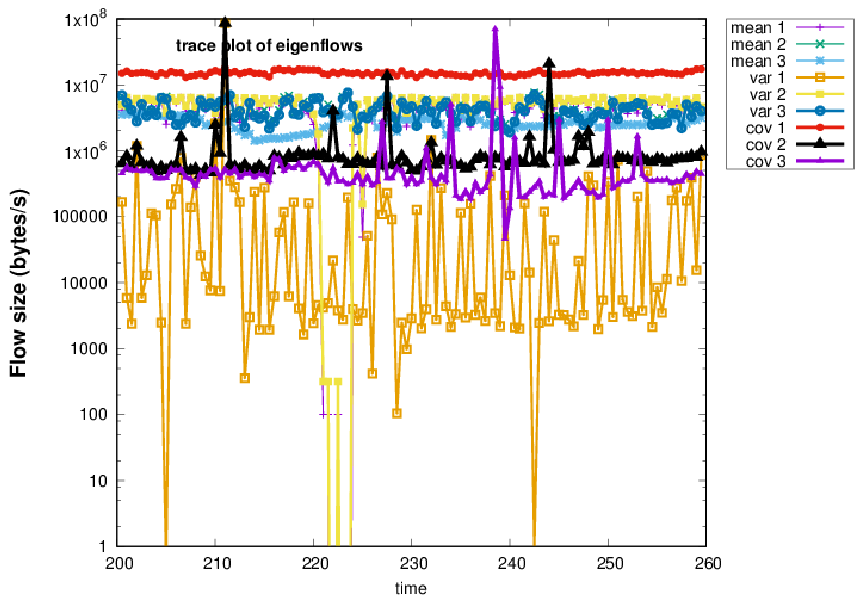 Fig 1: Eigenflows extracted from mean, variance, and covariance matrices, showing the underlying structural patterns of the traffic.
Key Insights: The Pareto Law and Gatekeepers
1. The Heavy Tail of Digital Society
The study confirms that the Pareto Principle (the 80/20 rule) is alive and well in network traffic. However, it’s even more extreme: roughly 1% of IP addresses account for 90% of total bytes.
2. Community Diversity (The "Slope" Metric)
By plotting the number of O-D pairs against the number of unique IP addresses on a log-log scale, the researchers calculated a "diversity slope."
- Slope ≈ 1: Indicates "closed communities" or communication through major "gatekeepers" (e.g., Google, Facebook).
- Slope ≈ 2: Would indicate a fully decentralized, everyone-talks-to-everyone network. The experimental results showed slopes consistently near 1.1 - 1.2, mathematically proving the dominance of a few central sites in mediating our social interactions.
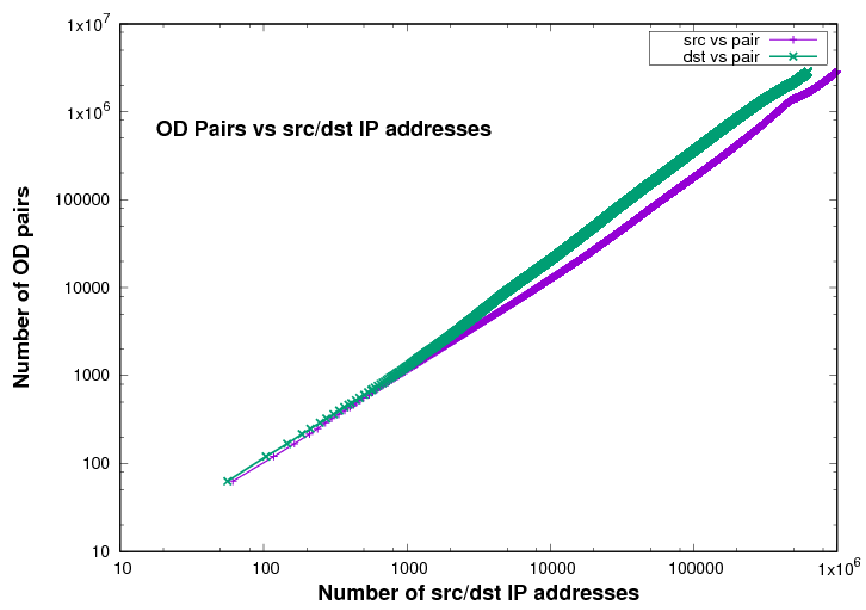 Fig 2: The relationship between unique IPs and O-D pairs. The slope near 1 suggests a highly centralized social structure.
Experiments and Eigenvalues
One of the most striking findings is the similarity in eigenvalues across different matrix types (Mean vs. Variance). This suggests that the "social signature" of the network is robust; whether you look at the average traffic or the volatility, the same underlying community structures emerge. The Covariance Matrix, however, proved the most sensitive, showing larger eigenvalues and thus a higher capacity to identify key social features.
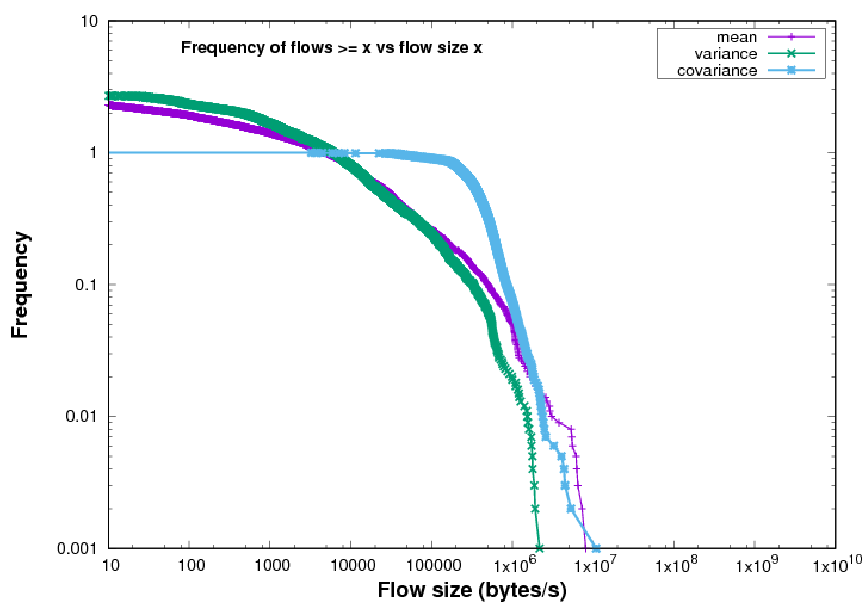 Fig 3: Comparison of eigenvalues across the three matrix types, highlighting the effectiveness of covariance analysis.
Critical Analysis & Future Outlook
While the paper successfully identifies that correlations exist, it leaves a significant open question: What do these "features" actually represent in the real world? In facial recognition, a feature might be "the nose"; in network traffic, we are yet to find the intuitive equivalent.
Takeaway: This research provides a mathematical bridge between raw packet traces and social science. For ISPs, understanding these "gatekeeper" slopes and power-law parameters isn't just academic—it's the key to predicting how traffic will shift as social trends evolve.
Limitations: The study uses very short traces (approx. 1 minute). Future work should investigate if these social profiles remain stable over hours or days, or if the "digital community" reshapes itself depending on the time of day.