
Inferring Physical Locations: Why Your Friends Give Away Where You Live
Inferring individual physical locations with social friendships
The paper introduces a spatial-based inferring framework designed to estimate an individual's physical locations using their social friendships. By leveraging massive anonymized data from Tencent QQ and employing weighted DB SCAN clustering, the method achieves a prediction accuracy of 68% within a 15 km distance error.
TL;DR
In the era of Location-Based Services (LBS), knowing "where" a user is becomes as vital as knowing "who" they are. This paper proposes a spatial-based framework that ignores unreliable self-reports and noisy status updates, instead using the locations of your social friends to predict your own. By applying weighted DBSCAN clustering to Tencent’s massive social graph, the researchers achieved a 68% accuracy rate within a tight 15 km radius.
Contextual Positioning
This work sits at the intersection of Social Network Analysis (SNA) and Spatial Data Mining. Rather than following the trend of complex Probabilistic Language Models (which analyze "what" you say), this paper doubles down on the First Law of Geography: near things are more related than distant things. It is a refinement of friendship-based geolocation that prioritizes "high-frequency" routines over erratic movements.
The Core Motivation: The Failure of Self-Reporting
Why do we need to infer locations?
- Privacy & Fakery: Users often list their location as "The Moon" or "Mars" to protect privacy.
- Coarseness: Reporting "China" or "USA" is useless for hyper-local advertising or navigation.
- Content Noise: Using keywords like "New York" in a post doesn't mean the user is actually there; they might just be discussing the news.
The authors' insight is simple: Human mobility is socially driven. We visit friends, work near them, and meet them in shared physical spaces. Therefore, a user's geographical "center of gravity" is mathematically linked to their social circle.
Methodology: From Social Ties to Spatial Centroids
The framework operates in three distinct phases:
1. Data Cleaning & Representation
To eliminate "noise" (like a one-time login at an airport during a layover), the authors use a threshold-based filter to keep only high-frequency places. This ensures the model focuses on residences and workplaces.
2. Weighted Spatial Clustering
The heart of the paper is the use of DBSCAN (Density-Based Spatial Clustering of Applications with Noise). Unlike K-means, DBSCAN doesn't need to know the number of clusters in advance and can find oddly shaped hotspots.
The authors add a twist by introducing Interaction Weighting. If you talk to Friend A for 100 hours and Friend B for 1 hour, Friend A’s location carries more weight in predicting yours.
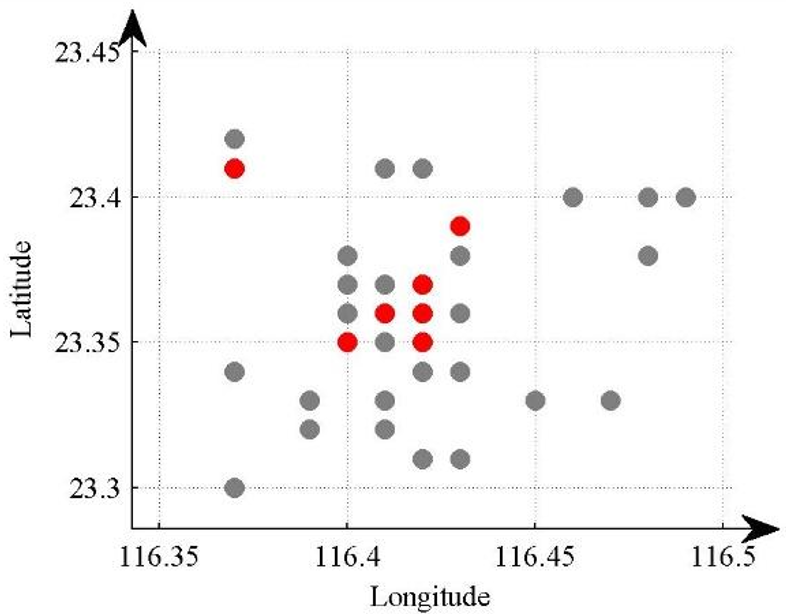 Figure 1: The analytical pipeline from friends' raw data to the target user's estimated location.
3. Centroid Calculation
The final location isn't just a geometric middle. It's a weighted centroid calculated by: Where represents the activity intensity adjusted by the communication timespan.
Experimental Results: Tencent Case Study
The model was validated using a dataset of 57 target users and their 226+ friends from Tencent QQ.
- Predictability: 82.3% of users could have their locations estimated.
- Precision: For those predictable users, the average error was only 6.2 km.
- Comparison: Compared to "Content-based" methods (like Chandra et al.), which have errors of ~160 km (100 miles), this spatial approach is surgically precise.
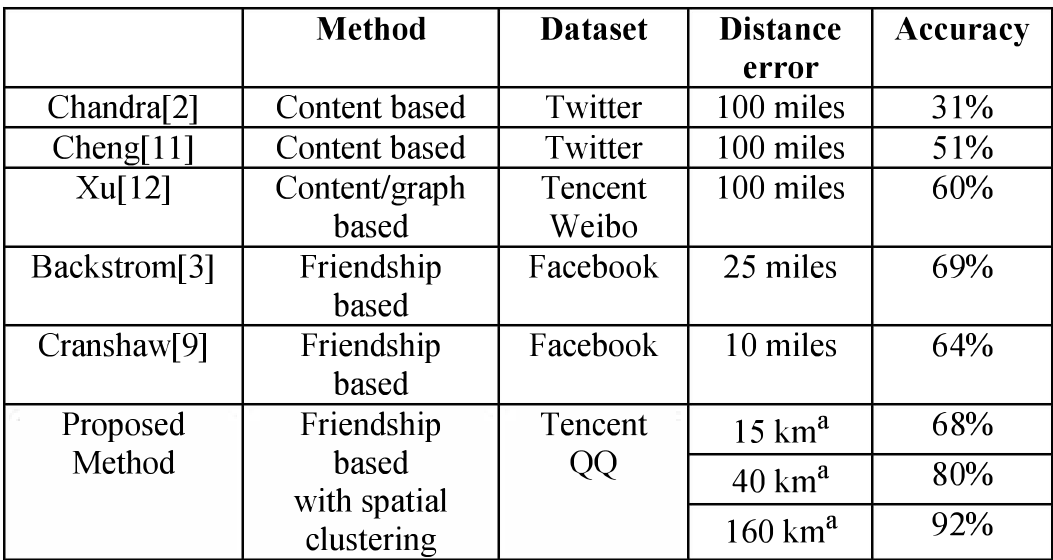 Table 1: Comparing the proposed method against SOTA content and graph-based approaches.
Critical Insight & Limitations
While the accuracy is impressive, the paper reveals a critical failure mode: Spatial Scattering. If a user's friends are distributed too widely across a country, DBSCAN fails to form a dense cluster, leading to "gross errors."
Furthermore, this method assumes a "static" routine. It excels at finding where you live and work, but it’s less effective for highly mobile users or digital nomads whose social circles aren't tethered to a single city.
Conclusion
This research proves that our social graph is essentially a geographical map. By shifting the focus from "what we say" to "who we know," the researchers have provided a more efficient, accurate, and lower-complexity tool for user profiling. For LBS providers, the message is clear: to find a user, look at their best friends.