
ModHEmo: Decoding Student Emotions through the Synergy of Physical and Cognitive Data
Inferring Students’ Emotions Using a Hybrid Approach that Combine Cognitive and Physical Data
This paper introduces ModHEmo, a hybrid emotion inference model tailored for educational environments. It combines cognitive appraisals (based on OCC theory) with physical reactions (facial expressions) to detect five learning-centered affective quadrants using low-cost sensors and system logs, achieving state-of-the-art performance in real-classroom settings.
TL;DR
Researchers have developed ModHEmo, a hybrid system that recognizes student emotions by combining what they see (facial expressions) with what they know (the context of the learning task). By fusing webcam data with interaction logs, the model achieves a 64.8% accuracy and a 0.545 Cohen's Kappa, proving that context is king when it comes to understanding a learner's inner state without requiring expensive or intrusive hardware.
Contextual Intelligence: The Missing Link in Affective Computing
For years, Affective Computing in education has been stuck between two extremes:
- The "Sensor-Heavy" Approach: Using expensive EEG, skin conductance, and pressure sensors. Effective, but impossible to scale to a normal classroom.
- The "Vision-Only" Approach: Using webcams to track smiles or frowns. While accessible, these systems are often "blind" to context—a student might frown because they are concentrating (productive) or because they are frustrated (detrimental).
The authors of this paper argue that humans don't just "see" emotions; we infer them based on the situation. ModHEmo mimics this by integrating Cognitive Appraisal (the "Why") with Physical Expression (the "How").
Methodology: The Hybrid Architecture
The ModHEmo architecture is split into two specialized pipelines that converge into a final decision engine.
1. The Physical Component
Captures facial images via a standard webcam during "Relevant Events" (e.g., a student solves a math problem). It extracts 8 primary emotions (Anger, Disgust, Fear, Happiness, etc.) as normalized scores.
2. The Cognitive Component
This is the "Brain" of the system. Based on the OCC (Ortony, Clore, & Collins) model, it monitors game events. If a student destroys a meteor in the "TuxMath" game, the system records positive valence; if the student fails despite effort, it registers potential frustration.
3. Dimensional Mapping
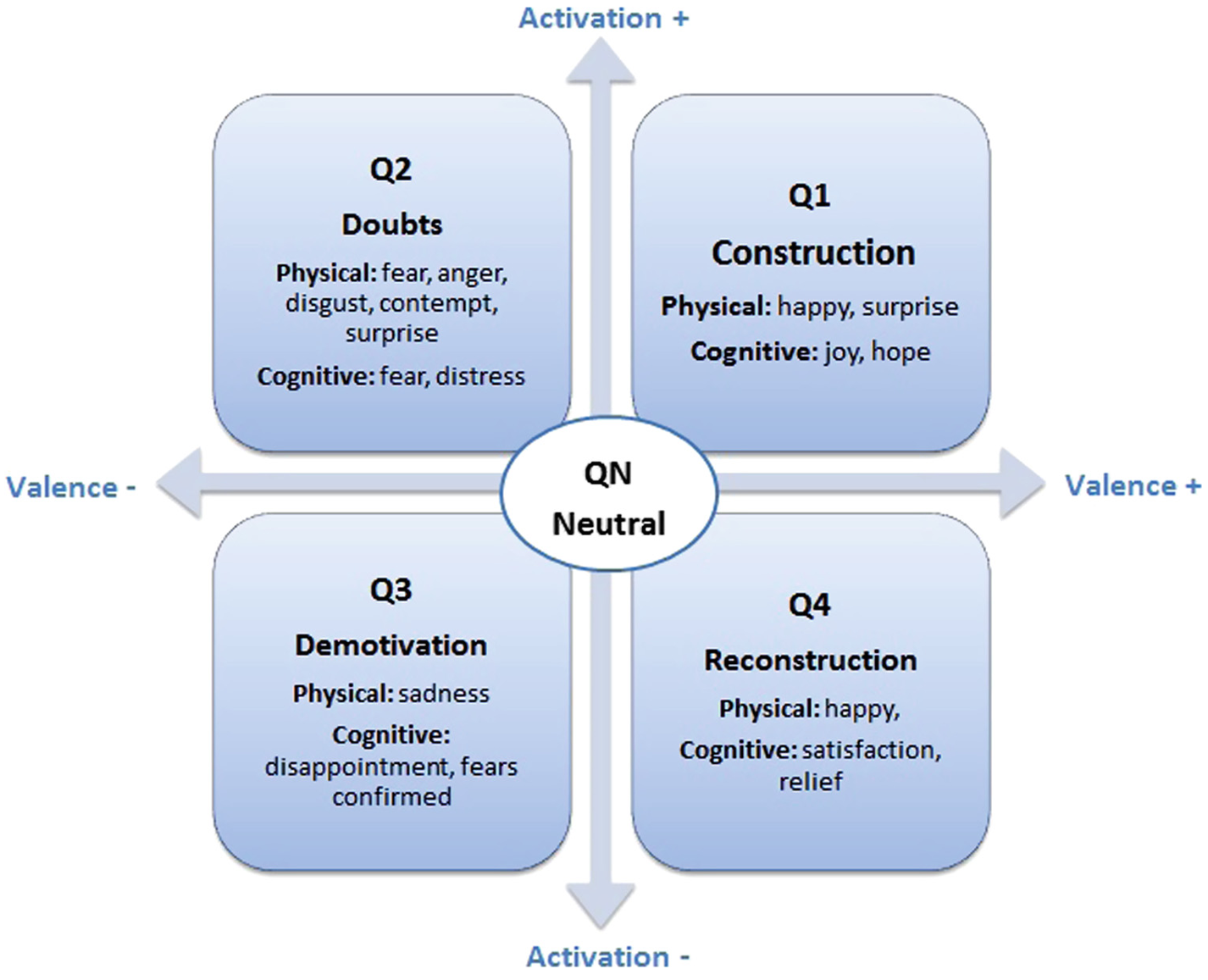
Instead of trying to pinpoint 22 complex emotions, the model simplifies the output into a Circumplex Model of four quadrants (Q1-Q4) based on Valence (Pleasure) and Activation (Arousal), plus a Neutral state (QN).
The "TuxMath" Experiment: Real-World Testing
The researchers tested ModHEmo with elementary students playing Tux, of Math Command. To ensure the model could handle negative emotions, they even introduced an "artificial bug generator" to trigger frustration.
Key Results:
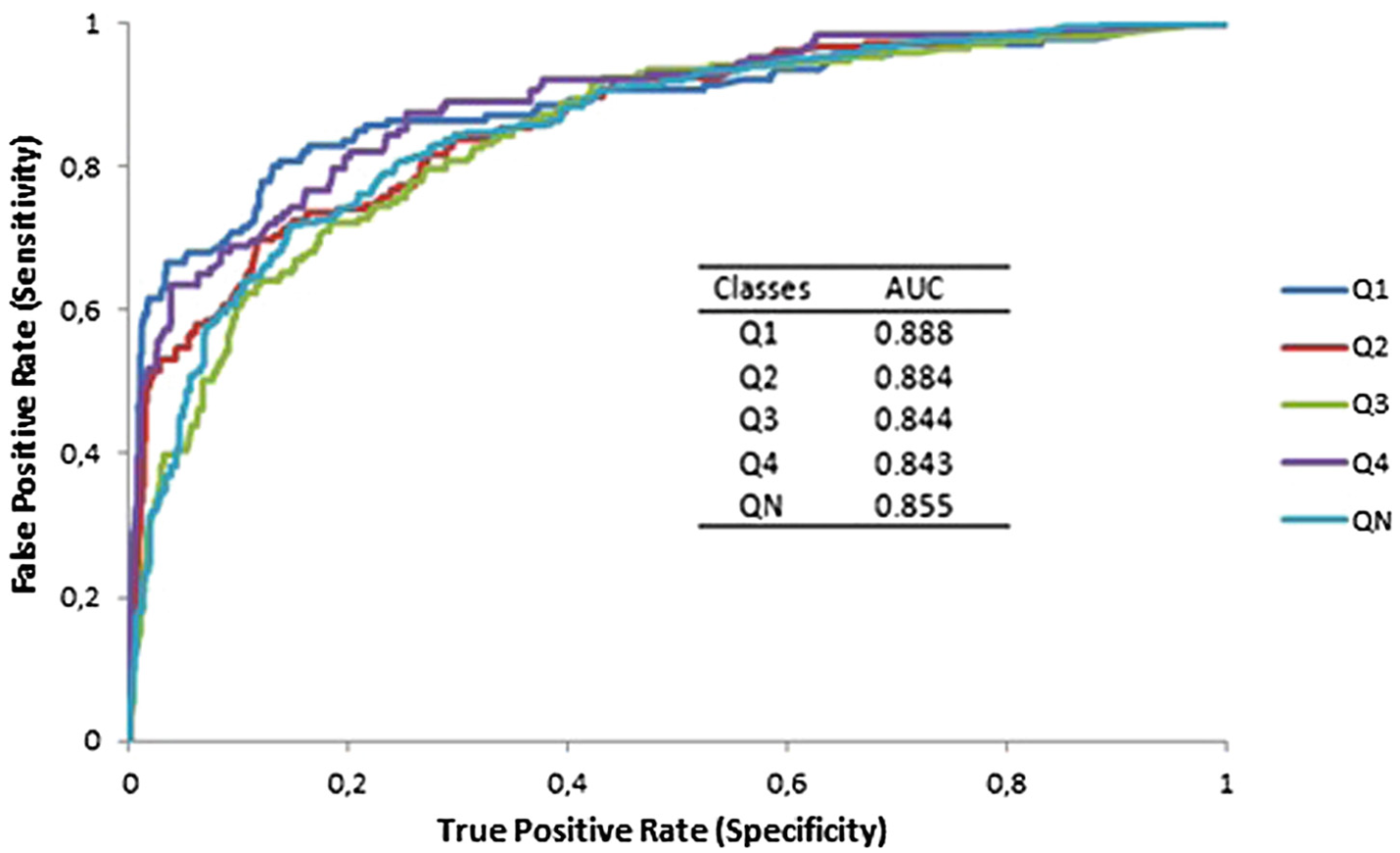
- Accuracy Boost: By using a RandomForest classifier to fuse the 10 attributes (5 physical + 5 cognitive), the system achieved a global accuracy of 64.81%.
- Reliability: The Cohen’s Kappa reached 0.545, which is considered "moderate to substantial" agreement and is significantly higher than existing "sensor-free" or "vision-only" methods.
Deep Insight: Why Hybrid Works
The study highlights a crucial phenomenon: students often maintain a "neutral" face even when they are experiencing internal frustration or joy. As seen in the case of "Student ID 6", the physical component often stayed neutral, while the cognitive component correctly identified shifts in engagement based on the game's difficulty and events.
The fusion of the two allowed the system to remain grounded—preventing "over-reacting" to a single micro-expression while still capturing the underlying emotional trend.
Conclusion and Future Outlook
ModHEmo proves that we don't need "Terminator-style" sensors to understand students. By intelligently logging software interactions and pairing them with simple video feeds, we can build Affect-Aware Tutors that know when to offer help and when to step back.
Limitations & Future Work: The current model relies on manual labeling for training. Future iterations aim to incorporate more "passive" data like mouse movement rhythms and keyboard dynamics to further refine the "Cognitive" component without increasing the hardware burden.
Takeaway for Educators & Devs
To build truly adaptive AI tutors, don't just look at the student—look at the task the student is trying to solve. Context is the best filter for noise.