
Beyond the Ballot: Levering Social Homophily to Recover the Truth
Inferring True Voting Outcomes in Homophilic Social Networks
The paper introduces the Correct Conversation (CC) Model, a novel approach for inferring objective ground truth from binary opinions aggregated over a social network. By assuming a homophilic effect where agents gravitate more easily toward the truth than falsehood, the researchers develop a computationally efficient Maximum Likelihood Estimator (MLE) that outperforms traditional majority voting in homophilic environments.
TL;DR
When people talk before they vote, the "Wisdom of the Crowds" often turns into the "Madness of the Mob" due to social correlation. This paper introduces the Correct Conversation (CC) Model, which proves that we can actually use the structure of these social interactions to improve our guess at the truth, provided that humans are slightly more likely to be convinced by a true argument than a false one.
Context: Why Condorcet Fails in the Real World
Since 1785, the Condorcet’s Jury Theorem has been the bedrock of collective intelligence: if every individual is slightly more likely to be right than wrong, the majority will almost certainly be right. But there is a catch—voters must be independent.
In the age of Twitter, Echo Chambers, and Slack, independence is a myth. We influence our neighbors. If a well-connected "influencer" holds an incorrect opinion, they can flip an entire community, leading a majority-rule system to the wrong conclusion.
The "Correct Conversation" Insight
The authors challenge a 2012 finding by Vincent Conitzer, which argued that social network structure shouldn't change how we count votes. The authors' breakthrough lies in a simple, intuitive assumption: Truth is stickier than falsehood.
In scientific discourse or a stadium dispute, a person with the correct facts usually has a more "convincing" argument. Therefore, if two neighbors agree, it is statistically more likely they are agreeing on the truth than on a lie. This creates homophily—clusters of correct opinions are more tightly knit than clusters of incorrect ones.
The Model Architecture
The likelihood of an outcome being the winner is factored into two components:
- Individual Tendency (): The innate probability of a voter knowing the truth.
- Social Tendency (): The probability of neighbors agreeing.
The CC Model focuses on Concordant Edges—edges where both agents report the same opinion.
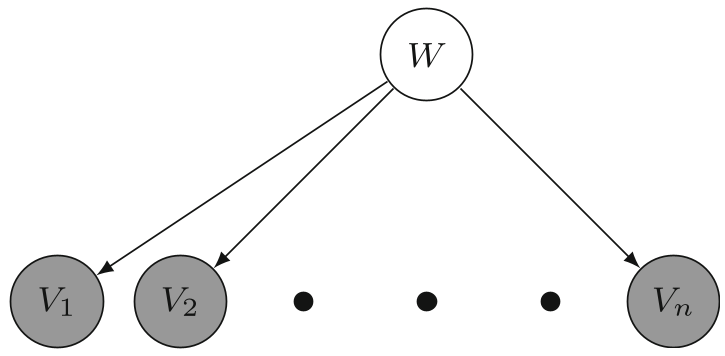 Figure 1: Traditional Condorcet models ignore the connections (left), while the CC model (right) treats agreements between neighbors as high-value signals.
Mathematical Intuition: When do Edges provide "Extra" Info?
The authors prove a fascinating "Neutrality Theorem": In a perfectly random network where voters are assigned opinions regardless of their position, counting edges is just a mathematical transformation of counting votes—it adds no new information.
The Secret Sauce is Homophily. The CC model shines when the network is "Scale-Free" (like the real internet). In these networks, flipping a single "hub" to the truth creates a massive ripple of concordant edges, providing a much stronger signal than a single vote count would suggest.
Experimental Showdown
The researchers tested the CC model against Naive Majority Voting across several graph types:
- Erdös–Rényi (ER): Random connections.
- Barabási–Albert (BA): Scale-free, "hub-and-spoke" networks.
- Real World: The Kapferer Tailor Shop network (a classic social study).
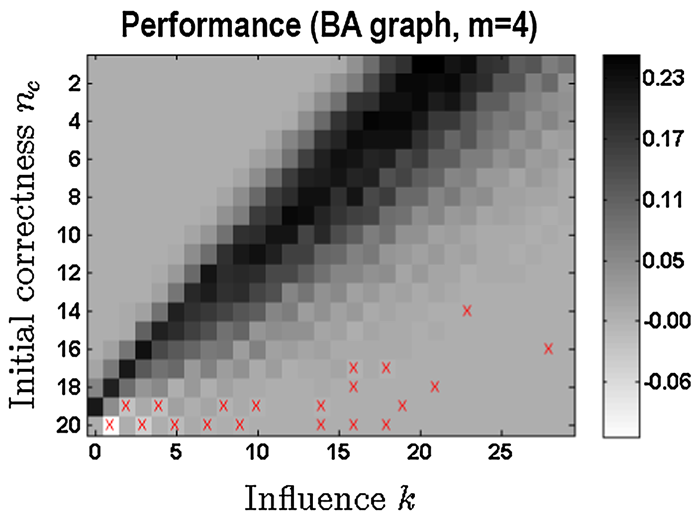 Figure 2: Performance Improvement () heatmaps. Darker regions show where the CC model crushes majority voting.
Key Findings:
- The "Critical Band": The model offers the most significant gains (up to 24%) when the initial "correct" population is small but opinion dynamics have begun to spread.
- Hierarchy Matters: In strictly directed, top-down hierarchies (like a rigid corporate ladder), if the "boss" is wrong, the CC model struggles because the influence is one-way.
- Real World Mastery: In the Kapferer dataset, the model improved truth recovery by 37%, proving that human social structures naturally contain the "truth-bias" the model requires.
Critical Analysis & Takeaways
The CC Model is a powerful tool for modern decision-making. Its primary advantage is that it doesn't need to see the "debate" happen; it only needs the final votes and the social map.
Limitations:
- Symmetry: The model assumes the network is known and static.
- Propaganda: If a network is intentionally designed to spread a lie (asymmetric malicious influence), the "Correct Conversation" assumption is violated, and the model could be misled.
Future Outlook: As we move toward decentralized governance (DAOs) and crowdsourced fact-checking, the CC model provides a blueprint for "Smarter Aggregation." Instead of one-person-one-vote, we should look at one-agreement-one-signal.
Conclusion
This paper shifts the paradigm of social choice. Social networks aren't just conduits for bias; they are structures that—if read correctly—can help us filter the signal from the noise.