
Beyond Followers: Decoding Expert Finding via Influence Analysis in Enterprise Social Networks
Influence Analysis Based Expert Finding Model and Its Applications in Enterprise Social Network
The paper introduces a novel Expert Finding Model based on social influence analysis within Enterprise Social Networks (ESNs). By combining candidate activity metrics and topic correlation indices, the system accurately identifies domain experts from platforms like KDWeibo, moving beyond simple link-based popularity.
TL;DR
Locating the right expert in a massive corporation is often a "needle in a haystack" problem. This paper presents a specialized influence-based model for Enterprise Social Networks (ESNs) that distinguishes between high-status managers and true subject matter experts. By analyzing interaction patterns, the model identifies experts with over 80% precision, ensuring that the most knowledgeable—rather than just the most followed—staff are found.
Context: Why Traditional Search Fails in the Enterprise
In a world where 140-character microblogs are replacing long-form documentation, traditional Information Retrieval (IR) models struggle with "data sparseness." Furthermore, standard social network algorithms like PageRank suffer from the "Executive Bias": a CEO will naturally have more followers than a senior software architect, but that doesn't make the CEO an expert in Java debugging.
The authors argue that true expertise in an ESN is reflected in specific actions—reposts, replies, and mentions—rather than just the static link structure of a "Following" list.
Methodology: The Two Pillars of Influence
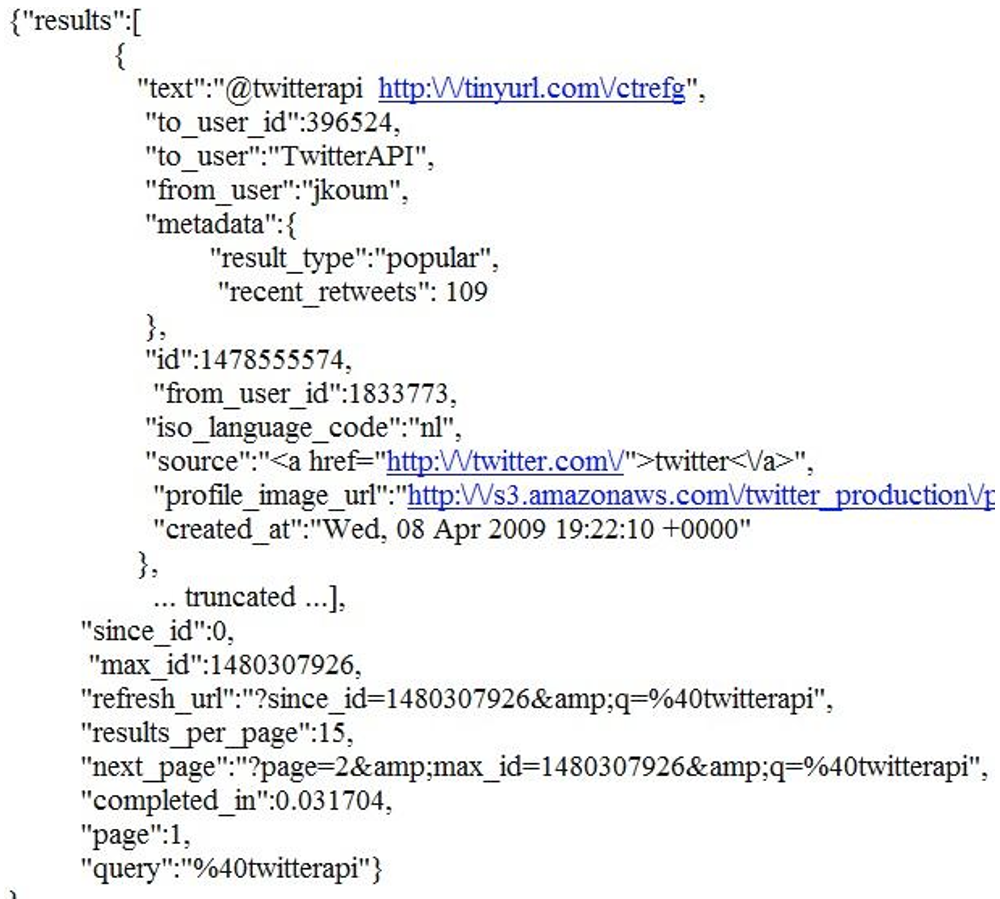
The researchers developed a framework that processes data through a three-step pipeline: Topic Search, Candidate Distillation, and the calculation of an Influence Index Model.
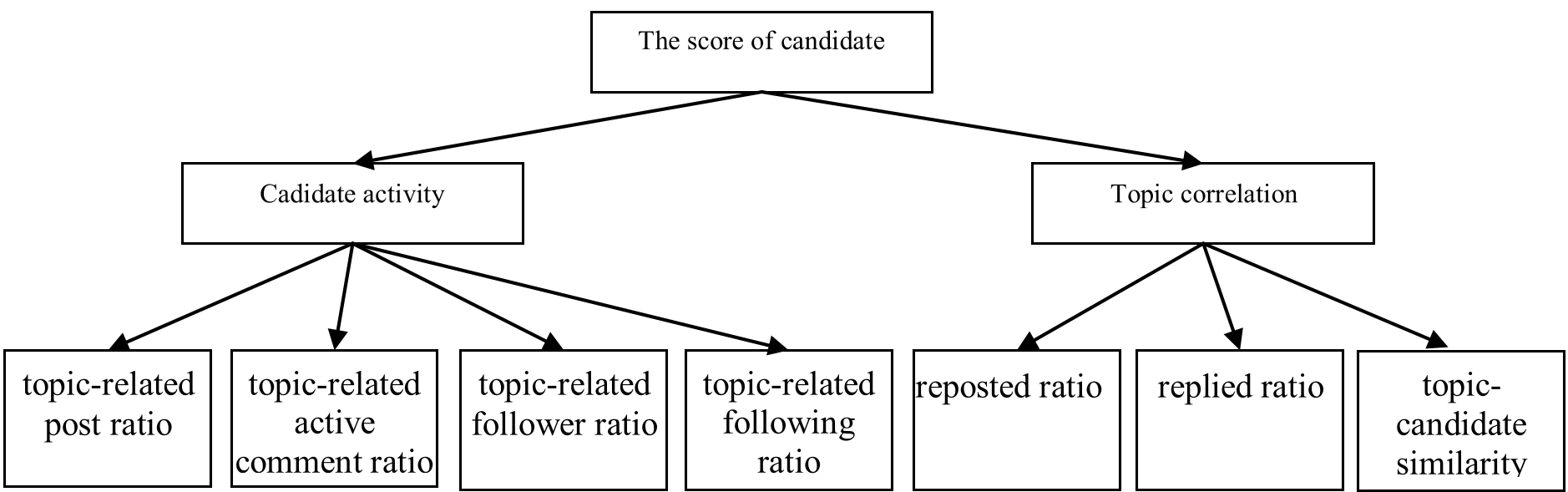
The core of the methodology lies in the dual-index approach:
- Candidate Activity (): This measures how "loud" and "relevant" a user is. It tracks ratios of topic-related posts, comments, and whether their social circle (followers/followings) belongs to the same topic cluster.
- Topic Correlation (): This accounts for "latent expertise." Even if an expert doesn't post frequently (the "Busy Expert" paradox), their influence is captured if others repost their content or mention their name frequently. The authors use a modified TF-IDF to quantify how often a user's name is "cited" within topic-specific microblogs.
To balance these factors, the authors utilized the Analytic Hierarchy Process (AHP) to mathematically determine weights, ensuring the model isn't biased toward just one type of behavior.
Insights from the Data
One of the most striking findings in the paper is the visual difference between the social profiles of managers versus ordinary staff.
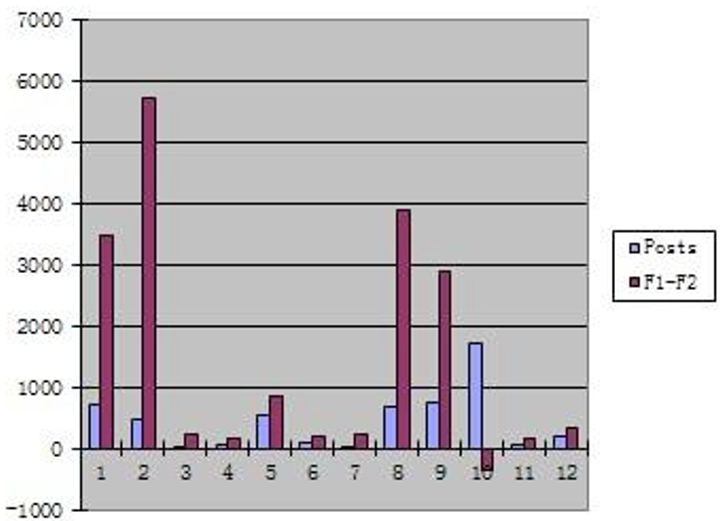
As shown in the charts above, managers (Fig 1a) show a massive gap between followers and following, while ordinary staff (Fig 1b) have a more balanced or inverted profile. By incorporating repost ratios and reply ratios, the proposed model successfully identified "Mr. Peng" (a chief architect) and "Mr. Li" (a senior consultant) as top experts, even though they were not at the top of the organizational chart.
Experimental Performance
The model was tested on KDWeibo, a prominent Chinese ESN platform. The precision metrics were impressive:
- Social Network Topic: P@1 = 0.900
- Supply Chain Topic: P@1 = 0.900
- Cloud Computing Topic: P@1 = 0.856
These results suggest that the system is not just tracking activity, but is effectively capturing the relevance of that activity to the technical domain.
Conclusion & Future Outlook
The beauty of this influence-based approach is its ability to overcome the "lazy expert" problem—capturing knowledge through the social signals of others.
Takeaway for the Industry: As companies embrace "Social BPM," the data generated by employees' daily interactions becomes a goldmine for internal talent discovery. Future iterations of this work aim to integrate with Question & Answer (Q&A) systems and scale using distributed computing like Hadoop to handle the burgeoning data of massive global enterprises.
Limitations: The model currently relies heavily on keyword-based extraction, which may struggle with nuanced or evolving technical jargon. Integrating Natural Language Processing (NLP) for better semantic understanding would be a logical next step.