
Expediting Viral Marketing: A Community-Centric Approach to Information Diffusion
Towards Information Diffusion in Mobile Social Networks
This paper investigates the "Diffusion Minimization Problem" in mobile social networks, aiming to identify a seed set of k individuals to minimize the total network information spread time. It proposes a centralized Community Based Algorithm and a Distributed Set-Cover Algorithm, both outperforming the existing SOTA asymmetric k-center approximation in both synthetic and real-world Facebook trace datasets.
TL;DR
Most viral marketing research asks "How many people can we reach?" This paper asks a more urgent question: "How fast can we reach everyone?" By reframing information diffusion as a "Diffusion Minimization Problem," the authors introduce two powerful algorithms—one community-based and one distributed—that dramatically outpace traditional mathematical approximations in both speed and computational efficiency.
The Need for Speed in Social Networks
In the era of "word-of-text" and "word-of-video," information spreads through mobile social networks via opportunistic contacts (Bluetooth, Wi-Fi Direct) and online interactions. For companies launching a new product or individuals spreading critical ideas, the goal isn't just to reach a threshold of users, but to minimize the latency of the entire network's adoption.
Why Standard Models Fail
The authors model the expected diffusion time as: where represents contact frequency. This leads to an asymmetric k-center problem. The existing SOTA approximation for this NP-hard problem is computationally "heavy" () and produces results that aren't optimized for the unique cluster-heavy nature of human social structures.
Methodology: Social Intuition meets Graph Theory
1. Community-Based Algorithm (Centralized)
The core insight is simple yet profound: Within a community, information spreads like wildfire; between communities, it crawls.
The algorithm works through two main phases:
- Community Merge: If the number of communities is greater than the allowed seed count , it merges "closely connected" communities to minimize the resulting "Diffusion Radius" (the maximum time to reach any node in that community).
- Restoring & Seeding: It identifies the "Central Node" of each merged or original community. If , it intelligently places extra seeds in communities with the largest diffusion radii to maximize speed.
 Figure: The merging and restoring process ensuring that seeds are strategically placed to cover the slowest portions of the network.
2. Distributed Set-Cover Algorithm
What if you don't have the global "God-view" of the network? The authors propose a distributed solution where nodes send out probing messages.
- Probabilistic TTL: Instead of a hop count, the Time-to-Live (TTL) is the "Available Diffusion Time."
- Discovery: As messages travel, nodes build an "Up-to-date Diffusion Set"—the list of nodes they can realistically reach within a time budget .
- Selection: Using a greedy set-cover approach, the network selects nodes whose combined sets cover the maximum population.
Experimental Results: Slaying the Baselines
The authors tested their methods against the "Asymmetric k-center Approximation" and a "Closeness Centrality Naïve Algorithm."
Synthetic Benchmarks
In heterogeneous networks (where connections vary wildly), the Community-Based Algorithm outperformed the standard approximation by up to 40% in expected diffusion time.
Facebook Trace Analysis
Using real-world data from the New Orleans Facebook network, the results were even more startling:
- Reach: With 100 seeds, the Community algorithm informed 50% of the network, while the standard approximation reached less than 30%.
- Efficiency: The proposed algorithms run in , a massive improvement over the complexity of previous methods.
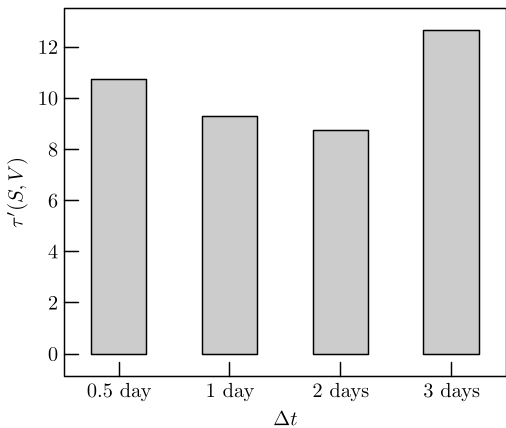 Figure: Community and Distributed Set-Cover consistently outperform the approximation across different seed (k) counts.
Critical Insights & Takeaways
The transition from global mathematical models to community-aware heuristics is a major leap for mobile social computing.
- Topology Matters: Pure distance-based models ignore the "clumpiness" of human interaction. By centering the strategy on communities, we align the algorithm with the natural flow of human communication.
- Distributed Power: The fact that the Set-Cover algorithm (which lacks global info) outperformed the global Approximation algorithm suggests that local, up-to-date contact information is more valuable than stale global topology in dynamic mobile environments.
Limitations
While robust, the community-based approach assumes communities are relatively stable. In hyper-dynamic networks where users move rapidly across cities, the "diffusion radius" might require frequent re-calculation, potentially increasing the overhead for the centralized version.
Conclusion
This work provides a blueprint for lightning-fast viral marketing. By understanding that "who you know" is less important than "how fast your community talks," the authors have turned a complex NP-hard problem into a manageable, socially-aware optimization task.