
Why We Click 'Share' on Bad News: The Psychology of Reposting Negative Information
Information Processing and Management
This study investigates the drivers of Reposting Negative Information (RNI) on microblogs (e.g., Sina Weibo). It develops a dual-pathway model incorporating affective (negative emotions) and cognitive (issue involvement) responses, combined with the Big-Five personality trait model to identify how individual differences moderate viral negative content dissemination.
TL;DR
Why does a scandal or a food safety scare go viral in minutes, while positive news struggles for traction? This study dives into Reposting Negative Information (RNI) on microblogs. It identifies that our urge to share stems from both a venting of negative emotions and a cognitive assessment of relevance (Issue Involvement). Crucially, your Big-Five personality traits act as the ultimate gatekeepers, either accelerating or putting the brakes on this digital wildfire.
Background: The Power of the "Negativity Bias"
In the digital age, "Bad is stronger than Good." Negative information is prioritized by our brains, leading to faster dissemination on platforms like Sina Weibo or X (Twitter). Unlike original content creation (which takes effort), "reposting" is a low-cost, high-impact action. The authors argue that RNI is a unique behavior distinct from traditional knowledge sharing because it often involves non-original content and events not directly experienced by the user.
The Dual-Pathway Mechanism
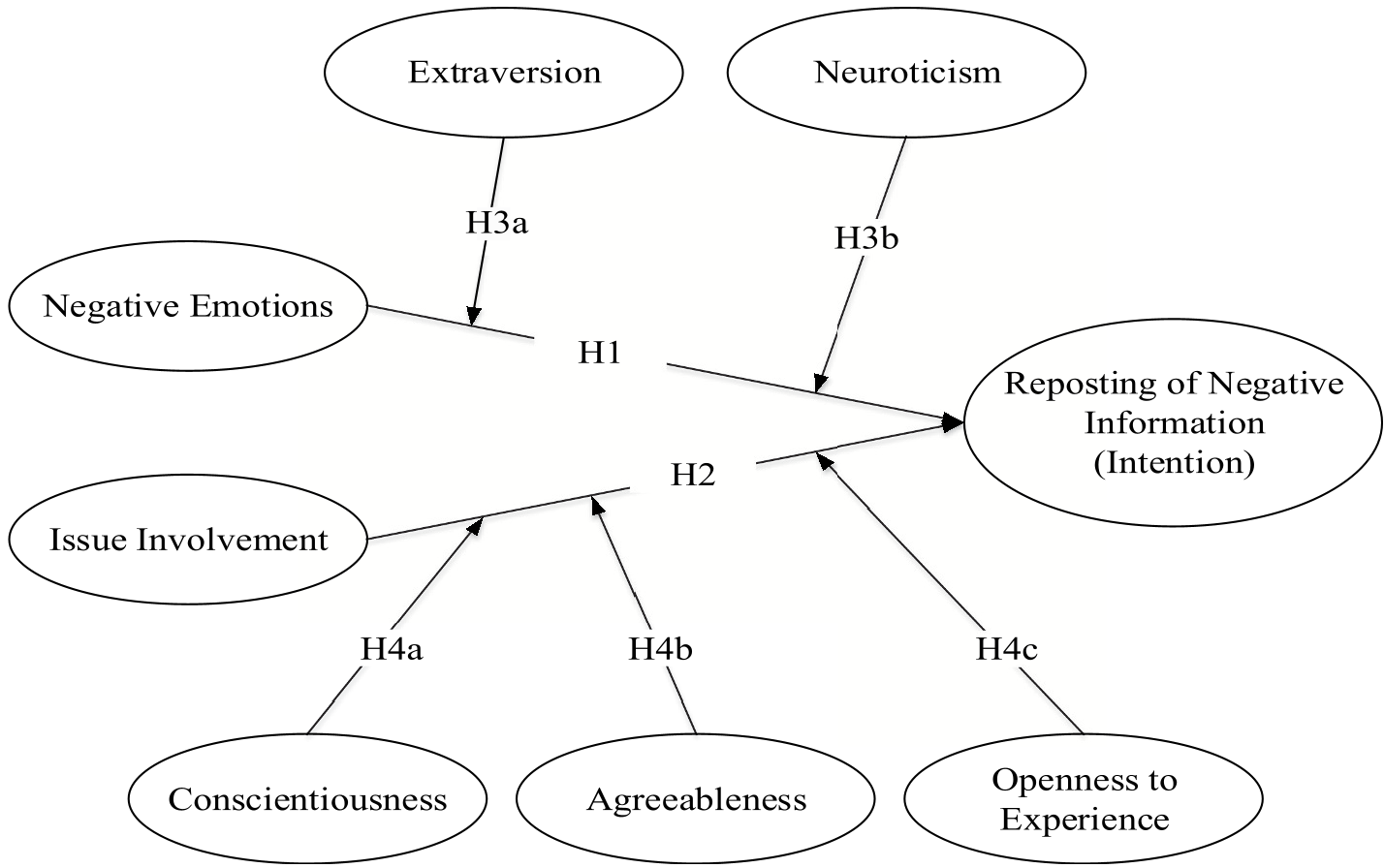
The researchers propose that when we encounter negative news, two systems light up:
- The Affective Pathway (Negative Emotions): Sharing acts as a "social sharing of emotions." We repost to release the anger, sadness, or anxiety the news triggered.
- The Cognitive Pathway (Issue Involvement): We evaluate how much the news "matters" to us or our community. High relevance triggers a deliberate decision to increase the news's publicity.
How Personality Traits Moderate the Fire
The most striking insight of this paper is how specific personality traits interact with these pathways.
1. Extraversion as a "Buffer"
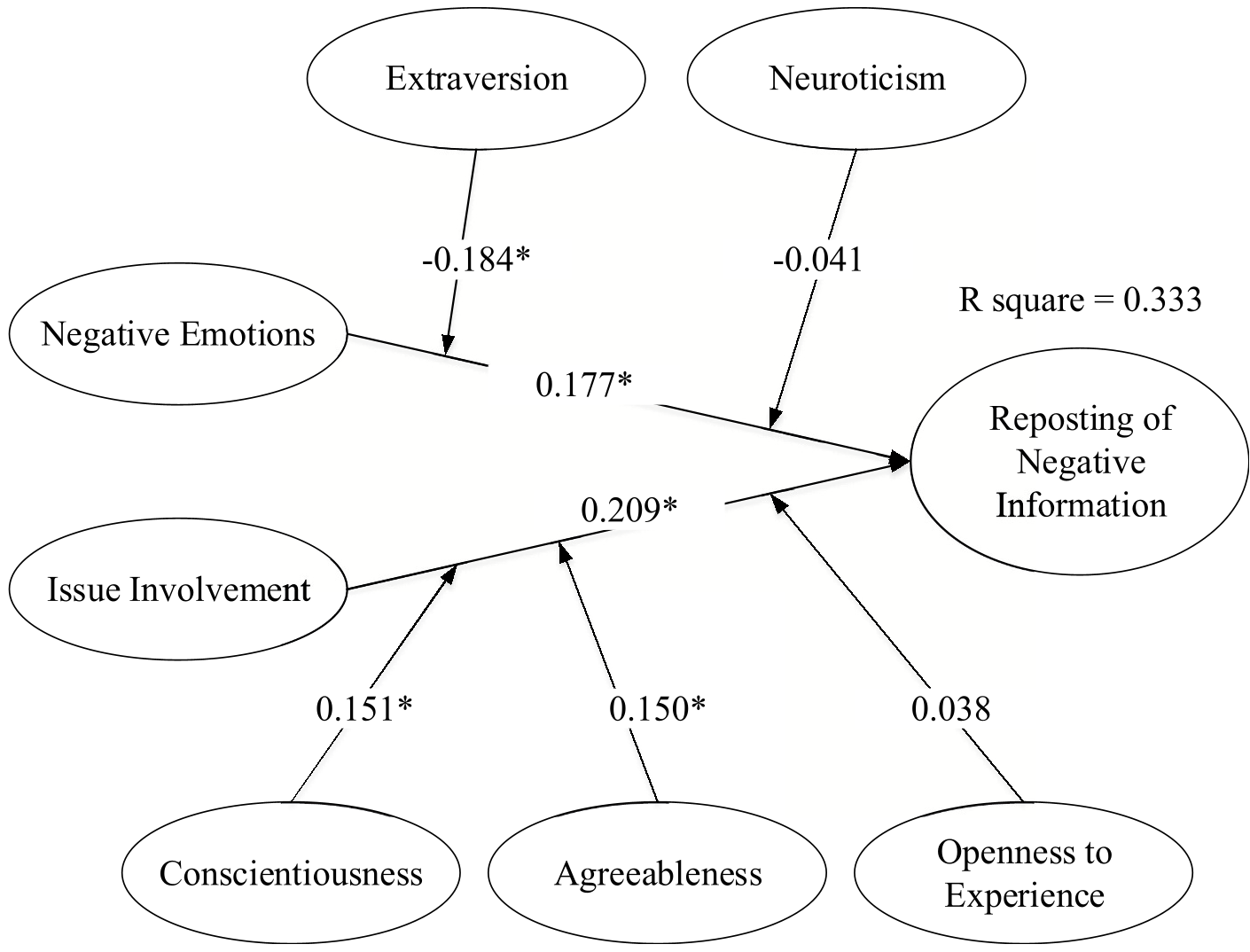
Interestingly, extraversion weakens the link between negative emotions and sharing. Why? Extraverts are naturally more sensitive to positive stimuli. When they feel "bad" about a post, their optimistic temperament dilutes the intensity of that emotion, making them less likely to hit "repost" purely out of anger compared to introverts.
2. Conscientiousness & Agreeableness as "Amplifiers"
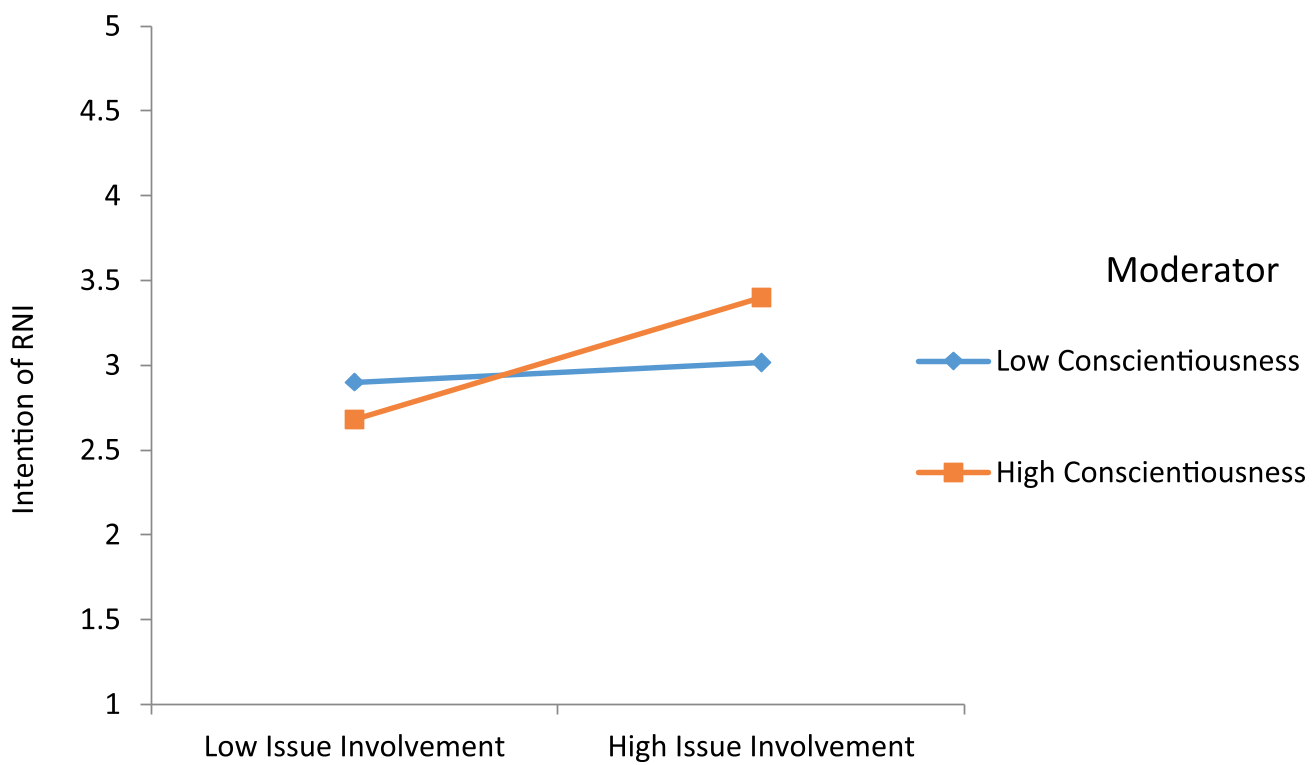
For the cognitive pathway, highly conscientious (organized, responsible) and agreeable (kind, cooperative) individuals are more likely to share if they feel the issue is relevant.
- Conscientious users share because they feel a responsibility to warn others about potential risks (e.g., food safety).
- Agreeable users share because they care about the welfare of their social circle and believe the information is helpful for others to know.
Experimental Evidence
The team conducted an online survey using a real-world scenario: a scandal involving smuggled, rancid meat in a warehouse in China.
- Direct Effects: Both negative emotions () and issue involvement () were significant predictors of RNI intention.
- The Personality "Filters": The data showed clear interaction effects, confirming that personality dictates how we react to the triggers.
Deep Insight: A New Strategy for Content Creators & Crisis Managers
For practitioners, this research offers a "User Persona" map for information control:
- For Content Creators: To maximize virality, use emotive language to trigger "Negative Emotions" and local/personal hooks to increase "Issue Involvement."
- For Crisis Management: Don't treat all users the same. Organizations should focus their PR efforts on "Highly Involved" groups (Conscientious/Agreeable) who feel a moral duty to spread the news, rather than just trying to silence the loudest emotional voices.
Conclusion
This study moves beyond simple "sharing" metrics to show that the spread of negative news is a complex interplay between the nature of the news and the DNA of the user. While we cannot change people's personalities, understanding these cognitive and affective pathways allows us to better predict—and perhaps mitigate—the next social media panic.
Takeaway: Your personality isn't just how you act in person; it's the invisible hand that decides what the world sees on their feed next.