
Beyond the Virus: Deciphering Information Propagation in Social Networks
Information Propagation Analysis in a Social Network Site
This paper presents an empirical analysis of information propagation on the social network site Friendfeed, utilizing a Large Social Database (LSD) of nearly 10 million entries. The authors identify key "propagation enablers" and demonstrate that information spread is dictated by user interaction patterns rather than just technical network topology.
TL;DR
Information doesn't just "spread"—it is shared through conscious human interaction. By analyzing the Friendfeed ecosystem, this paper uncovers that the "High Priority Network" (actual active relationships) is significantly smaller than the "Technical Network" (total followers), and that internal engagement is the primary engine for visibility.
Contextualizing the Study
In the landscape of social media research, this work acts as a bridge between pure graph theory and digital sociology. While many models treat information like a virus (epidemiology), the authors argue that in Social Network Sites (SNS), Exposition ≠ Contagion ≠ Spreading. A user must decide to participate, making the spread an active, interest-driven process rather than a passive infection.
The Problem: The Flaw in Random Contact Models
Most prior models (like Kermack-McKendrick) assume a standard rate of random contacts. However, human digital behavior is governed by routines and selective relevance.
- Passivity vs. Collaboration: In a virus outbreak, you don't choose to be infected. In a SNS, you choose to comment, thereby "vaccinating" the information against obscurity and pushing it to your own followers.
- Simple Graphs vs. Social Complexity: A follower count (Technical Network) is often a "vanity metric" that doesn't reflect the actual paths information takes.
Methodology: Mapping the Propagation Enablers
The research utilized a massive snapshot of Friendfeed data (9.3M entries, 15M relationships). The authors focused on three dimensions:
- User Modeling: Tracking daily and weekly production cycles (peaks during workdays, troughs during weekends).
- Network Modeling: Distinguishing between the 15 million technical links and the ~160,000 "active" links that actually facilitate conversation.
- Conversation Modeling: Measuring the "lifetime" of a discussion.
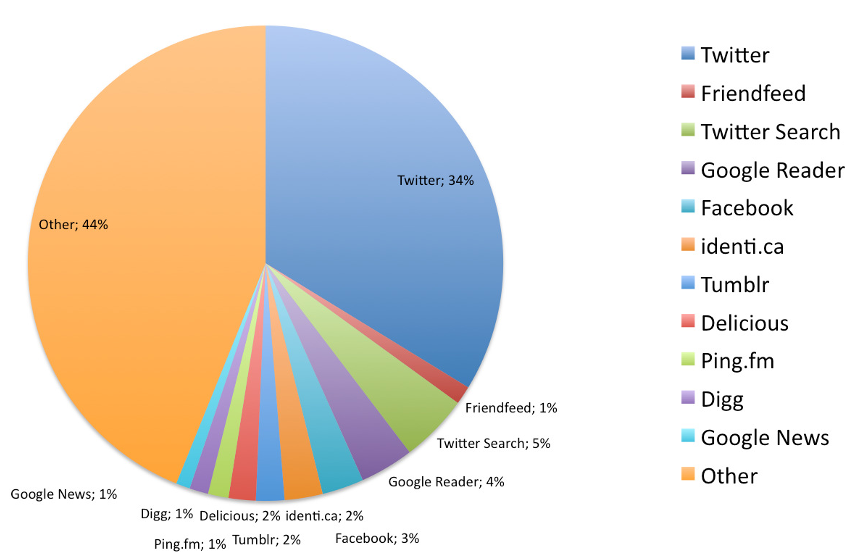 Fig 1: The study highlights how Friendfeed acts as a hub, yet internal content (FF) drives vastly more engagement than imported feeds.
Key Insights & Experimental Results
1. The Power of Native Content
The study found a massive disparity in engagement based on the source of the information.
- Friendfeed Native: Avg 1.07 comments per post.
- Twitter/YouTube Imports: Avg 0.04-0.05 comments per post.
- Insight: Simply "cross-posting" doesn't trigger propagation; the medium is the message.
2. Information Overload Threshold
The researchers found that the correlation between posting frequency and receiving comments isn't linear.
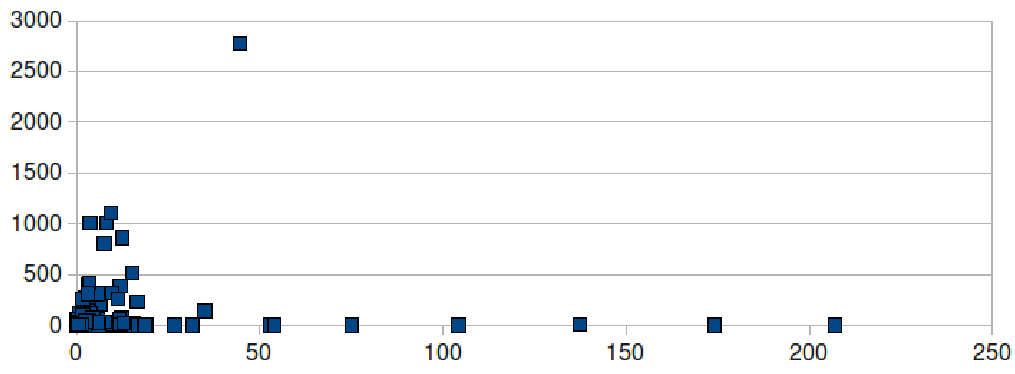 Fig 2: As posting frequency increases beyond a certain point, the number of comments received actually diminishes.
3. The Paradox of "Emotional Bursts"
Counter-intuitively, the most highly commented entries often have the shortest lifespans.
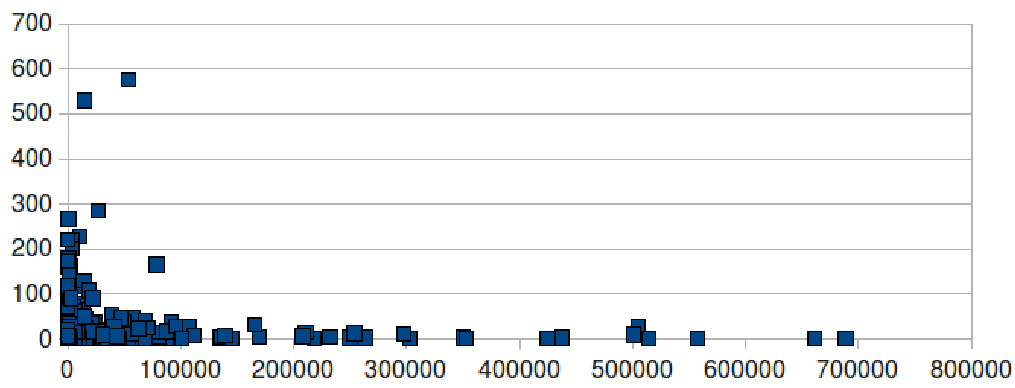 Fig 3: Most conversations (85%) die within a day. Rapid-fire commenting usually indicates "breaking news" or "emotional support" that burns out quickly.
Critical Analysis & Conclusion
The core takeaway is that High Priority Networks are the true backbone of information spread. While a user might have 1,000 followers, they likely only have ~13 "active" followers who drive their content's visibility.
Limitations: The study is based on a specific platform (Friendfeed) which, while unique in its aggregation, has since been eclipsed by more specialized platforms. The "High Priority" threshold is also somewhat arbitrary and varies by community.
Future Outlook: As we move into an era of algorithmic "For You" feeds, the "technical network" (following) is becoming even less relevant. This paper's early insight into active participation as the primary signal for propagation is now the fundamental logic behind TikTok and Instagram's current algorithms.