
Decoding Virality: What Actually Drives Information Spread in Social Networks?
Relationship between information propagation efficiency and its influence factors in online social network
This paper investigates the key factors influencing information propagation efficiency in online social networks using a dataset of 2,000 Sina Weibo (micro-blog) posts. The study identifies that propagation efficiency follows a rapid decay curve and is significantly correlated with user-specific metrics like follower counts and prior activity levels.
TL;DR
In the digital age, understanding why some posts go viral while others vanish is the "Holy Grail" of marketing. This study analyzes 2,000 micro-blogs to prove that propagation is a race against time—peaking in the first 24 hours—and reveals that having a high follower count is the only consistent driver of efficiency, while excessive posting might actually hurt your reach.
The "User-Centric" Hurdle
Unlike traditional web media where content is king, social networks are user-centric. Information flows through a complex "mesh structure" of relationships. The problem with prior research is that it often overlooks how variables interact. Does a high posting frequency help because you are active, or hurt because you dilute your influence? The author addresses this by diving into Sina Weibo data to find the mathematical "why" behind the "what."
Methodology: Beyond Simple Correlations
The study defines Propagation Efficiency (E) as:
The author doesn't just look at one factor. They analyze:
- User Metrics: Number of Attentions (following), Fans (followers), and Total Micro-blogs.
- Contextual Metrics: Publication time and Content Classification.
Using Partial Correlation Analysis, the researcher was able to "freeze" certain variables to see the true impact of others, moving beyond surface-level observations.
Key Insights: The 24-Hour Rule
The data reveals a brutal reality for content creators:
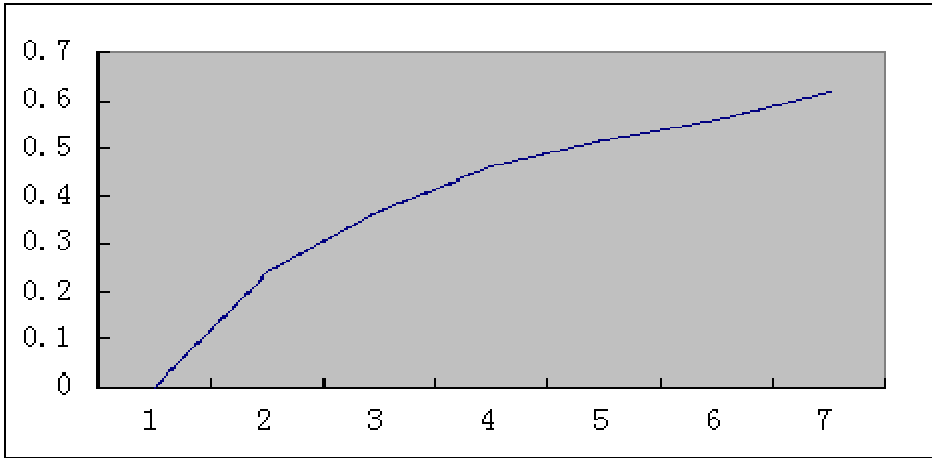
- The Decay Curve: The first day accounts for the vast majority of spread. By the third day, 37% of posts have reached a total standstill. By day seven, 59% of posts are effectively "dead."
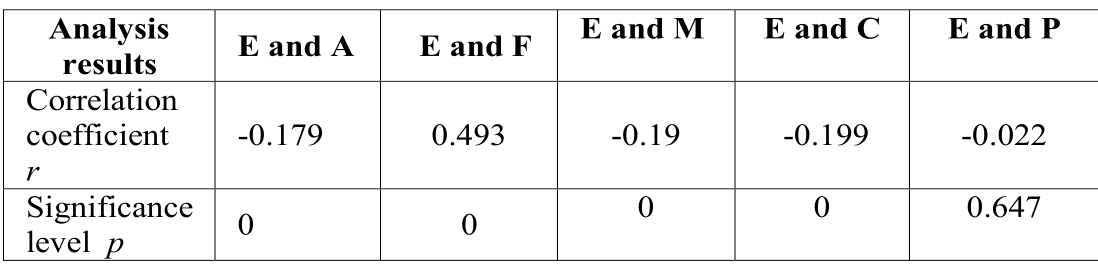
- The "Fans" Factor: There is a moderate positive correlation () between fans and efficiency. This is the strongest predictor found.
- The "Attention" Paradox: Interestingly, the number of people a user follows (Attentions) is negatively correlated with their propagation efficiency. This suggests that "follow-for-follow" accounts or extreme social climbers may suffer from lower engagement quality.
Deep Dive: Why More Isn't Always Better
One of the most counter-intuitive findings is that the total number of micro-blogs published by a user is negatively correlated with efficiency ().
- The Intuition: Users who post incessantly may be perceived as "spammy" or lower quality, leading their audience to ignore new posts.
- The Statistical Evidence: Even after eliminating other factors via partial correlation, the negative relationship between high activity and efficiency remained significant.
Conclusion & Perspective
This work provides a quantitative backbone for social media strategy. The Takeaway is clear: Focus on building a high-quality fan base rather than mass-following others or flooding the feed with content.
Limitations: The study focuses on Sina Weibo, which has a specific user demographic. Future work should investigate if these correlations remain stable in the age of algorithmic feeds (like TikTok), where the relationship between "Fans" and "Reach" has been partially decoupled by AI discovery engines.