
Securing the Crowd: Mitigation Strategies for Information Security in Smart Cities
Information security in a public safety, participatory crowdsourcing smart city project
This paper investigates information security factors in a public safety participatory crowdsourcing project within a Smart City context. Using a case study from East London, South Africa, it defines a framework integrating legislation, technology, and human factors to safeguard the Confidentiality, Integrity, and Availability (CIA) of citizen-reported data.
Executive Summary
TL;DR: This research addresses the critical barrier to Smart City adoption: Citizen Trust. By analyzing a public safety crowdsourcing project in South Africa, the authors identify that while participatory methods reduce initial privacy risks, long-term participation hinges on a robust Information Security framework (CIA triad) supported by legislation, technology, and transparent communication.
Positioning: This work serves as an empirical bridge between theoretical Smart City frameworks and the practical socio-technical challenges of deploying security-sensitive systems in developing urban environments.
The Paradox of Smart City Data
Smart cities thrive on data to optimize resources like waste management, traffic, and emergency response. However, this creates a "Big Brother" dilemma. The authors distinguish between two primary data collection methods:
- Crowdsensing (Opportunistic): Sensors capture data without active user intervention (High privacy threat).
- Crowdsourcing (Participatory): Users voluntarily report incidents (Lower initial privacy risk, but high post-submission security risk).
The core motivation of this study is that even when citizens choose to share data for public safety, they fear the consequences of that data being mishandled, leaked, or used for "identity appropriation."
Methodology: The CIA Triad in Action
The researchers deployed an Interactive Voice Response (IVR) system and a mobi-site in East London, South Africa. This dual-channel approach specifically targeted the digital divide, allowing both illiterate users and those with limited data budgets to participate.
The Methodology focuses on three pillars of Information Security:
- Confidentiality: Preventing exposure to unauthorized individuals.
- Integrity: Ensuring data remains uncorrupted and accurate.
- Availability: Ensuring systems are accessible 100% of the time, especially during emergencies.
Core Findings: What Citizens Actually Want
The study’s empirical data reveals a high level of security awareness among urban residents:
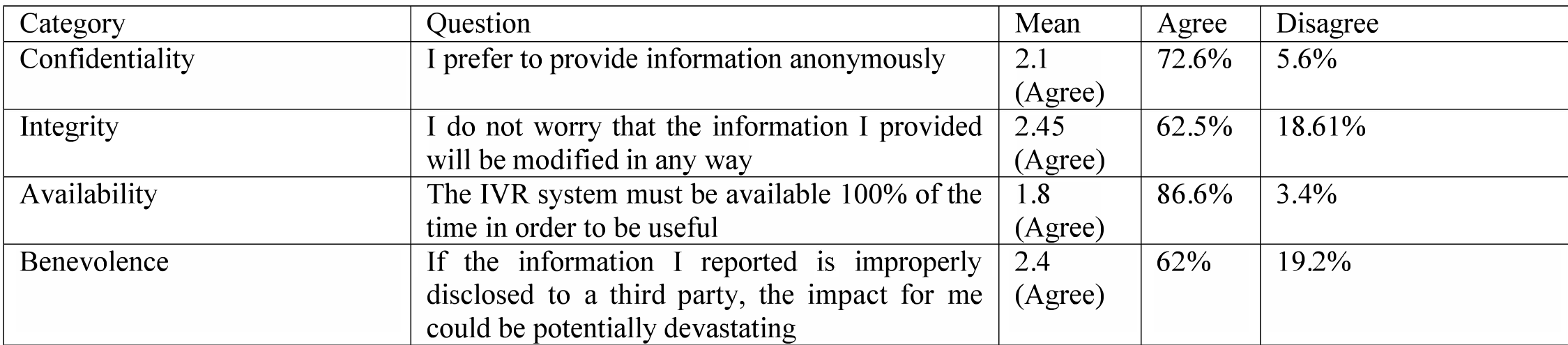
- Anonymity is Non-Negotiable: 72.6% of users want to report information anonymously.
- Availability equals Utility: In public safety, if a system isn't available 100% of the time, participants view it as useless.
- Fear of Reprisal: 62% believe improper disclosure of their reports could lead to "devastating" consequences.
The Proposed Framework: Trinity of Trust
To mitigate these concerns, the paper proposes a holistic approach:
1. Institutional Factors (The Law)
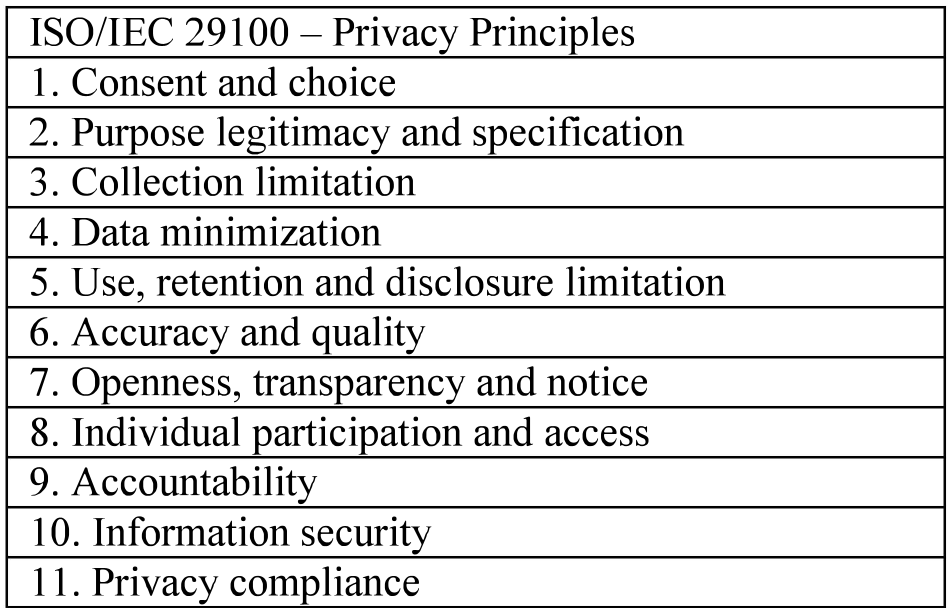
Authorities must move beyond "blind trust" by adopting global standards like ISO/IEC 29100. Privacy principles such as "Data Minimization" and "Purpose Legitimacy" must be codified into local policy.
2. Technological Factors (The Shield)
Technical safeguards are mandatory to protect the Integrity and Confidentiality of the crowd. Key recommendations include:
- Encryption and Digital Signatures: To prevent tampering.
- Statistical Disclosure Control: Using noise addition, rank swapping, and pseudonyms to protect identities within large datasets.
3. People (The Bridge)
Perhaps the most insightful contribution is the emphasis on Feedback Mechanisms. Citizens need "proof of benevolence." When the city provides evidence (e.g., a dashboard showing how a reported accident led to faster emergency response), it creates a positive reinforcement loop that increases trust and participation.
Critical Insight & Conclusion
The study concludes that Information Security in a Smart City is not merely a technical problem of "better encryption"—it is a social contract. The success of participatory systems depends on the local authority's ability to communicate security controls clearly and demonstrate how data is handled with integrity.
Future Outlook: As cities integrate more AI-driven predictive analytics, the challenge will be maintaining transparency in how these "black box" algorithms utilize citizen-contributed data without violating the early principles of consent and choice.