
USNB: Breaking the Walled Gardens—Toward a Universal Social Network Bus
CCS Concepts: • Information systems → Social networks; Internet communications tools; Service buses; • Computer systems organization → Distributed architectures
The paper introduces the Universal Social Network Bus (USNB), a middleware framework designed to federate heterogeneous Online Social Network Services (OSNSs). It enables users on different platforms (e.g., Facebook Messenger, Slack, Email) to interact seamlessly through a "service bus" architecture and synthetic personae, achieving "social interoperability" without requiring users to create multiple accounts.
TL;DR
The Universal Social Network Bus (USNB) is a middleware solution that allows users on closed platforms like Facebook Messenger to talk to users on Slack or Email without leaving their preferred app. By treating social networks as a unified "bus" and using synthetic digital twins (personae), it effectively solves the "platform lock-in" problem.
Executive Summary
In the modern digital landscape, we are siloed. If your friends are on WhatsApp and you are on Signal, you are effectively socially invisible to one another. This paper, "Universal Social Network Bus," proposes a radical architectural shift: moving from isolated platforms to a federated social reachability graph. By leveraging the classic "Service Bus" paradigm from enterprise software, the authors demonstrate that technical and social interoperability can coexist, even when platform owners refuse to cooperate.
The Pain Point: The Prison of Walled Gardens
The "walled garden" effect is a deliberate business strategy where OSNS providers (Facebook, LinkedIn, etc.) restrict data and interaction to their own proprietary ecosystems.
- User Burden: You end up managing 10 different accounts just to reach different social circles.
- Data Fragmentation: Your digital identity is scattered and redundant.
- The "Open" Failure: Even "open" networks like Mastodon or Diaspora often create new silos because they lack the critical mass to bridge into the "closed" giants.
Methodology: The "Social Bus" & Synthetic Personae
The core innovation is the USNB Persona. Think of a Persona as a specialized translator bot. If User A (on Messenger) wants to talk to User B (on Email), the USNB creates a synthetic profile for User B inside Messenger.
Architectural Breakdown
The system follows a hub-and-spoke model mediated by a RabbitMQ Broker:
- Reference Social Interaction Service: A common language the bus speaks.
- Personae: Adapters that translate "Messenger-speak" or "Slack-speak" into the Bus's common language.
- Social reachability graph: A mathematical model that defines who can talk to whom via which relays (human or software).
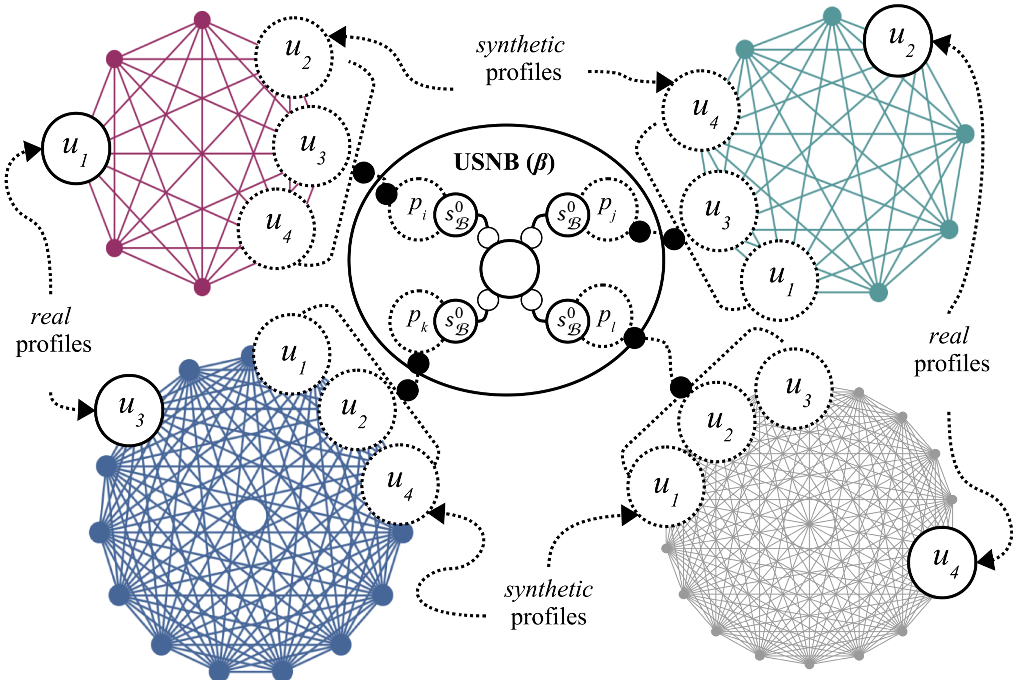 Figure 1: The USNB High-level Architecture showing the Subscription Manager and Distributed Personae.
Experiments & Real-World Validation
The authors didn't just theorize; they built a prototype connecting Facebook Messenger, Slack, and Gmail.
Key Findings:
- Efficiency: 90% of testers found the communication "efficient."
- Intuition: Over 70% found the interface convenient for cross-platform contact management.
- The "Older Generation" Bridge: One insight was that USNB allows younger users (on social apps) to communicate with older generations (who mostly use email) without the friction of platform migration.
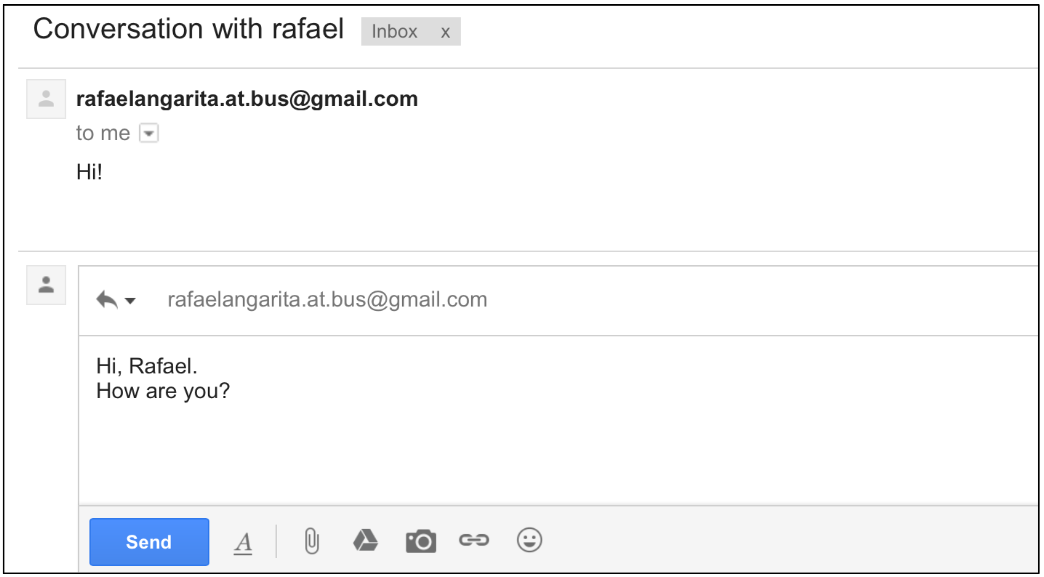 Figure 2: A real-world interaction where a Messenger user talks to an Email user via the "SocialBus" persona.
Critical Insight & Future Outlook
While technically sound, the paper honestly addresses the elephant in the room: Trust and Privacy.
- The Third-Party Risk: Since USNB acts as a mediator, it essentially sees the traffic between both ends. This requires robust encryption and trust management.
- Closed API Pushback: Closed OSNSs frequently change their APIs to block such "adapters." The authors suggest that if USNB-like federations gain enough popularity, the resulting "Network Effect" will force platform owners to allow interoperability to avoid losing users entirely.
Conclusion (Takeaway)
The USNB is a major step toward a post-platform social internet. By prioritizing the Social Reachability Graph over the platform's bottom line, it paves the way for "Participatory Budgeting" and other civic tools that need to reach everyone, regardless of whether they have a Facebook account.
Wait for the Future: The next step is the Automated Synthesis of Personae, where AI could potentially generate the translation code for new, niche social networks automatically.