
The Duality of Disclosure: A Phenomenological Look at Social Media Privacy
Exploring Informational Privacy Perceptions in the Context of Online Social Networks: A Phenomenology Perspective
The paper proposes a conceptual framework for informational privacy in Online Social Networks (OSNs) using a phenomenology approach. It identifies three core dimensions—limited communication, release of personal information, and control—derived from in-depth focus group interviews to capture the "lived experiences" of users.
TL;DR
This research moves beyond simple "yes/no" privacy surveys to explore how users actually experience privacy on social networks. By using a phenomenology approach, the study uncovers a conceptual framework centered on Control, Limited Communication, and the Strategic Release of Information, revealing that users aren't necessarily "giving up" privacy; they are managing it as a dynamic trade-off.
Background: The Limits of Expert Opinion
Why do users post their entire lives online while claiming they care about privacy? This "Privacy Paradox" has long puzzled researchers. Most prior work uses quantitative surveys which often fail because they are researcher-biased—asking questions that don't reflect how a user feels in the moment of sharing. This paper argues that to understand privacy, we must look at the lived experience of the users themselves.
Motivation: Why Does This Matter Now?
Online Social Networks (OSNs) are essentially "identity construction" sites. To gain value, you must share. However, public scandals and questionable data handling have created a "concerned situation" where users might withdraw from platforms if they feel they've lost control. The author notes that "expert opinions" on privacy often fail to reflect the actual needs of the average undergraduate or professional user, necessitating a bottom-up approach.
Methodology: The Phenomenology Perspective
Instead of a survey, the researcher used focus group interviews with educated, frequent OSN users (with at least 2 years of experience).
The Framework
The core of the paper is the discovery of 17 themes, including four brand-new dimensions not significantly addressed in previous literature:
- Security: The technical safety of disclosed data.
- Inappropriate/Unrelated Association: The fear of being linked to content that doesn't fit one’s "ideal self."
- Options: The demand for granular choices in revelation.
- Misuse of Information: Concerns regarding third-party exploitation.
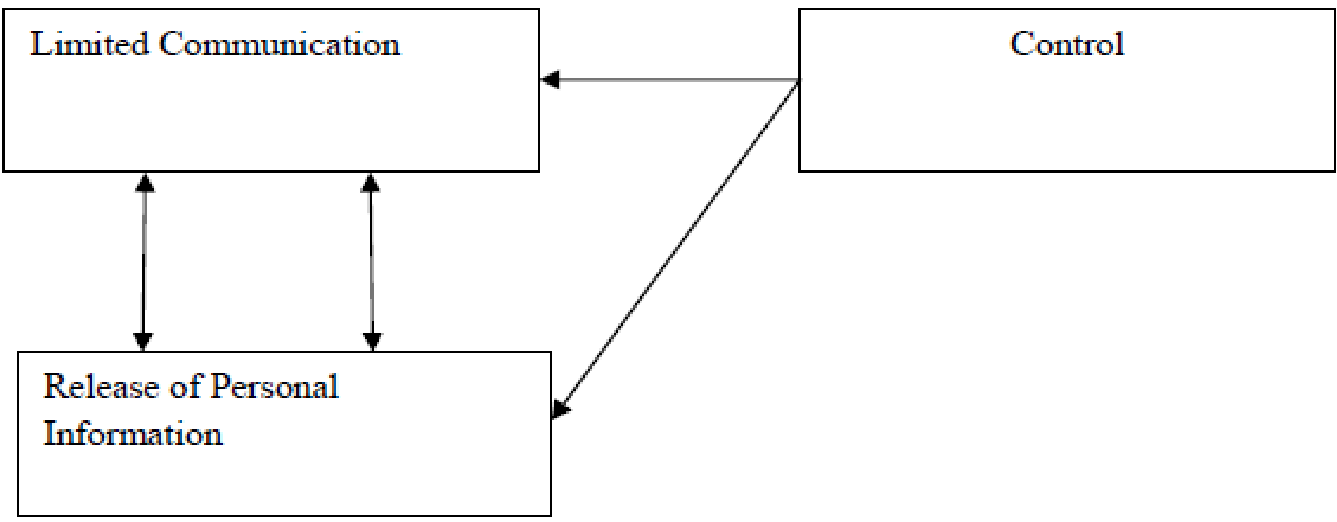
The proposed framework (shown above) illustrates the interplay of three constructs:
- Control: The overarching ability to decide who sees what.
- Limited Communication: Restricting data to "trusted others."
- Release of personal information: Managing the volume and type of content shared.
Critical Insight: The Duality of Exposure
The study highlights a fascinating "Duality of the Phenomenon": The more a user exposes their network (socializing), the more limited and calculated the specific personal information they disclose becomes.
Users view OSNs as a medium for sharing, but they distinguish between socializing and privacy invasion based on the concept of Trusted Others. If a user cannot decide who captures or uses their information, they feel a loss of "Personhood" and "Privacy."
Experiments & Qualitative Results
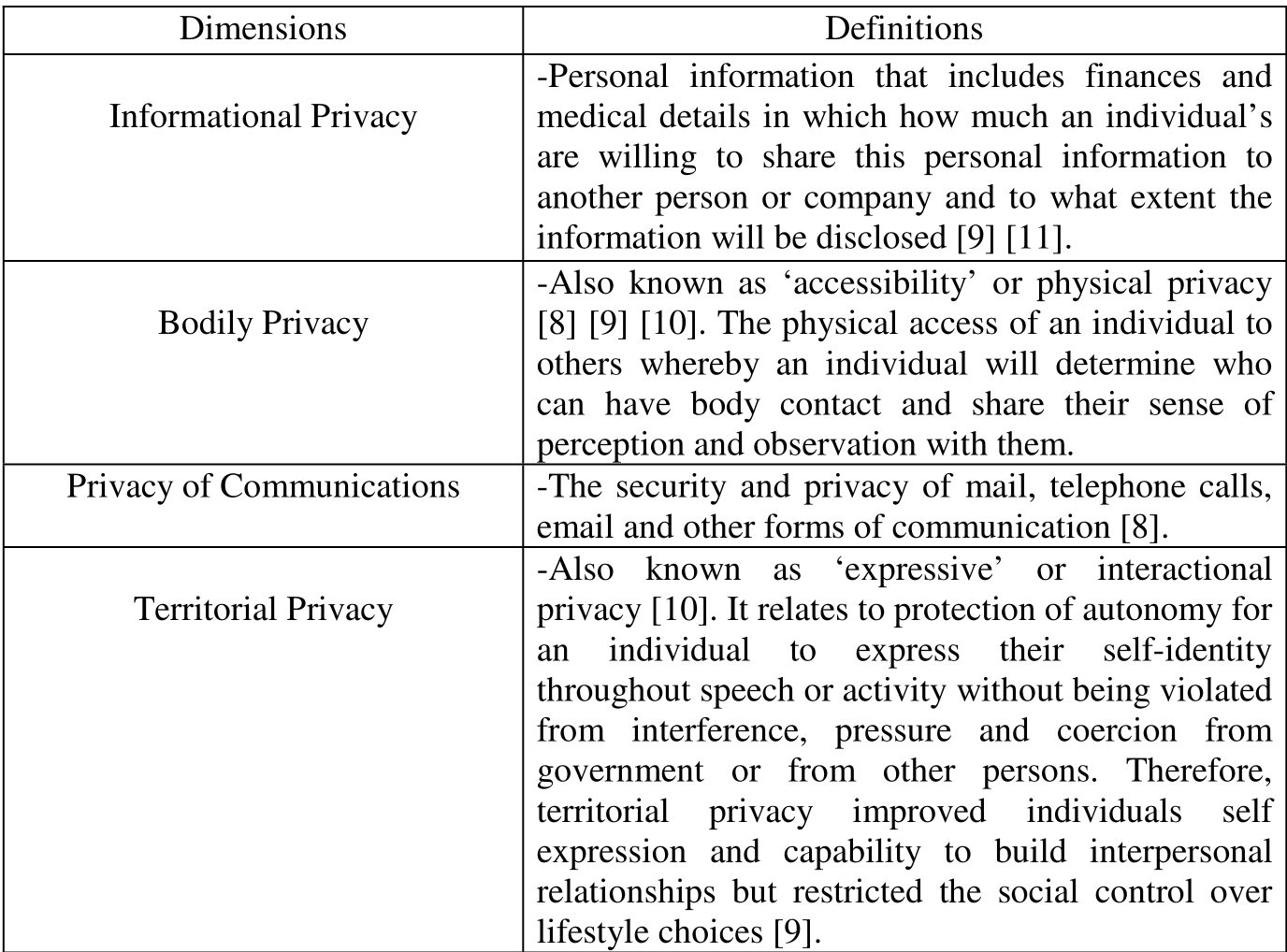
The analysis of the focus groups resulted in the categorization of themes (Table 2 in the paper), which bridges old concepts like "Solitude" and "Reserve" with modern digital concerns like "Identity Theft" and "Information Compensation" (the trade-off of data for platform benefits).
Conclusion and Future Outlook
This research provides a vital step toward creating a measurement instrument specifically for OSNs.
Takeaways for the Industry:
- Control is King: Privacy isn't about hiding; it's about the agency to share.
- Granularity: Users want "Options" to avoid "Inappropriate Associations."
- Contextual Sharing: Platforms should focus on helping users define "Trusted Others" more effectively.
While the sample size was small (6 participants), it lays the qualitative groundwork for future large-scale quantitative studies to validate these dimensions across broader demographics.