
Decoding Instagram: High-Precision Behavior Identification in Encrypted Traffic
Instagram User Behavior Identification Based on Multidimensional Features
This paper introduces a multidimensional feature extraction method specifically designed for identifying user behaviors within the encrypted traffic of the Instagram application. By leveraging a combination of stable JSON data filtering and an adaptive SVM-based classification framework, the authors achieve a state-of-the-art accuracy of 99.8% across nine distinct user actions.
TL;DR
Researchers from Southeast University have developed a robust method to de-anonymize user actions on Instagram—even when traffic is fully encrypted. By filtering out "noisy" data like images and focusing on stable JSON control signals, their SVM-based model identifies actions like 'Posting' or 'Favorite' with a staggering 99.8% accuracy and a near-zero False Positive Rate.
The "Stability" Crisis in Encrypted Traffic Analysis
As user privacy becomes paramount, encryption is no longer optional. For network regulators and security researchers, this creates a "black box" problem. Previous SOTA methods relied on metadata like packet intervals or average throughput. However, these are notoriously unreliable; a slight lag in a Wi-Fi connection or a 4G handover can completely change the statistical profile of a segment, rendered traditional classifiers useless.
The authors identified a crucial Inductive Bias: In a RESTful architecture (which Instagram uses), there is a fundamental split between Content Data (variable size, sensitive to network conditions) and Control Data (stable JSON/XML structures).
Methodology: Finding Order in the Chaos
1. Filtering the Noise
The core insight is that the size of JSON requests is remarkably consistent across different network environments. The authors used two primary dimensions to isolate this stable data:
- LenC: The length of the client request.
- LenS-TLS1: The length of the first TLS fragment in the server response.
By plotting these, they found that JSON-based control signals and MPEG/JPEG-based content data occupy distinct clusters in the feature space.
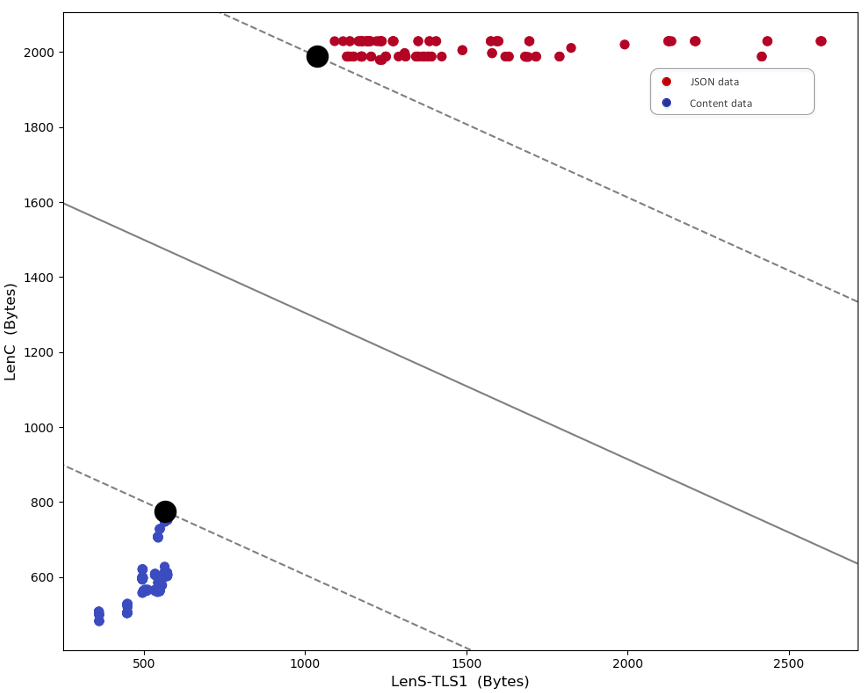 Fig 1: Using SVM to separate stable JSON signals from fluctuant media content.
2. Adaptive Feature Mapping via Maximum Entropy
Not all servers are created equal. The authors tracked traffic across three primary Instagram servers (Servers a, b, and c). To turn raw packet lengths into a vector suitable for Machine Learning, they used the Principle of Maximum Entropy.
Instead of arbitrary bins, they used a Cumulative Distribution Function (CDF) to divide the data into ranges such that each range had an equal probability of occurrence. This maximized the information gain for the SVM classifier.
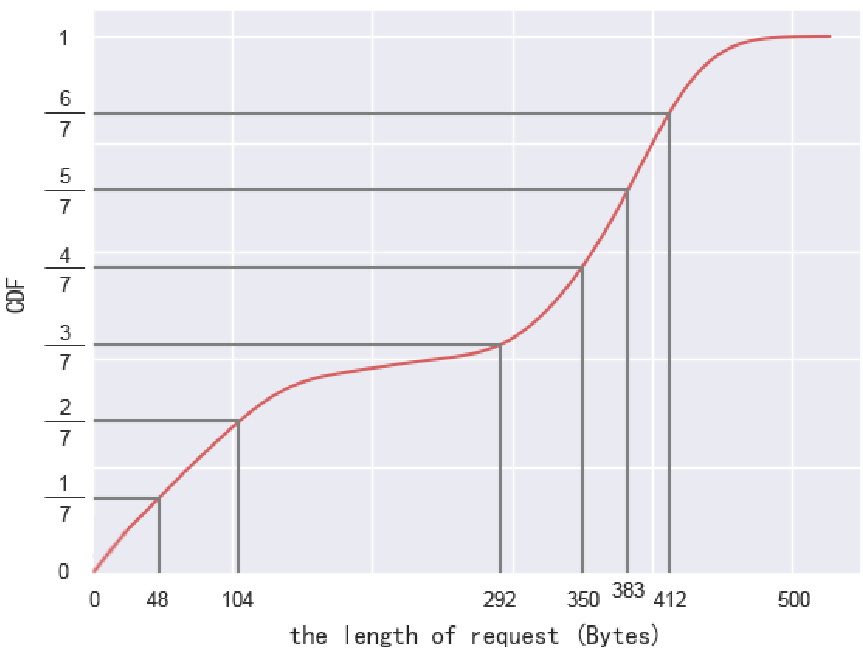 Fig 2: Discretizing the request length into 7 adaptive ranges for Server c using CDF.
Experimental Results
The model was tested using a variety of devices (Samsung, Xiaomi, Huawei) to ensure hardware-agnostic results. They defined 9 specific behaviors, including Posting, Reposting, and Exit.
The results were remarkably consistent:
- Overall Accuracy: 99.8%
- Precision/Recall: 99.3%
- False Positive Rate (FPR): 0.09%
The confusion matrix below highlights that "Return" and "Set up" achieved perfect 100% scores, while "Login" had a slightly higher FPR because its traffic signature occasionally mimics other navigation-heavy behaviors.
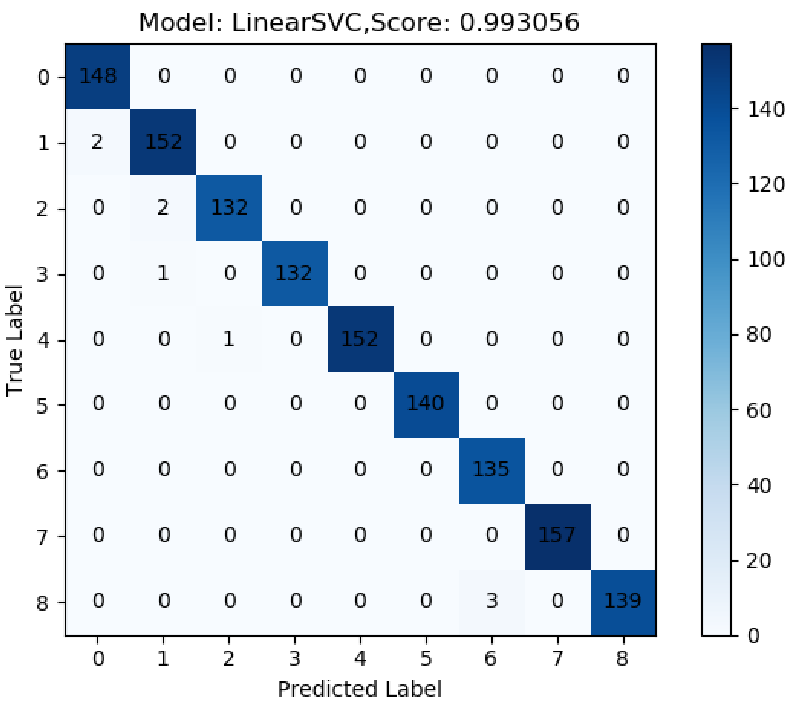 Fig 3: The confusion matrix showing high separation between the nine identified behaviors.
| User Behavior | Accuracy | Precision | Recall | FPR |
|---|---|---|---|---|
| Average | 99.8% | 99.3% | 99.3% | 0.09% |
Critical Insight & Future Outlook
This work proves that encryption is not an absolute shield against behavior tracking. By understanding the underlying architecture of an application (RESTful JSON patterns), an attacker or a regulator can extract "stable features" that survive even the most volatile network conditions.
Limitations: The study focuses on Instagram. While the RESTful logic applies to many apps, those using binary protocols or custom obfuscation might be more resistant to this specific type of multidimensional length analysis.
The Takeaway for Developers: To defend against such side-channel attacks, developers may need to consider "traffic padding" or randomized JSON structure lengths to break the stability that this method exploits.