
Beyond ROI: The Social Forces Driving Corporate IT Spending
Effects of Institutional Pressures on Information Technology Investments: An Empirical Investigation
2009-10-08
Summary
Problem
Method
Results
Takeaways
Abstract
This empirical study investigates the determinants of Information Technology (IT) investment levels using Institutional Theory. The researchers propose that a firm's IT investment intensity is driven not only by internal economic factors but also by external pressures from competitors, suppliers, customers, and institutional shareholders.
## TL;DR
Why do firms invest in IT? If you answer "to improve efficiency," you only have half the story. This study reveals that **Institutional Pressures**—the need to look legitimate in the eyes of competitors, trading partners, and shareholders—are just as influential as economic rationale. By analyzing value chains and ownership structures, the authors prove that IT spending is a deeply social and imitative process.
## The Motivation: Why Rationality Isn't Enough
For decades, the "Productivity Paradox" puzzled economists: trillions were spent on IT, but micro-level efficiency didn't always follow. If firms were truly rational, they would only invest when the expected return outweighed the cost. In reality, IT decisions are often made by committees influenced by "gut feel" or industry benchmarks.
The authors argue that firms seek **Legitimacy**. In a world of high uncertainty, "doing what everyone else is doing" reduces the perceived risk for executives and satisfies the expectations of powerful stakeholders.
## Methodology: Mapping the Field of Influence
The researchers moved beyond simple firm-level snapshots. They constructed a model (see Figure 1) that connects a focal firm to its entire ecological "field":
* **Industry Peers (Mimetic Pressure):** When technology gains are ambiguous, firms copy leaders to avoid being left behind.
* **Trading Partners (Coercive Pressure):** Powerful customers (like Walmart) or suppliers mandate IT adoption (like RFID or EDI) to ensure supply chain synchronization.
* **Shareholders (Normative Pressure):** Institutional investors view IT commitment as a signal of long-term health and modernization.
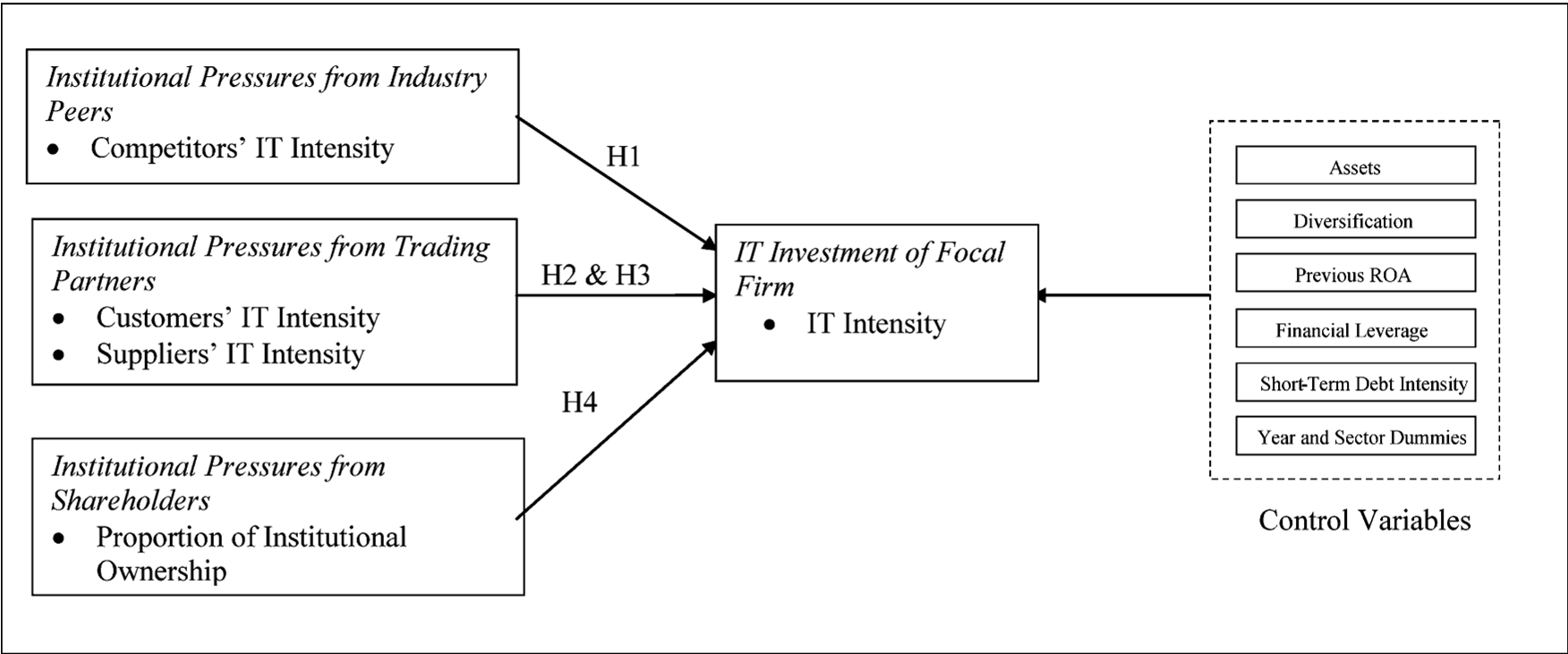
*Figure 1: The Research Model linking institutional factors and firm characteristics to IT Intensity.*
## Key Findings: The Power of the Network
The empirical results were striking. Even after controlling for firm size, diversification, and financial slack (ability to pay), institutional factors were highly significant:
1. **Supply Chain Ripple Effects:** A firm’s IT intensity moves in lockstep with its suppliers and customers. If your partners are tech-heavy, you have no choice but to keep up to lower transaction costs.
2. **The Competitor Mirror:** IT intensity is positively associated with competitors. Managers use reports from analysts (like Gartner) as "reference documents" to rationalize their budgets.
3. **Shareholder Activism:** Firms with higher institutional ownership invest more in IT, suggesting that sophisticated investors push for technology as a strategic resource.
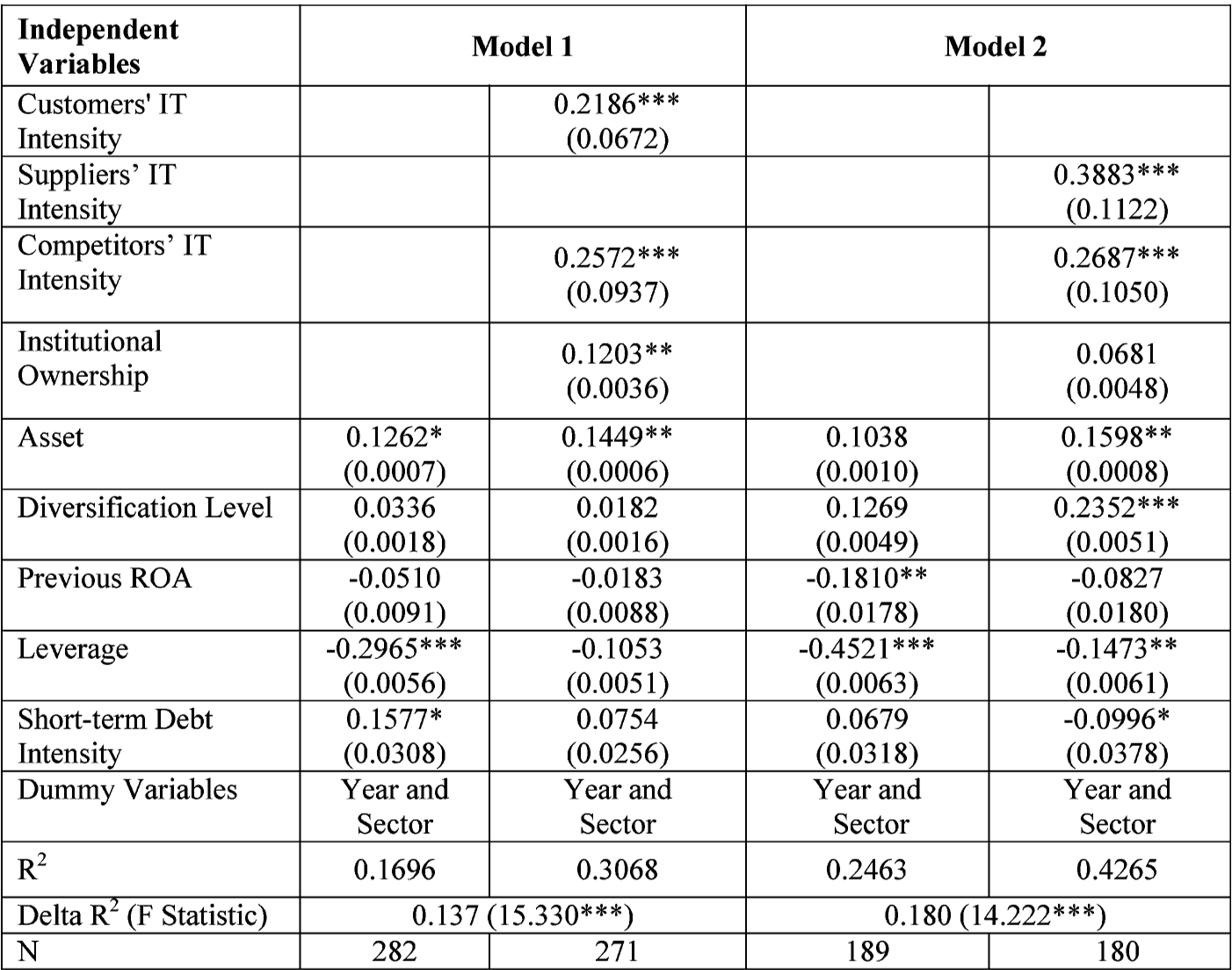
*Table V: Regression results showing the significant positive impact of Customer, Supplier, and Competitor IT intensity on the focal firm.*
## Critical Insights: Mindfulness vs. Mindlessness
The paper introduces a critical distinction for modern managers: **Mindfulness vs. Mindlessness**.
* **Mindless compliance** leads to "bandwagon effects"—buying technology because it's "fashionable" (e.g., the dot-com bubble or perhaps the current AI craze). This can lead to over-investment and wasted capital.
* **Mindful adoption** involves recognizing these external pressures but choosing to comply only when it aligns with internal capabilities and strategic goals.
### Limitations
The study uses data from the 1990s. While the specific technologies (EDI, early ERP) have changed, the *social mechanisms* have likely intensified. In today’s world of integrated APIs and global supply chains, the pressure to conform is arguably higher than ever.
## Conclusion
IT managers should not just be financial analysts; they need to be "organizational sociologists." Understanding that your budget is driven by a quest for legitimacy can help you negotiate better, avoid wasteful imitation, and explain to your board why certain investments are "table stakes" for the industry, even if the direct ROI is hard to quantify.