
AEEIS: Bridging the Infrastructure Gap in Digital Agriculture via Enterprise Systems
An Integrated Approach for Agricultural Ecosystem Management
The paper proposes a systematic approach for agricultural ecosystem management based on Integrated Information Systems (IIS). It introduces the Agricultural Ecosystem Enterprise Information System (AEEIS), which leverages Enterprise Information Systems (EIS) and Business Intelligence (BI) to provide data-driven decision support for sustainable land use and crop management.
TL;DR
Researchers have developed the Agricultural Ecosystem Enterprise Information System (AEEIS), a sophisticated platform that treats agricultural management like high-end industrial enterprise management. By integrating ETL processes, data warehousing, and complex simulation models (GEMOD), the system provides precise recommendations for land use and planting density, significantly improving the accuracy of ecological management in sensitive areas like China's sandy grasslands.
The Motivation: From Data Silos to Digital Agriculture
Modern agriculture is no longer just about planting seeds; it is an information-intensive industry. However, a critical "infrastructure gap" persists. Agricultural data regarding terrain, soil texture, climate, and biodiversity are often stored in disconnected formats and physical locations. This fragmentation prevents policy-makers from making timely, evidence-based decisions.
The authors argue that for agriculture to become sustainable and competitive, it must adopt the Systems Approach used in Large-scale Enterprise Information Systems (EIS).
Methodology: The AEEIS Architecture
AEEIS is not a single tool but a multi-layered ecosystem of technologies designed to turn raw observations into actionable intelligence.
1. The Integration Engine (ETL & Data Warehouse)
The system uses an ETL (Extract, Transform, and Load) subsystem that pulls data from diverse sources (legacy systems, OLTP, and GIS) and converts it into a subject-oriented data warehouse. This allows for OLAP (Online Analytical Processing), where managers can "slice and dice" data to see how different variables, like soil fertility and precipitation, interact across various regions.
2. Physical Intuition: The Soil Water Balance Model
A highlight of the paper is the mathematical modeling of soil water dynamics. The authors use a differential equation to describe water content (): This formula moves beyond simple observation by capturing the physical trade-offs of vegetation: while plants help retain water through root systems, they also increase loss through transpiration.
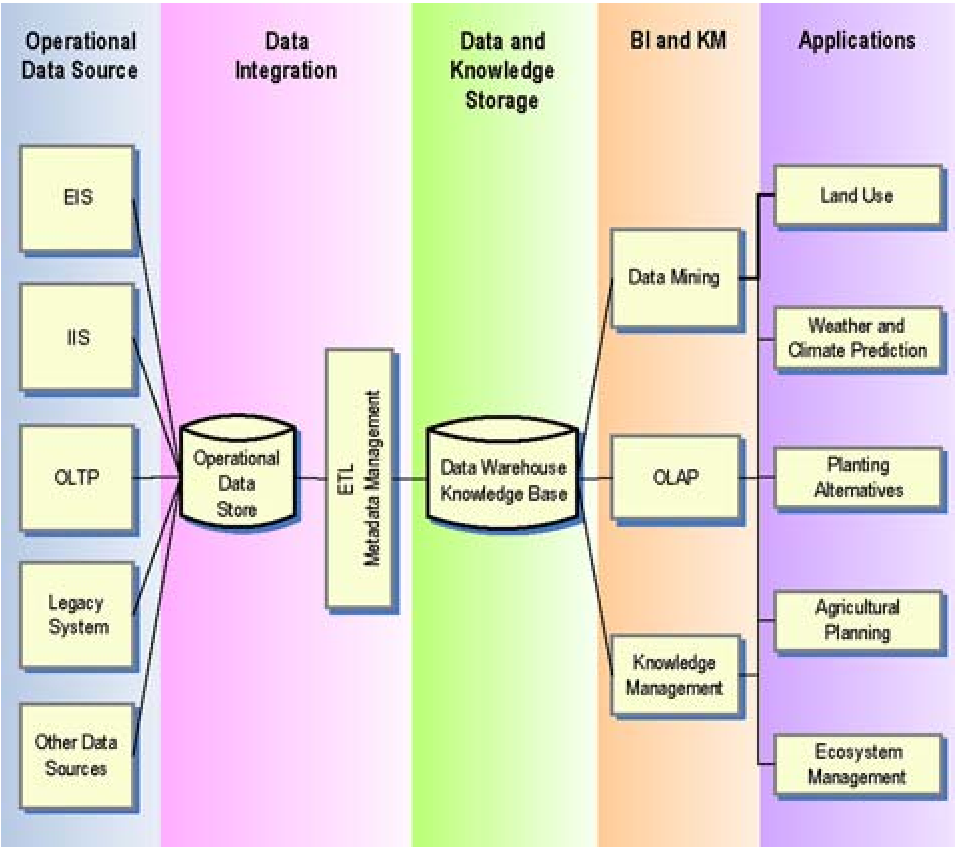 Figure 1: The Integrated Architecture of AEEIS, combining BI tools with ecological databases.
Experiments: Solving the Maowusu Grassland Crisis
The system was tested in the Maowusu sandy grassland, a region suffering from severe degradation. AEEIS simulated various scenarios to find the "Goldilocks zone" of plant coverage.
Key Findings:
- The Slope Threshold: For slopes steeper than 15°, excessive vegetation actually decreases yearly mean soil water because the water loss from transpiration outweighs the root-based water retention.
- Optimal Coverage: The system recommended a maximum coverage of 0.5 for moderate slopes, but strictly restricted it to 0.3 for slopes exceeding 55° to prevent desertification.
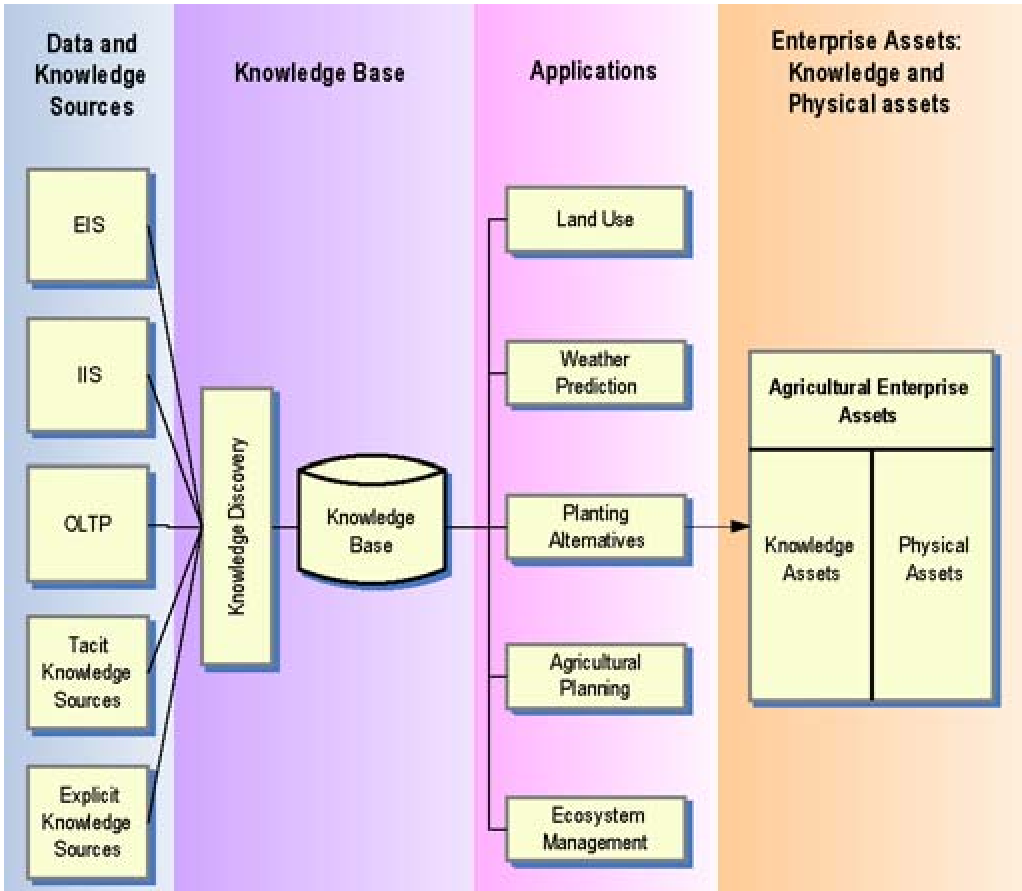 Figure 2: The Knowledge Management interface and simulation flow for the Maowusu application.
Critical Insights & Takeaways
The brilliance of this work lies in its Interdisciplinary Synthesis. It doesn't just provide a better ecological model; it provides the information infrastructure required to make that model useful for a government official or a farm manager.
Limitations & Future Work
- Data Standardization: The study acknowledges that inconsistent data formats across different organizations remain a major hurdle.
- Socioeconomic Integration: While AEEIS focuses heavily on ecological parameters, the next frontier is the full integration of market prices, labor costs, and social factors into the simulation engine.
Final Conclusion
AEEIS proves that "Digital Agriculture" is not just a buzzword but a technical reality achievable through the rigorous application of enterprise-level IT infrastructure. By bridging the gap between the field and the data center, we can transform agricultural management from a reactive practice into a proactive, predictive science.