
Integrated Pedestrian Modeling: Marrying Cognitive Deliberation with Social Physics
An Integrated Pedestrian Behavior Model Based on Extended Decision Field Theory and Social Force Model
This paper introduces an integrated pedestrian behavior model combining Extended Decision Field Theory (EDFT) for tactical decision-making and an Enhanced Social Force Model (ESFM) for physical interactions. Applied to a shopping mall scenario using AnyLogic, it achieves a more realistic simulation of both individual and group dynamics by incorporating human vision and dynamic path planning.
TL;DR
This research bridges the gap between physics-based crowd movement and psychological decision-making. By integrating Extended Decision Field Theory (EDFT) with an Enhanced Social Force Model (ESFM), the authors created a simulation that accounts for human vision, group loyalty, and tactical planning. The result is a highly realistic model of shopping mall behavior that yields actionable insights into facility profit and crowd management.
Background: Beyond "Bouncing Balls"
Most microscopic crowd models treat humans like billiard balls—reacting purely to proximity and collisions. However, a shopper in a mall doesn't just "repel" from others; they deliberate on which store to visit next, stay close to their family, and ignore people standing behind them. This paper addresses these nuances by adding a "brain" (EDFT) and "eyes" (Vision-based SFM) to the standard pedestrian agent.
The Problem: The Limitations of Classical SFM
The classical Social Force Model (SFM) developed by Helbing has been the gold standard for decades, but it suffers from three main unrealistic assumptions:
- Omnidirectional Awareness: Agents "feel" forces from people behind them as much as those in front.
- Infinite Interaction: Every agent exerts a force on every other agent, regardless of distance.
- Constant Repulsion: The model assumes everyone wants to stay away from everyone else, ignoring the reality of social groups (families/friends).
Methodology: The Integrated Architecture
The proposed model operates on a sequence that flows from high-level intention to low-level motor control.
1. The Tactics: Extended Decision Field Theory (EDFT)
Instead of a simple "move toward goal" vector, agents use EDFT to choose between six potential directions. This process considers:
- Value Matrix (): Evaluating directions based on crowd density and destination proximity.
- Weight Vector (): Dynamically shifting attention—e.g., when it's crowded, agents care more about density than the shortest path.
2. The Physics: Enhanced Social Force Model (ESFM)
The movement is governed by an acceleration equation that now includes a Connection Range (CR) and a Visible Area.
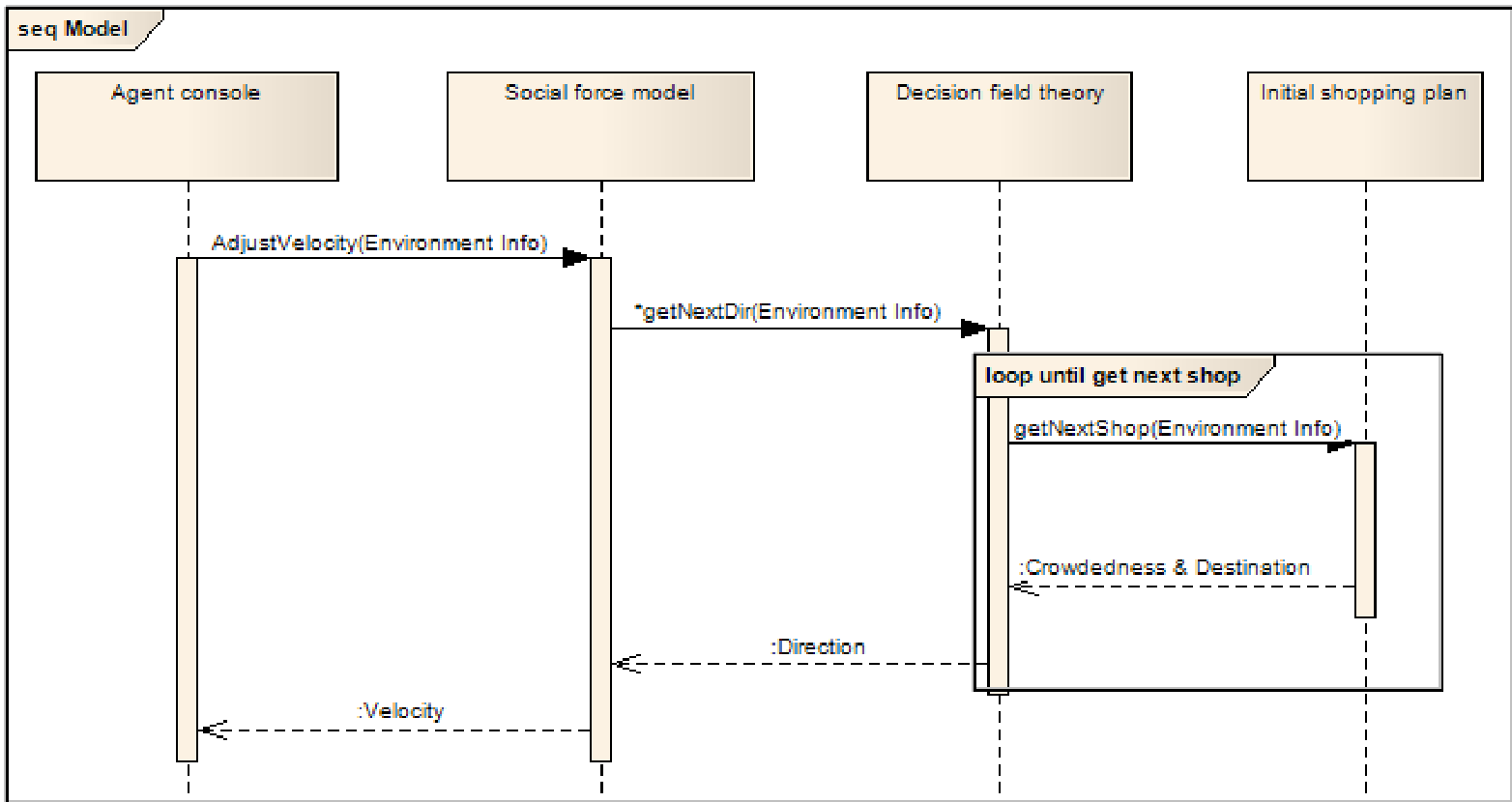 Figure 1: The logical sequence from perception to action.
One of the most innovative tweaks is the Intimate Factor (). For group members, the psychological force becomes attractive rather than repulsive, ensuring groups stay together naturally without artificial tethering.
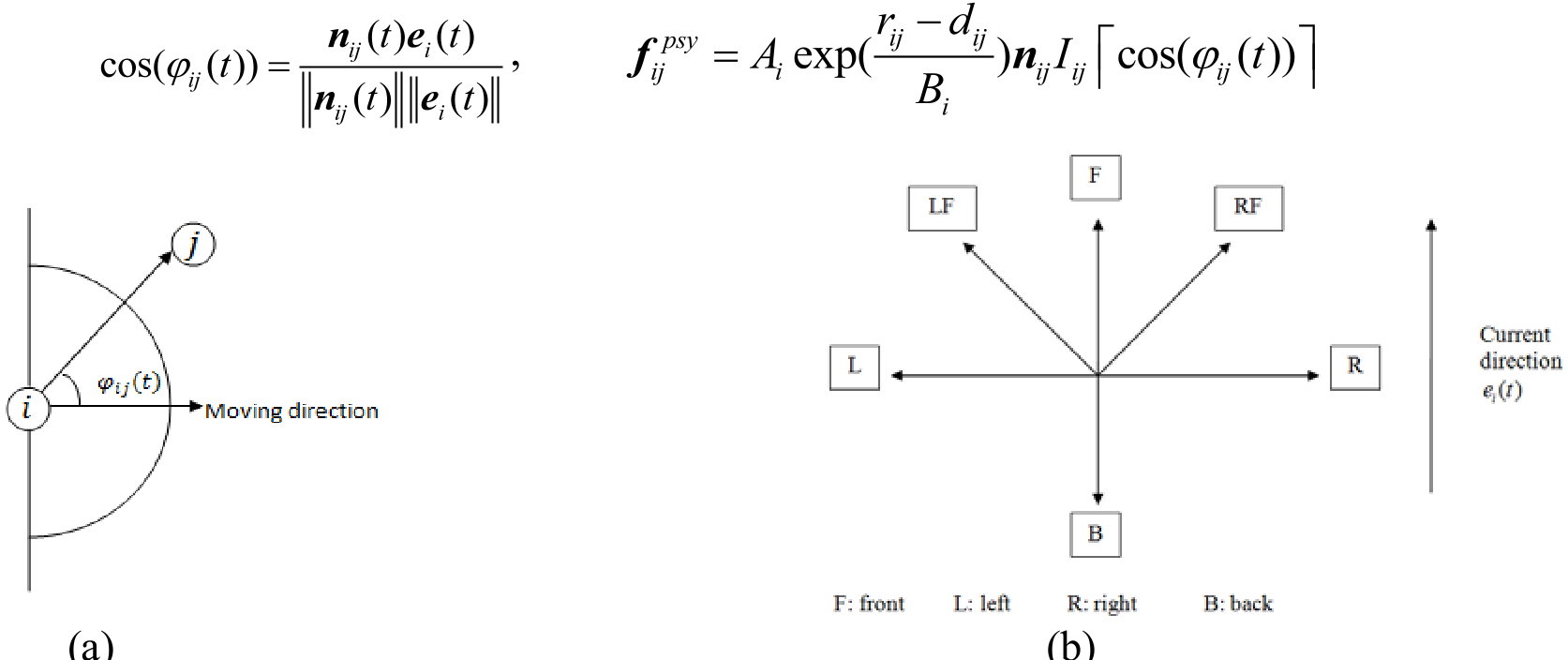 Figure 2: (a) 180-degree vision field; (b) The 6-direction choice set for EDFT.
Experiments and Results
The authors implemented this in AnyLogic using a layout based on the Tucson Mall in Arizona.
The Impact of Vision
Experiments showed that when vision is considered, pedestrians move faster and more efficiently. This is because they aren't "pushed" by people behind them, reducing unnecessary resistance and mimicking the natural "flow" seen in real-world corridors.
Profit and Pedestrian Types
The study categorized shoppers into "Planned" vs. "Unplanned."
- Planned Shoppers: Visit specific stores, have higher purchase probabilities (0.8), and are less deterred by crowds.
- Group Dynamics: Groups were found to be "stickier"—they are less likely to skip a store due to crowding because they utilize a group-consensus mechanism before adjusting their plans.
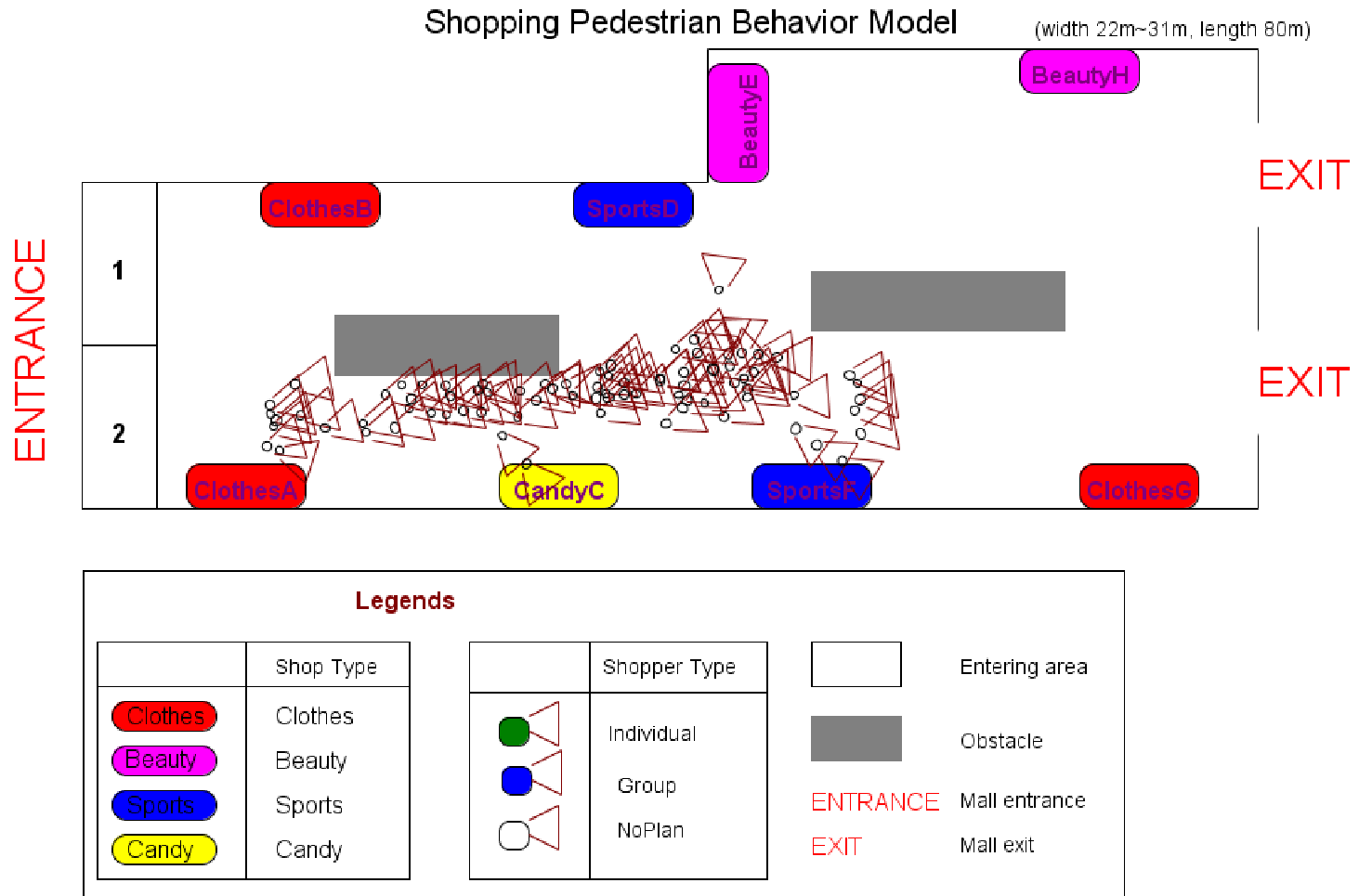 Figure 3: AnyLogic simulation of the mall corridor showing group and individual agents.
Critical Insight: The Scalability of Cognition
One might assume that adding complex psychological formulas (EDFT) to every agent would make the simulation crawl. However, the authors demonstrate that the execution time increases linearly with the number of agents. This proves that high-fidelity cognitive modeling is computationally feasible for large-scale urban digital twins.
Conclusion
This paper elevates pedestrian simulation from simple particle physics to a socio-cognitive science. For mall operators and architects, the key takeaway is clear: store arrangement (keeping similar types close) and understanding the ratio of group-to-individual shoppers are just as important as the physical width of the hallways.
Limitations
While the model is robust, it still relies on a fixed shopping strategy chosen at the entrance. Future work could improve this by allowing "impulse" strategy changes mid-trip based on dynamic visual triggers or fatigue.