
DECIDE 2.0: Transforming Social Media Noise into Logical Policy Arguments
Integrating argumentation technologies and context-based search for intelligent processing of citizens' opinion in social media
The paper introduces DECIDE 2.0, an intelligent framework designed for e-Governance that integrates context-based search and Defeasible Logic Programming (DeLP) to process citizen opinions from social media. It specifically aims to transform noisy, inconsistent data streams like Twitter into structured arguments (pro and con) to assist policy makers in decision-making.
TL;DR
As governments transition to "Government 2.0," the deluge of citizen opinions on social media has become a double-edged sword: highly valuable but technically overwhelming. DECIDE 2.0 is an intelligent framework that bridges this gap by combining context-aware search with Defeasible Logic Programming (DeLP). It doesn't just count mentions; it builds logical arguments to help officials understand the "why" and "why not" behind public sentiment.
Background: Beyond Simple Sentiment Analysis
Traditional sentiment analysis tells you if people are happy or angry. However, for a policy maker, knowing why a citizen opposes a healthcare reform is far more crucial. Existing tools struggle with the inconsistency of human debate—where two equally valid-looking opinions might flatly contradict each other. This paper positions itself as a SOTA bridge between raw Data Mining and high-level Common Sense Reasoning.
The Core Challenge: Inconsistency as a Feature, Not a Bug
Social media data is notoriously messy. The authors identify two primary pain points:
- Volume & Noise: The sheer magnitude of data (millions of tweets) makes manual review impossible.
- Dialectical Conflict: Unlike standard databases, social media "data" is a collection of conflicting views. Prior works often ignored these contradictions or averaged them out; DECIDE 2.0 treats them as formal counter-arguments.
Methodology: From Tweets to Dialectical Trees
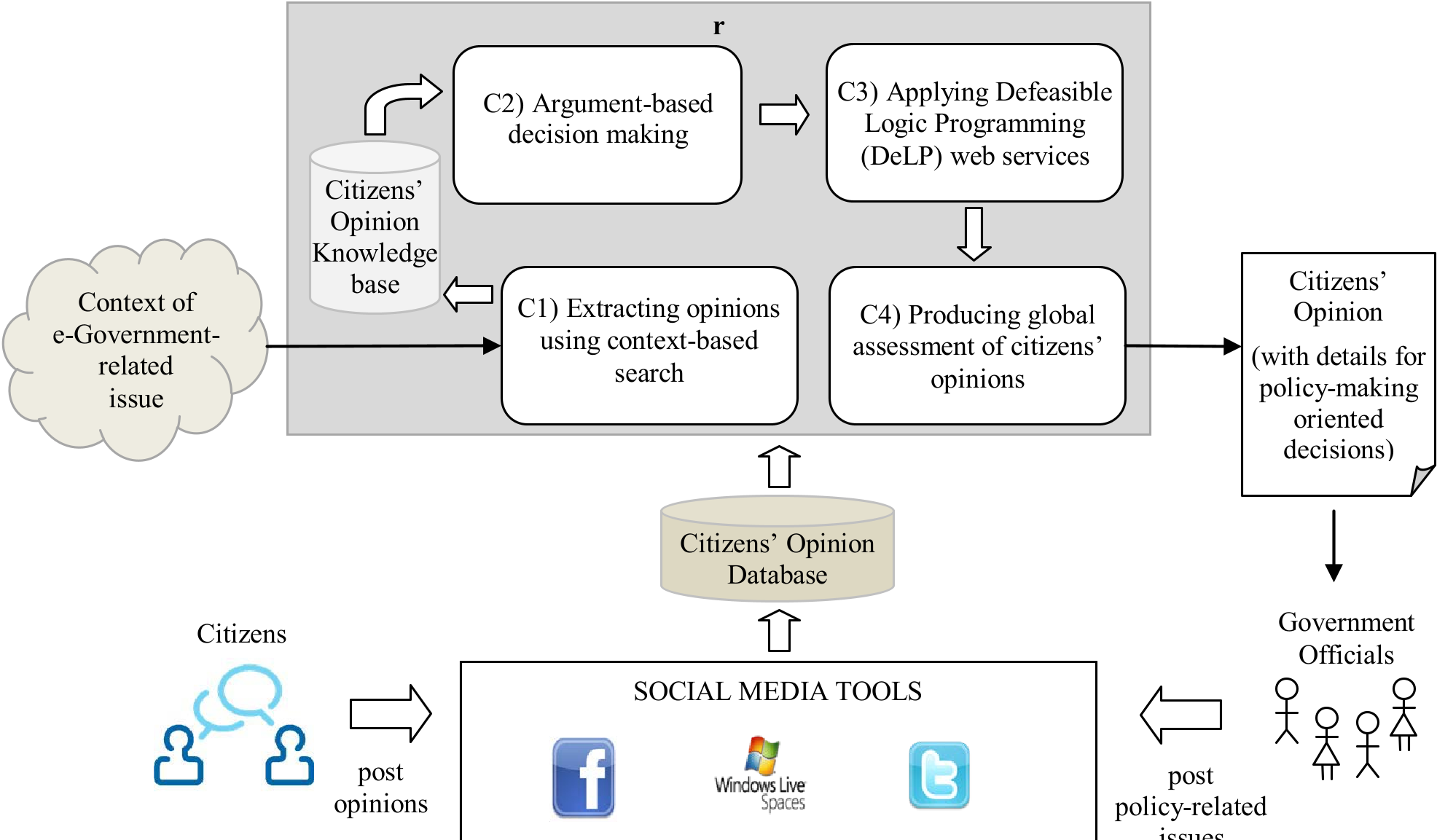
The DECIDE 2.0 framework operates in four distinct stages:
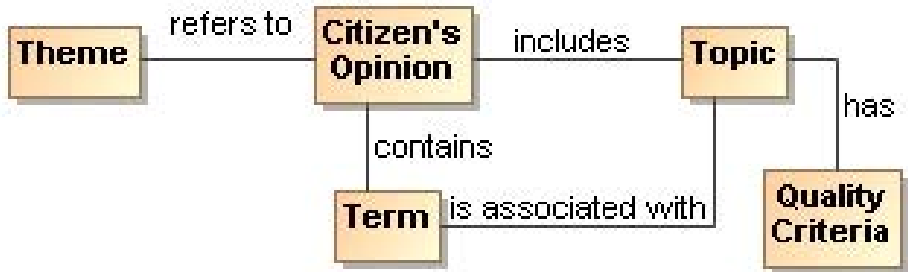
- Opinion Extraction (C1): Uses context-based search to identify cohesive terms and topics within a theme (e.g., "Healthcare").
- Argument-based Decision Making (C2): Converts filtered opinions into formal logical predicates.
- DeLP Web Services (C3): This is the "brain" of the system. It uses Defeasible Logic Programming to distinguish between "Strict Knowledge" (facts) and "Defeasible Knowledge" (tentative opinions).
- Global Assessment (C4): It generates a Dialectical Tree. If Opinion A supports a policy, but Opinion B provides a "defeat" (a counter-argument based on a specific exception), the system evaluates which argument is ultimately "undefeated."
The Logic of Defeaters
In DeLP, a query like isSupported(ObamaCare) triggers a backward-chaining process. The system looks for "arguments" supporting the claim and then searches for "defeaters"—counter-arguments that might invalidate the original premise based on preference criteria (like specificity).
Analysis of Results: Structuring the Unstructured
By applying this to the "ObamaCare" case study, the authors demonstrate how raw tweets are transformed into facts for a knowledge base:
- Topic Identification: Identifying "preventive health care" as a core descriptor.
- Predicate Mapping: Scaling from
opinion(o1, text)touseropinion(u1, o1, t1, positive).
The power of this approach lies in its Interpretability. Unlike a "Black Box" Neural Network that just gives a percentage of support, DECIDE 2.0 provides a tree of reasons, showing exactly why a certain conclusion was reached.
Critical Insight & Conclusion
The true value of DECIDE 2.0 is its treatment of trust and reputation. The authors acknowledge that not all tweets are equal. In their future roadmap, they emphasize that for these arguments to hold weight in a government setting, the framework must integrate models of trust propagation.
Takeaway: This work proves that symbolic AI (Logic Programming) and sub-symbolic AI (Text Mining) are more powerful when combined. While social media provides the content, argumentation theory provides the structure needed for legitimate democratic participation.
Limitations
- Scalability of Logic: While DeLP is robust, building the initial "Strict Knowledge" base still requires human (Knowledge Engineer) intervention.
- Trust Assessment: Currently, the model assumes most data sources are equally reliable, which is a significant risk in the era of bots and misinformation.