
Pettie: Bridging the Gap Between Virtual Pets and Social Networks
A study of integrating social networking service into the virtual pet web game system
The paper presents "Pettie," a web-based virtual pet game that integrates Social Networking Services (SNS) to enhance user engagement. Developed using an MVC architecture with PHP and MySQL, the system allows for real-time interaction between friends' pets and message sharing through a blog-style interface.
TL;DR
The paper introduces Pettie, a virtual pet community system that transforms the solitary experience of raising a digital pet into a social endeavor. By integrating a micro-blogging service and friend-interaction mechanics, the authors aim to increase game durability and market reach. The system is built on a robust MVC architecture and utilizes Finite State Machines (FSM) for pet behavior simulation.
Background: The Social Evolution of Gaming
The gaming landscape has shifted from isolated software to connected services. Observing the success of Facebook, the authors identified that social connectivity and accessibility are the primary drivers of modern web apps. While virtual pets have existed since the Tamagotchi era, Pettie seeks to modernize the genre by making the "raising" process visible and interactive within a user's social circle.
The Core Problem: The Loneliness of the Virtual Pet
Most legacy virtual pet games are "one-player" experiences. The primary pain points identified include:
- Low Replayability: Once a pet grows, the player has little incentive to continue without social validation.
- Platform Silos: Many games are tied to specific hardware or single computers, preventing the "anytime, anywhere" interaction users now expect.
- Lack of Interaction: Traditional games rarely allow friends to help care for a pet, missing out on collaborative gameplay.
Methodology: Architecture and Logic
The researchers designed a multi-tiered architecture to ensure the system is both scalable and interactive.
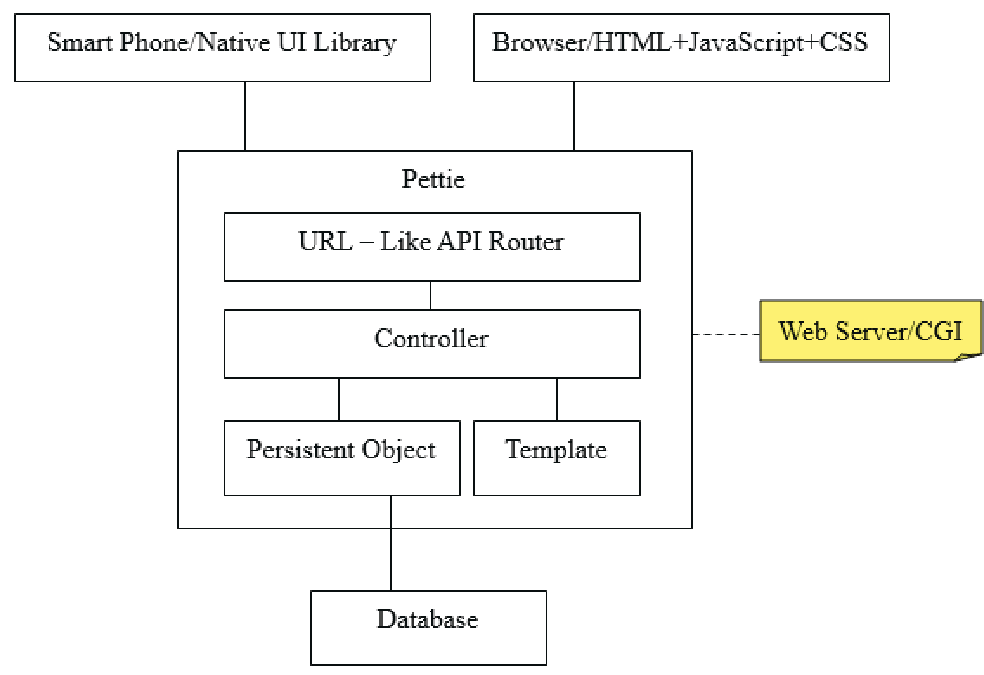
1. System Architecture (MVC)
To ensure the game could eventually support mobile platforms, the team used the Model-View-Controller (MVC) pattern.
- Model: MySQL database storing pet attributes and user relations.
- View: A front-end built with HTML/CSS/JavaScript and AJAX to allow real-time updates without refreshing the page.
- Controller: PHP logic running on an Apache server, acting as a "Façade" to reduce coupling between subsystems.
2. Behavioral Logic: Finite State Machine (FSM)
To handle pet animations (like feeding, exercise, or sickness), the system utilizes an FSM. When a user triggers an event (e.g., clicking "Feed"), the pet's state transitions, shifting the graphical output to a specific frame in the animation sprite sheet. This ensures that pet movements remain logical and responsive.

Experiments and Results
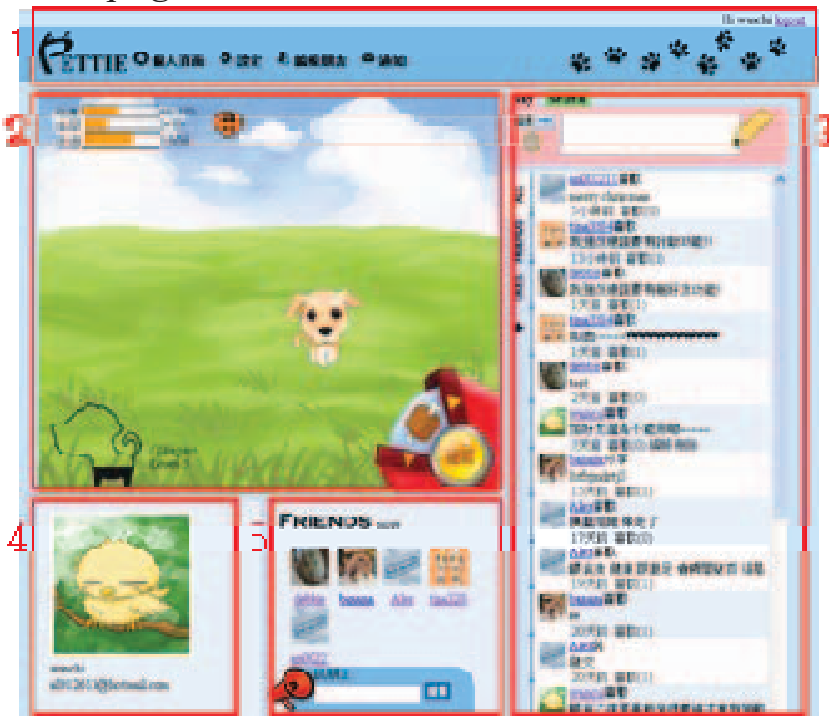
The implementation of the Virtual Pet Subsystem introduced complex interaction rules. Unlike traditional games, "Pettie" allows friends to perform actions like cleaning or feeding a user's pet, which directly impacts the pet's health and satisfaction bars.
| Action | Condition | Effect |
|---|---|---|
| Inject | Health < 30 | Restores Satiety and Cleanliness |
| Feed | Satiety < 30 | +3 Satiety (Can be done by friends) |
| Exercise | Health 30 | Grants Experience Points (XP) |
The integration of a Blog Subsystem (limited to 140 characters, similar to early Twitter/X) creates an information exchange platform where users can post pet updates and social messages, further cementing the community aspect.
Critical Analysis & Future Work
Takeaway: The "Pettie" project highlights that the value of a virtual pet is no longer just in the simulation itself, but in the social capital it generates through sharing and friend-to-friend assistance.
Limitations:
- The current system is restricted to a 2D environment, which may feel dated compared to 3D mobile offerings.
- The 1024*768 resolution target is specific to desktop browsers and lacks a fully responsive design for modern smartphones.
Future Outlook: The authors plan to introduce Pet Evolution, where pets change appearance based on growth levels, and a Virtual Mall for monetization. This trajectory aligns with the "Freemium" model that dominates the current mobile gaming industry.