
Deconstructing Artificial Creativity: The Legal Wall Between AI and Originality
Intellectual Properties of Artificial Creativity: Dismantling Originality in European’s Legal Framework
This paper explores whether AI-generated artwork meets the criteria for legal protection under the European Intellectual Property framework. It specifically investigates the "originality threshold" and "creativity" requirements, concluding that current AI outputs—while novel—fail to reflect the "author's own intellectual creation" required by EU law.
TL;DR
Can a machine be "creative" enough to own a copyright? Under the current European legal framework, the answer is a resounding no. While AI can generate stunning, novel imagery, EU law requires a "personal touch"—an expression of human personality and free creative choice—that current algorithms, tethered to human inputs and randomized patterns, simply cannot provide.
The Anthropomorphic Wall: Why AI Fails the Law
In the European tradition (Droit d’Auteur), Intellectual Property isn't just about protecting a product; it's about protecting the human spirit. The core conflict arises from the Originality Threshold. For a work to be protected, it must:
- Be the author's own intellectual creation.
- Reflect the author's personality.
- Be the result of free and creative choices.
The author argues that AI suffers from an "anthropomorphic syndrome"—the law was written by humans, for humans. When an AI creates, it is often bound by technical rules or functional goals, which the ECJ (in cases like Football Association Premier League) has explicitly stated disqualifies a work from being "creative."
Methodology: Putting AI to the Legal Test
The paper analyzes AI evolution through the lens of legal requirements, moving from deterministic systems to autonomous neural networks.
1. Genetic Algorithms (GA)
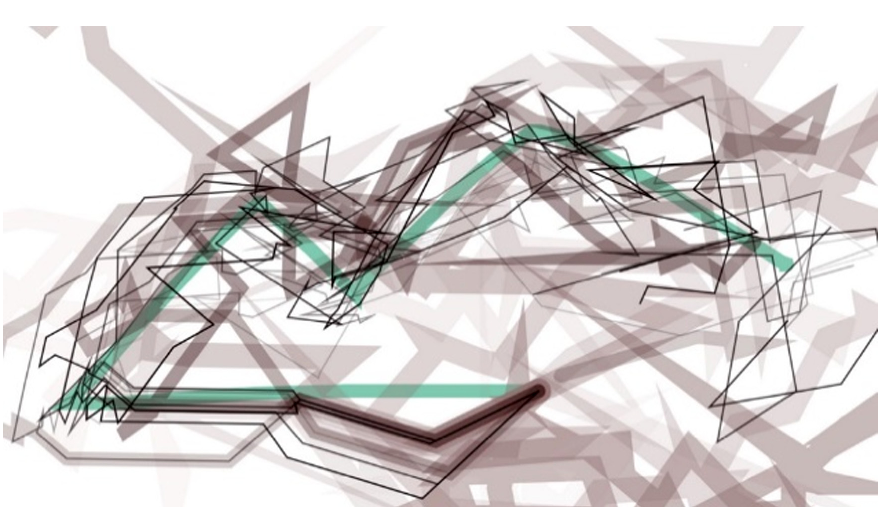
These systems use "mutation" and "crossover" to evolve art. While the results are surprising, they are essentially randomized optimization.
 Constraint: There is no "choice" here, only a search for a high score in a pre-defined set of binary strings.
2. Generative Adversarial Networks (GANs)
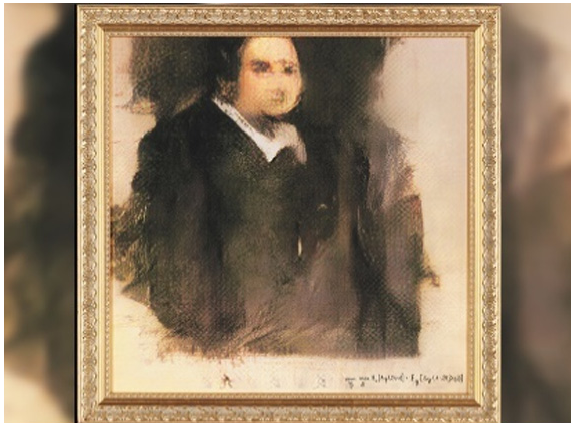
The famous Edmond de Belamy portrait proved AI could command high market value, but the paper notes the creative heavy lifting—selecting the 15,000 baseline portraits and tuning the algorithm—was done by humans.
3. Deep Neural Networks & Deep Dream
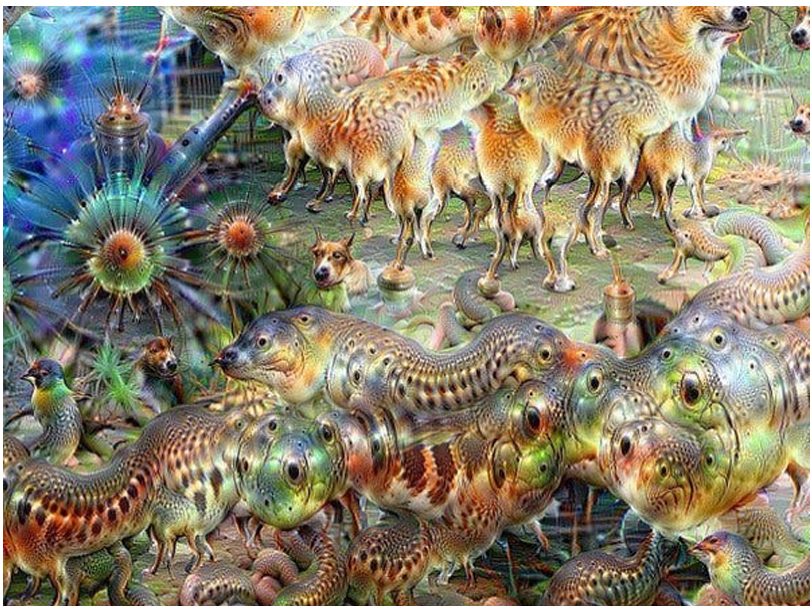
Google's Deep Dream creates a recognizable, unique style. One might argue it has a "virtual personality." However, these systems function as closed systems. They make intelligent guesses based on past data (predictive permutations), which lacks the "disruptive" and "spiritual" nature of human art.
The Three Pillars of Autonomous Creativity
The author references Jennings (2010) to define what a truly "creative" AI would look like in the eyes of the law:
- Autonomous Evaluation: The system must judge its own work without human feedback.
- Autonomous Change: It must modify its process without being told how.
- Non-randomness: Changes must be intentional, not just stochastic noise.
Critical Analysis & Future Outlook
The paper concludes that AI art currently occupies a legal "no-man's-land." Because it is traceable back to a human programmer's desire and the datasets provided, it serves more as a tool than a creator.
The Dilemma: If we grant AI copyright, we ignore the "spiritual" requirement of law. If we don't, we risk leaving valuable assets in the public domain, potentially disincentivizing investment in AI creativity.
The Solution? The author suggests we might need to treat AI works like "films" or "sound recordings"—protecting the economic rights of the investors/operators rather than trying to find a "soul" in the machine code.
Summary Takeaway
Until an AI can exhibit "free deliberation" independent of its training data and human prompts, the European legal framework will continue to view it as a sophisticated brush rather than a painter.