
Fermat: Bridging the Gap Between Math, Social Networks, and Emotional Intelligence
An Intelligent and Affective Tutoring System within a Social Network for Learning Mathematics
The paper introduces Fermat, an Intelligent and Affective Tutoring System (IATS) integrated within a social network designed for mathematics education. It employs Kohonen Neural Networks for facial and voice emotion recognition and Fuzzy Logic to dynamically adjust exercise difficulty.
TL;DR
Fermat is a next-generation tutoring platform that doesn't just check if you got a math problem right—it checks how you feel about it. By embedding an Intelligent Tutoring System (ITS) within a social network and using Neural Networks for emotion recognition, it adapts and responds to student frustration or boredom in real-time.
Background & Motivation: Beyond the Cognitive Wall
Since the 1970s, Intelligent Tutoring Systems have focused on the "Cognitive Model"—tracking what a student knows. However, research in Affective Computing suggests that if a student is frustrated or bored, even the best lesson plan will fail. The authors of "Fermat" identified a critical gap in Mexico’s ENLACE standardized testing results, where millions of students struggle with math. Their goal was to move beyond "static" software and create a social, emotionally-aware tutor.
Methodology: The "Brain" of Fermat
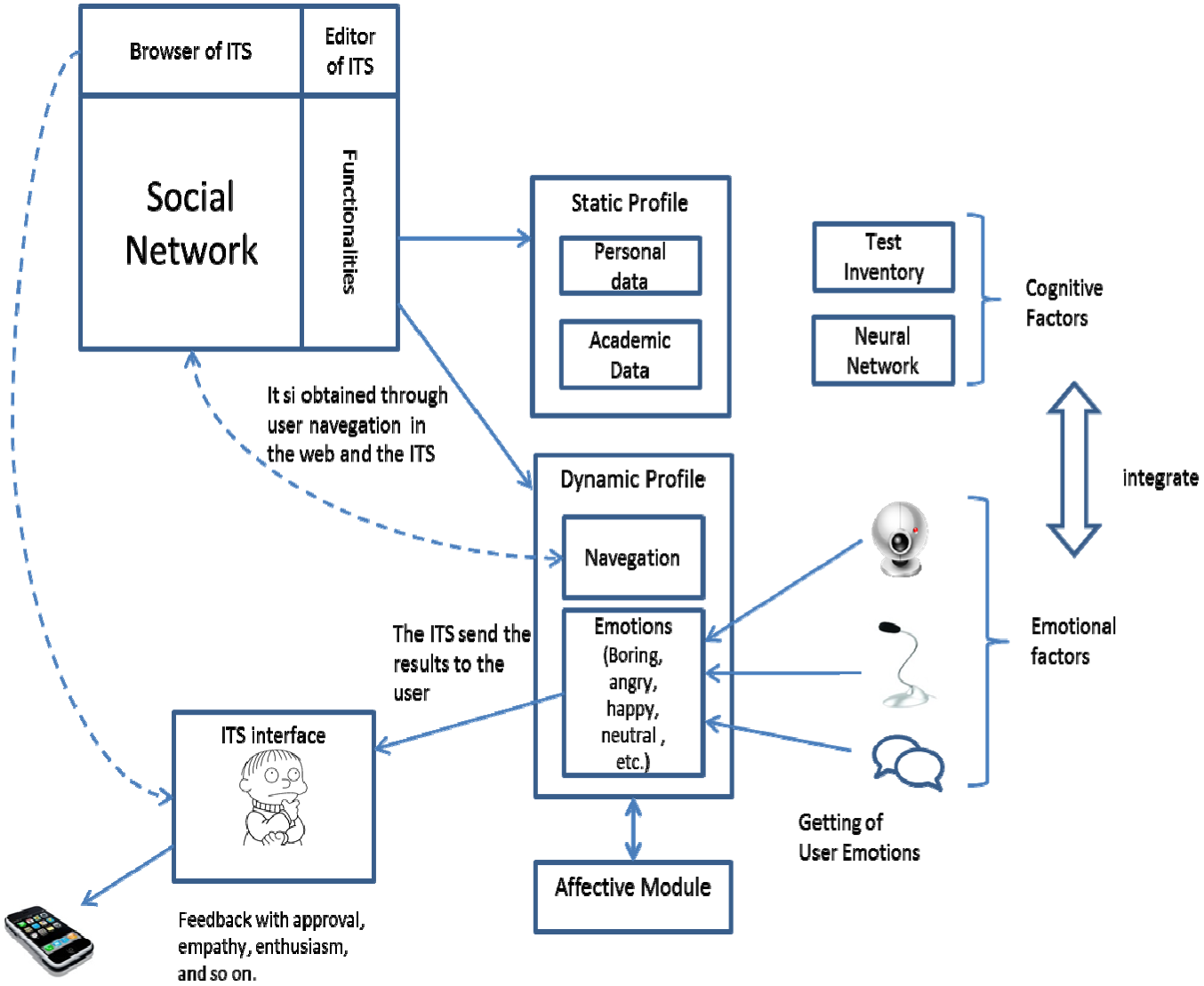
The system architecture follows the traditional ITS "trinity" (Domain, Student, and Tutoring modules) but adds a sophisticated Affective Layer.
1. Multimodal Emotion Recognition
Fermat uses two primary sensors (camera and microphone) to feed data into Kohonen Neural Networks.
- Visual: Processes facial feature points to recognize 7 core emotions (Anger, Happiness, Sadness, etc.) based on Ekman’s theory.
- Acoustic: Uses Principal Component Analysis (PCA) and search methods to extract emotional features from the student's voice.
2. Fuzzy Logic for Pedagogical Decisions
The system doesn't use rigid "if-then" rules. Instead, it employs Fuzzy Logic to calculate the difficulty of the next exercise. It considers variables like time spent, number of assistances requested, and error frequency to generate a "human-like" reasoning process for selecting the next task.
3. Affective Intervention
To respond to emotions, Fermat uses a "Genie" character (Microsoft Agent). The decision-making here is driven by Multi-Attribute Utility Theory (MAUT), which calculates the best balance between a "Learning Utility" (teaching new facts) and an "Affective Utility" (encouraging the student).
Experiments and Results
The system was tested on 72 third-graders in Mexico. The results validated the "Overlay" model of learning.
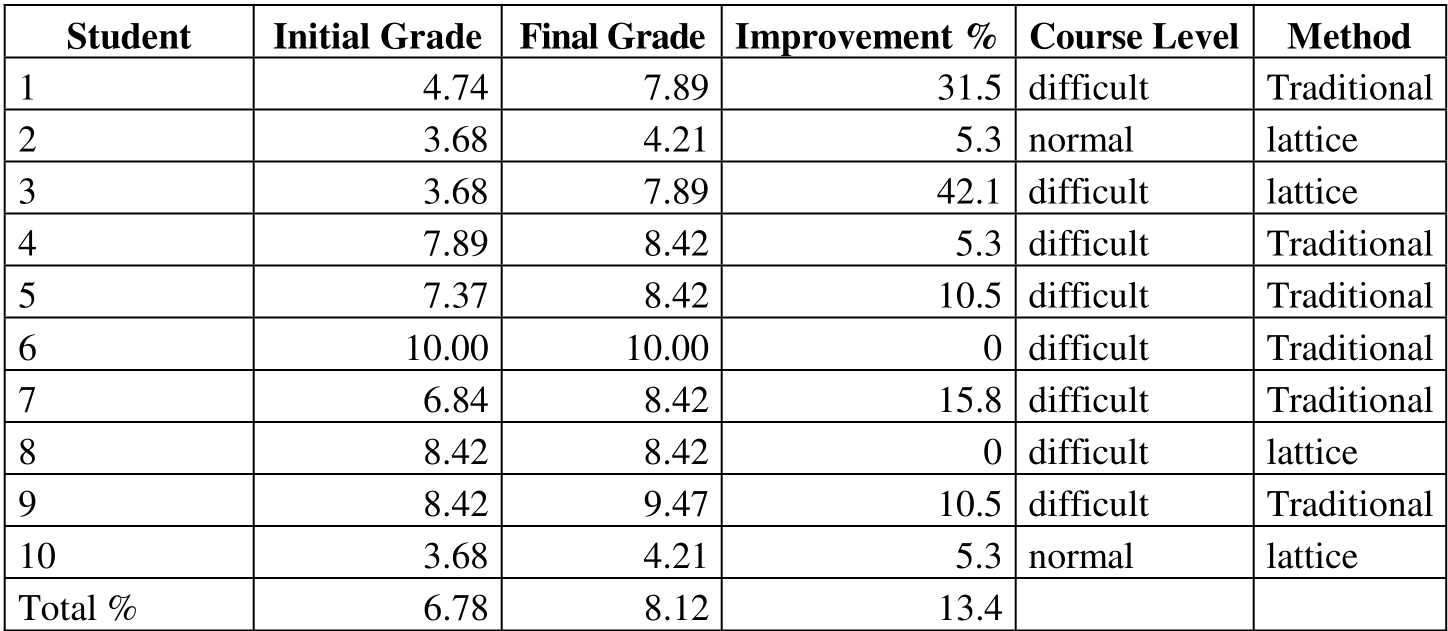
- Quantitative Success: Most students showed marked improvement. For instance, a student starting with a 3.68 grade jumped to a 7.89 after using the "Lattice" method provided by the tutor.
- Adaptability: The Fuzzy Expert System successfully categorized students into "Normal" or "Difficult" levels, ensuring the cognitive load was never too high or too low.
Critical Insight & Conclusion
The real innovation of Fermat is its placement within a Social Network. Unlike isolated tutoring software, Fermat allows for a community-based approach involving parents and teachers, which provides the necessary social context for learning.
Limitations: The authors openly admit that emotion recognition on the web is challenging due to varying hardware (webcams/mics). Future work will focus on refining these recognizers and expanding the curriculum beyond basic multiplication to cover the full spectrum of standardized national tests.
Fermat serves as a blueprint for the future: software that doesn't just teach, but understands.