
The Robot Influx: Predictive Modeling of Teacher Anxiety in the Age of AI Agents
Intelligent Agents Influx in Schools: Teacher Cultures, Anxiety Levels and Predictable Variations
This paper investigates teacher attitudes toward integrating AI humanoid robots (Softbank's "Pepper") in Japanese classrooms. It introduces the "Culture Stress System" (CSS), a machine learning-based approach to predict teacher anxiety and recommend optimal AI deployment levels.
TL;DR
The impetuous entry of AI humanoid robots into Japanese schools has faced significant cultural resistance. This research by R. Yamamoto Ravenor moves beyond the "age gap" myth, proving that coding literacy is the ultimate gatekeeper for AI adoption. The paper introduces a Culture Stress System (CSS)—a machine learning tool designed to predict teacher anxiety and optimize the "robot population" in schools to prevent resource waste.
Contextualizing the "Cerebral Immigration"
When Softbank deployed 2,000 "Pepper" robots into Japanese schools in 2017, it was envisioned as a revolution. However, the population of these robots plummeted by over 50% in a few years. Ravenor views this influx not just as a technology rollout, but as a form of "cerebral immigration"—where a non-human group enters a human cultural ecosystem, creating inevitable "culture stress."
While students typically embrace these changes, teachers — the actual gatekeepers of the classroom — are often ignored. This paper shifts the lens toward the individual teacher's cultural background to understand why some integrations thrive while others collapse.
Beyond Age: The Coding Literacy Insight
The core contribution of this study is the debunking of age as the primary driver of technophobia. Through surveys of 134 teachers, the author discovered a more nuanced reality:
- Age is a Proxy: While older teachers showed more anxiety, the correlation actually stems from a lack of exposure to coding, which was not part of their earlier training.
- The Literacy Shield: 86% of code-literate teachers had zero "culture stress" regarding AI. Conversely, 96% of those who "minded a lot" had no coding experience.
Methodology: The Culture Stress System (CSS)
To transform these qualitative observations into a quantitative tool, the author developed the Culture Stress System (CSS).
Architecture and Logic
The system utilizes a Random Forest algorithm, which was selected after a comparative study of six ML models (including Naïve Bayes, SVM, and Decision Trees).
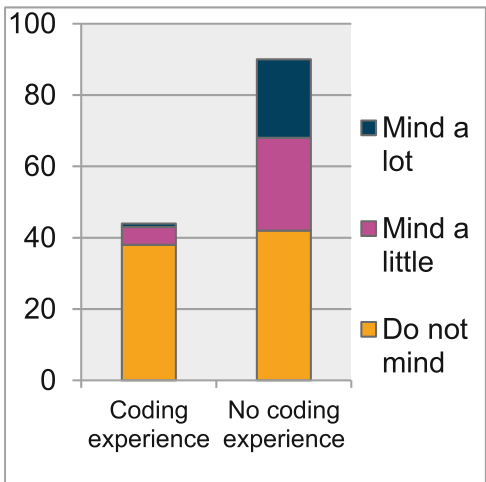
Fig. 1: Schematic representation of the CSS logic or data distribution (Placeholder).
The CSS takes demographic markers—age, major, and critically, the length of coding experience—to output:
- Anxiety Level Prediction: Likelihood of the teacher experiencing culture stress.
- Resource Allocation: Recommendation of the optimum number of AI agents (max 3) a teacher can plausibly handle.
Results: Predictable Variations
The Random Forest model achieved an accuracy of 80.59%. This high level of predictability suggests that "teacher readiness" is not an abstract feeling but a state that can be engineered and measured.
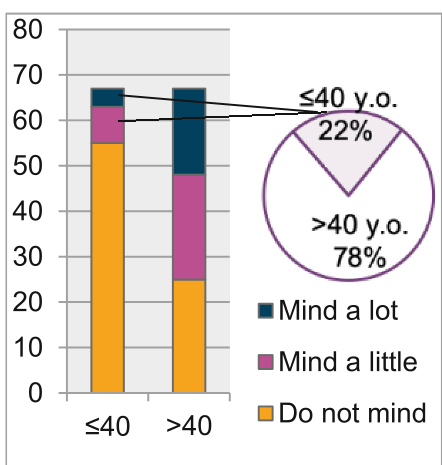 Fig 2. Direct correlation between age demographics and reported culture stress.
The data reveals that STEM-specialized teachers under 40 had nearly an 80% non-anxiety rate. However, once coding literacy was isolated, the "major" and "age" factors became secondary.
Critical Insight: The Osmosis Fallacy
The paper concludes with a powerful critique of educational policy. Unlike smartphones or tablets, AI robots and open-source platforms cannot be learned by "osmosis." If schools continue to treat AI as a "plug-and-play" tool without providing teachers with underlying coding literacy, the resources will continue to be misallocated.
Limitations & Future Work
- Sample Size: The study is a pilot with 134 teachers; larger datasets are needed to refine the CSS.
- Cultural Specificity: The study focuses on Japanese communication styles (avoiding neutral answers); international application would require cross-cultural calibration.
Conclusion
Ravenor's work provides a sine qua non for rational AI placement. By quantifying "culture stress," the CSS offers a roadmap for schools to move from the chaotic "flooding" of technology to a calculated, sustainable integration. The takeaway is clear: If you want robots in the classroom, you must first teach the teacher to speak their language.