
ISOCAT: Deep Diving into Political Sentiment through Neural Networks and Twitter
Intelligent Approach for Identifying Political Views over Social Networks
This paper introduces ISOCAT (Intelligent Social Crime Analysis Tool), a system designed to identify political orientations—specifically "supporter" or "anti-supporter" stances regarding the 2013 Gezi Park events—by analyzing Twitter data. Using an Artificial Neural Network (ANN) combined with word weight analysis, the method achieves a high classification accuracy of 90%.
TL;DR
Researchers from Gazi University have developed ISOCAT (Intelligent Social Crime Analysis Tool), a platform that leverages Artificial Neural Networks (ANN) to classify Twitter users as "supporters" or "anti-supporters" of specific political events. By processing over 10,000 tweets from the 2013 Gezi Park protests, the system achieved a 90% accuracy rate, demonstrating the potent intersection of data mining and linguistic weighting in social forensics.
Background & Motivation: The Social Network as a Weapon
Social media has evolved from a simple sharing platform into a critical tool for political organization. During events like the Gezi Park protests, Twitter became a primary medium for organizing demonstrations and spreading ideological content. The researchers argue that while social media provides a "democratic right," it can also be used as a "weapon" for vandalism and crime. The motivation for this study was to build an intelligent decision system that helps police and intelligence agencies predict the size of events and analyze the reaction of the populace in real-time.
Methodology: The Logic of Word Weighting
The core innovation lies in the Word Weight Analysis combined with a robust ANN backend. Unlike generic sentiment analysis, this method is highly localized and event-specific.
1. Keyword Database Construction
The researchers identified 100 critical keywords and categorized them:
- Neutral/Common (1-30): Words like "Gezi," "Park," and "Media" used by both sides.
- Supporter Lean (31-66): Words frequently used by the pro-event group.
- Anti-Supporter Lean (67-100): Terms like "betrayer" or "provocation" used by the opposing side.
2. Neural Network Architecture
The system uses a Multi-Layered Perceptron (MLP). The authors experimented with various training algorithms, including Gradient Descent (GD) and Levenberg-Marquardt (LM).
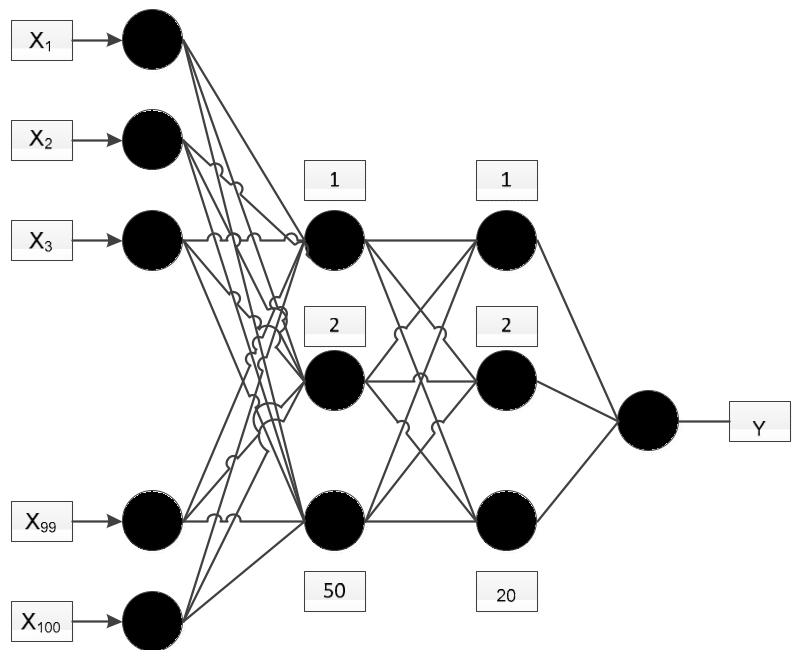 Fig 1: The architecture of the proposed neural network, featuring two hidden layers designed to map word weights to a binary political stance.
Experimental Performance
The researchers tested 10 different ANN configurations (Table 4 in the paper) to find the optimal balance between layer depth and neuron count.
- The Winner: Model #1, utilizing 50 neurons in the first hidden layer and 20 in the second, with Tangent Hyperbolic (T) and Linear (LN) transfer functions.
- The Success Metric: On a test set of 20 Twitter accounts (2,000 tweets), the model correctly identified the stance of 18 accounts, resulting in a 90% success rate.
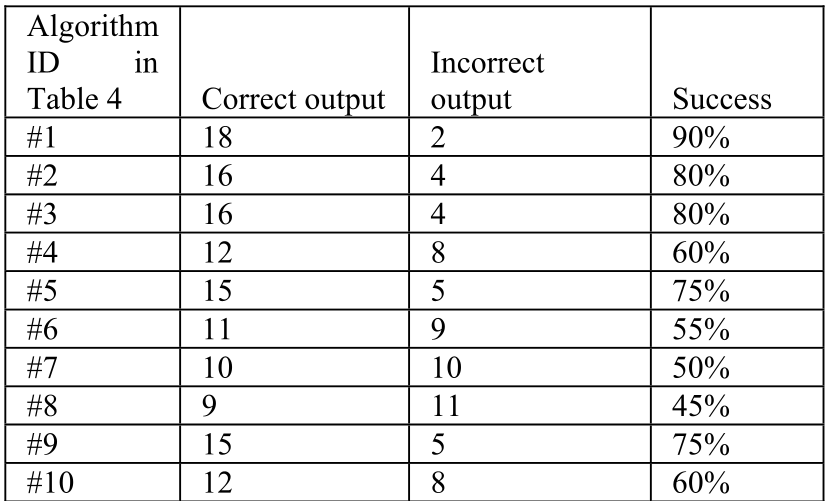 Table: Iterative testing of different algorithm IDs showing the 90% peak accuracy achieved by Model #1.
Software Implementation: ISOCAT
To make their findings actionable, the team developed ISOCAT. The software extracts tweets via PHP, calculates the total "word weight" of an account, and runs it through the trained ANN. If the final output is below 1.5, the user is classified as a "Supporter"; above 1.5, they are an "Anti-supporter."
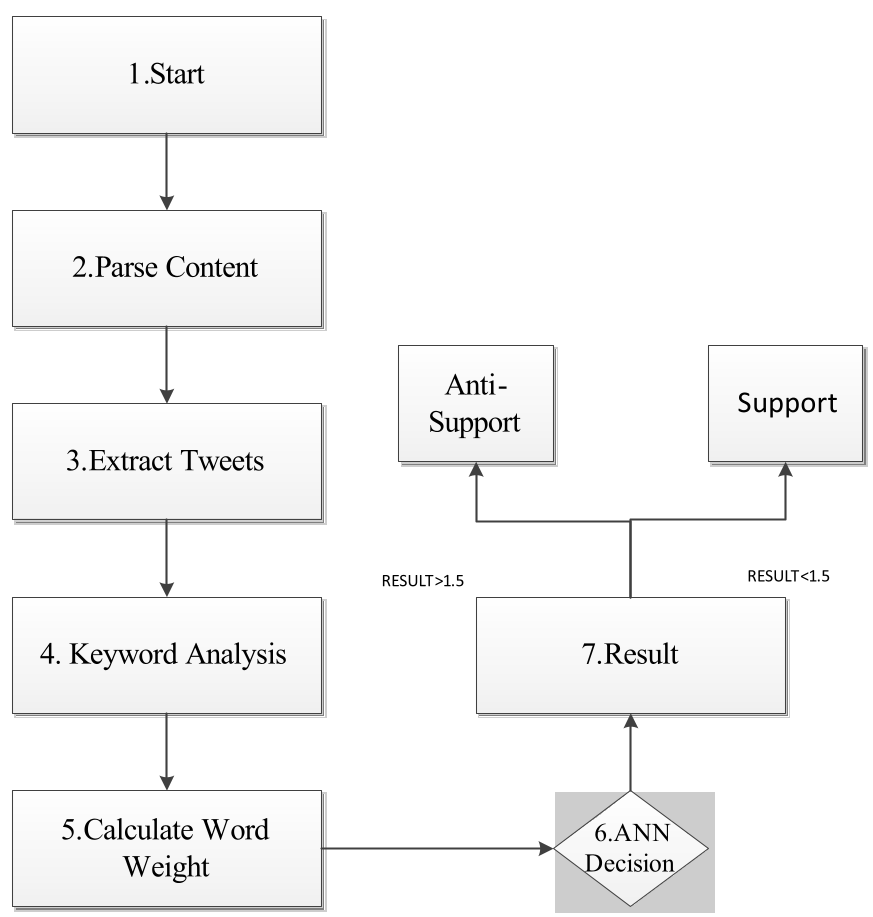 Fig 2: The User Interface of the developed software, showing the real-time classification of Twitter feeds.
Critical Insight: Why This Matters
The transition from simple keyword counting to ANN-based classification is crucial. Political discourse is rarely binary; meanings change based on word combinations. By training an ANN on the distribution and frequency of these weighted words, the system gains a rudimentary "intuition" for political leaning that standard filtering tools lack.
Limitations and Ethics
While the technical results are impressive, the study raises significant privacy and ethical questions. The authors acknowledge that privacy is a "hot topic" but argue that such tools are necessary for "crime analyzing and predicting boycotts." Future work intends to expand this logic to Facebook and even larger datasets to enhance the granularity of the predictions.
Conclusion
This paper serves as a technical cornerstone for automated social media forensics. By achieving 90% accuracy using localized linguistic features, the researchers have shown that AI can effectively monitor and categorize the complex, polarized landscape of social media during times of political instability.