
Treasury 4.0: Re-engineering the Corporate Nervous System with AI
“Intelligent” finance and treasury management: what we can expect
This paper explores the integration of Artificial Intelligence (AI), Machine Learning (ML), and Robotic Process Automation (RPA) into corporate finance and treasury management, a paradigm shift termed "Treasury 4.0." It outlines how intelligent systems can transform virtual financial processes from administrative burdens into strategic assets, achieving SOTA-level efficiency in cash flow forecasting and liquidity management.
TL;DR
The corporate treasury is evolving from a back-office administrative function into a strategic "intelligent" hub. By leveraging Robotic Process Automation (RPA) and Machine Learning, firms are reducing manual work by up to 80% and achieving 30-50% ROI. This paper defines the roadmap for Treasury 4.0, where AI acts as the organization's nervous system to manage liquidity, FX risk, and fraud detection with unprecedented precision.
Problem & Motivation: The Black Box Dilemma
Historically, treasury departments have been treated as "black boxes"—technical silos that manage cash but struggle to provide proactive strategic value. The primary pain points include:
- Data Silos: Information is trapped in incompatible General Ledger platforms.
- Behavioral Biases: Decisions regarding working capital often suffer from human "anchoring" and "loss aversion."
- Complexity: Unlike physical manufacturing, treasury processes are virtual and involve high-dimensional variables like global FX fluctuations and internal growth trends.
The authors argue that the only way to overcome these hurdles is to adopt the Treasury 4.0 framework, which treats AI as a holistic nervous system rather than a series of isolated gadgets.
Methodology: The "Nervous System" of Finance
The core insight of this paper is the classification of automation into a hierarchy, moving from basic data normalization to true cognitive AI.
The Four-Step Adoption Model
To effectively implement AI, corporations must follow a structured path:
- Directorial Alignment: Secure Board-level support for AI transformation.
- Scalable Data Strategy: Move beyond fragmented Excel sheets to a robust data lake.
- Cross-System Orchestration: Ensuring the Treasury Management System (TMS), ERP, and banking portals communicate seamlessly.
- Insight Extraction: Using ML to move from "What happened?" (Reporting) to "What will happen?" (Forecasting).
 Figure 1: The transition from physical processes to virtual, AI-enabled treasury frameworks.
Architecture of Automation
The researchers categorize the transformation into three "Type Models":
- Proprietary Development: Building in-house AI tools for corporate "portraits" and risk identification.
- Partnership Access: Accessing AI via banking partners (e.g., using "Smart Bill Pools" or "Smart Investment robots").
- Hybrid Solutions: Combining SaaS tools with internal business logic to manage "tail risks" (extreme events).
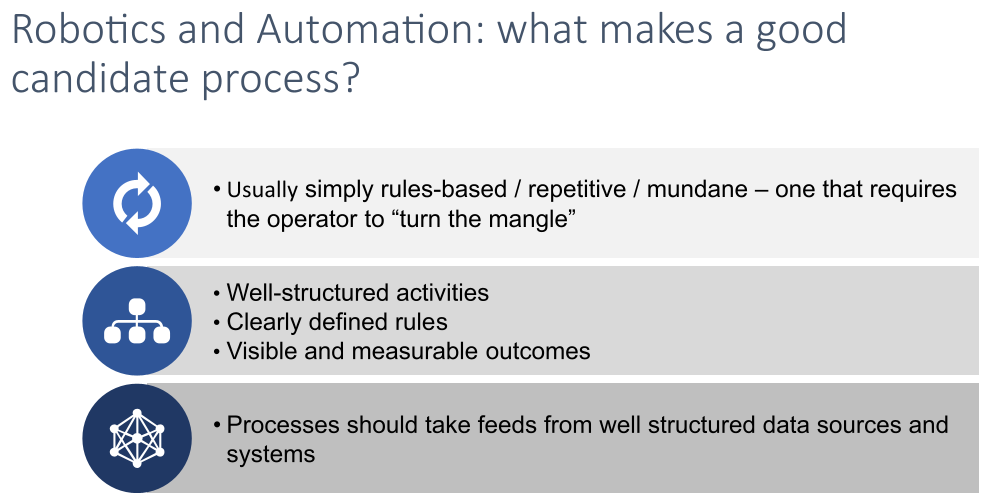 Figure 2: The workflow of Robotics and Automation in treasury, highlighting the role of data consolidation and virtual assistants.
Experiments & Real-World Impact
The paper provides a compelling case study on B2B payment processing:
- Payee Capture: By applying AI to OCR (Optical Character Recognition), the manual effort to validate payees against external databases dropped by 80%.
- Cost Efficiency: For a large organization, this single optimization resulted in over $1 million in annual savings.
- Strategic Speed: Real-time credit decisions enabled property managers to refuse payments from tenants whose leases they intended to sever, avoiding accidental contractual obligations.
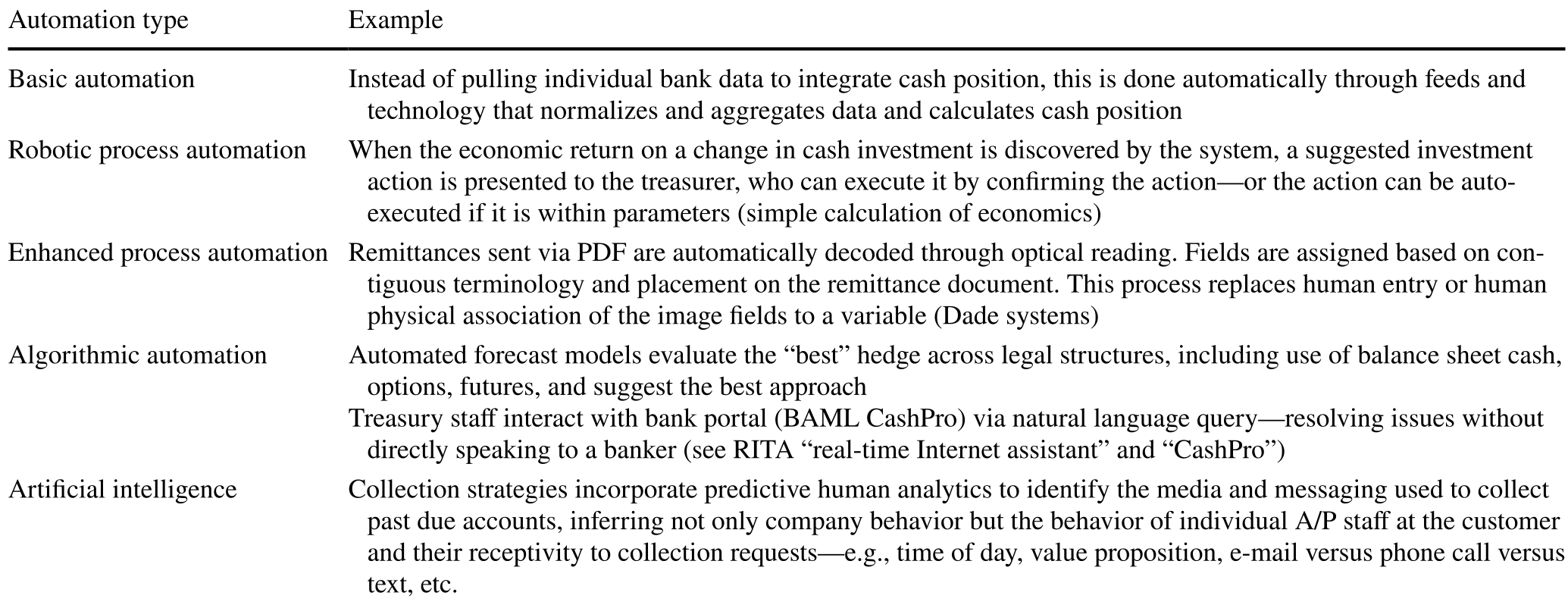 Table 1: Levels of Automation, from Basic (Cash Positioning) to AI (Predictive Human Analytics).
Critical Insight & Future Outlook
While the benefits are clear (30-50% ROI for RPA), the authors offer a sober reminder of the "Regulatory and Ethical Gap." As treasury functions become more opaque via deep learning, explaining credit decisions becomes harder, potentially clashing with regulations like the GDPR.
Takeaway: The future of treasury lies in "Augmented Intelligence." The goal is not to replace the Treasurer but to free them from the "black box" of administration, allowing them to focus on the high-level judgment calls that machines—for now—cannot simulate.
Conclusion: To reap the benefits of AI, simplicity is key. The more streamlined the underlying cash and FX operations, the easier it is for AI to act as an effective "Nervous System" for the firm.