
Intelligent Crowdsourcing: Bridging the Digital Divide via SMS and Machine Learning
An Intelligent Mobile Crowdsourcing Information Notification System for Developing Countries
The paper proposes an "Intelligent Mobile Crowdsourcing Information Notification System" specifically designed for developing countries. It introduces a hybrid communication framework using SMS and prediction algorithms (like Random Forest and Naive Bayes) to provide real-time public transit notifications even in areas with unstable internet and low user participation.
TL;DR
Mobile crowdsourcing has revolutionized transit in the West, but developing nations are often left behind due to poor internet and low user engagement. This paper introduces a robust framework that bypasses local infrastructure limitations by using SMS-based data protocols and Machine Learning to predict missing transit information and personalized rewards, ensuring a reliable service even with a "sparse" crowd.
Positioning: This work is a practical systems-level contribution that adapts SOTA Machine Learning (Random Forest, Naive Bayes) to the specific socioeconomic constraints of developing regions.
Problem & Motivation: The "Data Disparity" Gap
In developed cities, apps like Waze thrive on a constant stream of high-speed GPS data. However, in developing countries, several "Open Problems" exist:
- Infrastructure Fragility: Real-time tracking is impossible when mobile data is expensive or unavailable.
- Participation Cold-Start: Crowdsourcing requires a "critical mass" of users. Without historical data or immediate value, new users won't join, creating a vicious cycle of data sparsity.
- Language and Awareness: Complex English-centric UI/UX often alienates the local workforce.
The authors' insight is simple yet profound: Don't wait for better infrastructure; build on what exists (SMS) and simulate what is missing (via Prediction).
Methodology: The Intelligent Hybrid Framework
1. Reliable Communication via SMS Protocol
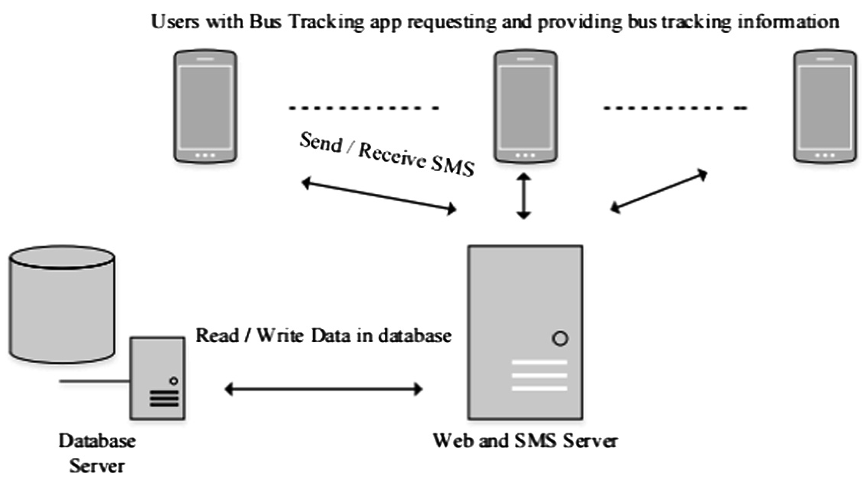
Instead of relying on HTTP/REST over 4G, the system implements a custom SMS protocol. If the app detects no internet, it packages the user's location and request into a condensed SMS. The server processes this and replies via SMS, which the app then parses to display a visual UI.
2. Filling the Gaps: Naive Bayes Prediction
When no active "contributors" are on a specific bus, the system doesn't return an error. Instead, it uses a Naive Bayes algorithm trained on historical arrival data to provide a "predicted" arrival time, maintaining user trust even during low-activity periods.
3. Motivational Engineering: Random Forest Profiling
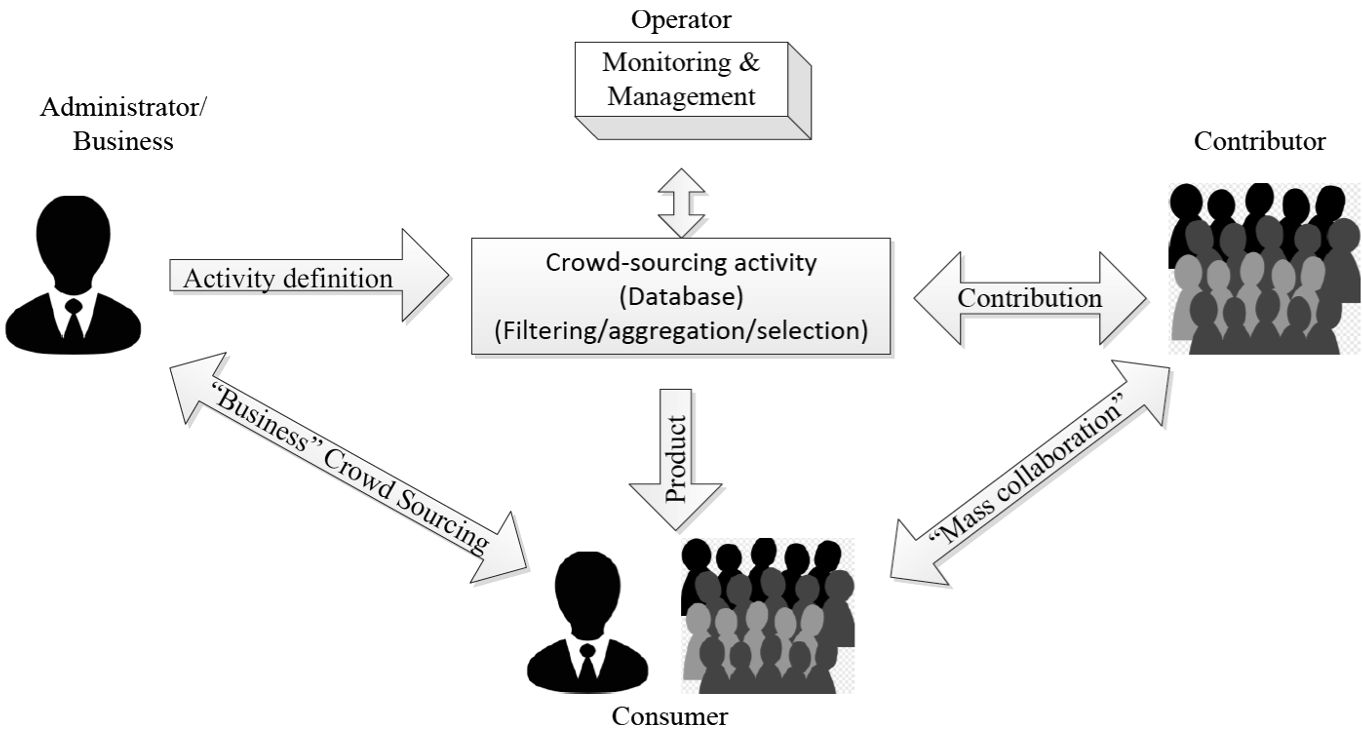
To solve the lack of motivation, the system uses a Reward-based platform. Not all rewards (coupons, bonuses) work for everyone. The system uses a Random Forest classifier to predict user categories (e.g., student, worker) based on demographic data and riding patterns, ensuring the "financial incentives" provided are actually relevant to the user.
Experiments & Results: Choosing the Right Model
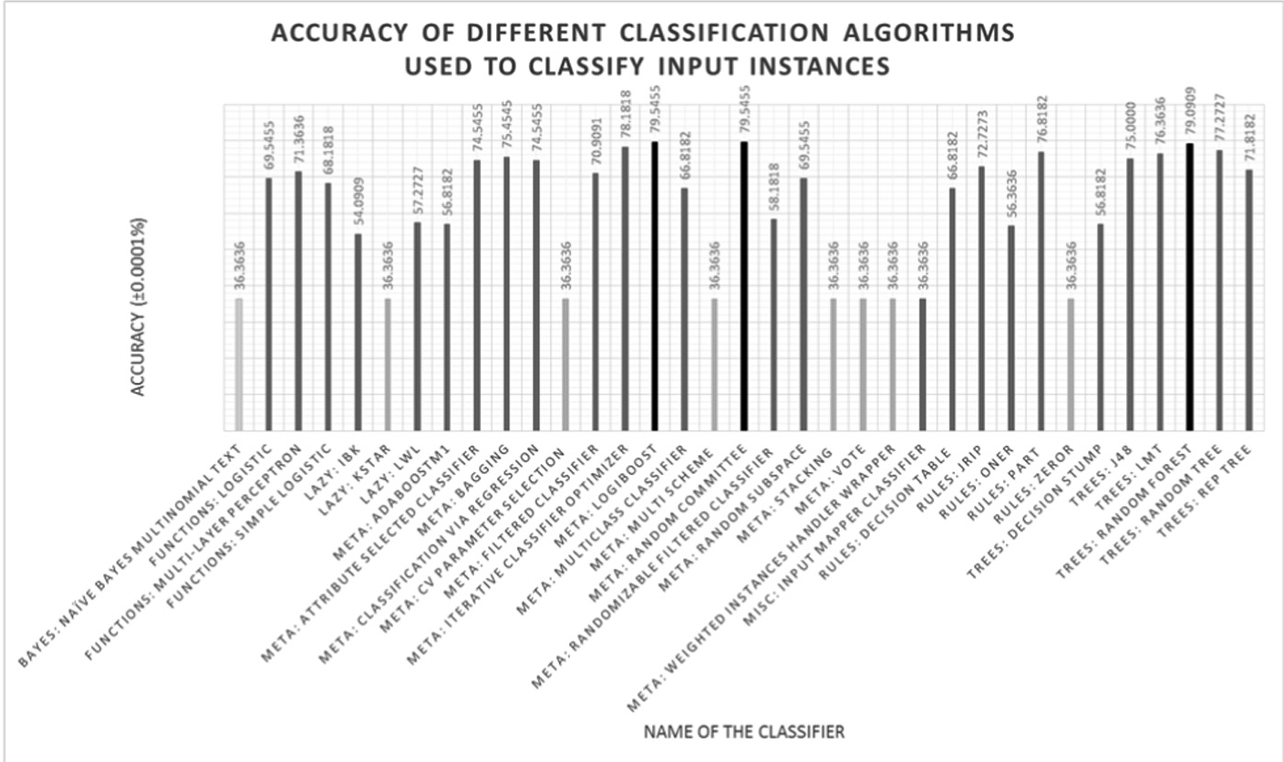
The authors tested 35 different classifiers using Weka to determine which model best predicts user categories for the reward system.
- Top Performers: Random Forest, LogiBoost, and Random Committee achieved an accuracy of ~80%.
- The "Why": Random Forest succeeded because it handles "skewed data" well (e.g., if the majority of bus users are students) and uses proximities to model complex relationships between variables.
- Failures: Naive Bayes Multinomial Text performed poorly (~36%) because its strict independence assumptions were violated by the overlapping nature of user behavior data.
Critical Analysis & Conclusion
Takeaway
The genius of this system lies in its graceful degradation. It uses high-tech Machine Learning to solve the problems caused by low-tech infrastructure. By integrating commercial advertisements into the notification SMS, it also creates a self-sustaining financial model.
Limitations & Future Work
- SMS Scalability: As the user base grows, the cost and traffic of bulk SMS could become a bottleneck. The authors suggest "dynamic thresholding" to minimize traffic in future iterations.
- Battery Consumption: While not focused on in this paper, constant GPS polling for crowdsourcing remains a challenge for low-end mobile devices common in these regions.
Final Insight: This paper proves that "Intelligent Systems" aren't just about the most complex neural networks; they are about applying the right algorithms to solve human problems where the environment is most challenging.