
Beyond the Glass Case: Redefining Social Interaction in Museums through Hybrid Artifacts
Interaction Paradigms in Technology-Enhanced Social Spaces: a Case Study in Museums
The paper introduces "The Fire and the Mountain," a museum exhibition utilizing hybrid interactive artifacts to combine physical manipulation with digital content. It explores unique interaction paradigms—tangible, auditory, and visual—designed to enhance social learning and engagement in technology-augmented public spaces.
TL;DR
"The Fire and the Mountain" is a landmark case study into how technology-augmented physical spaces can foster "Social Learning." By replacing passive observation with tangible interaction—where physical manipulation directly triggers digital responses—the researchers created an environment where museum visitors engage not just with history, but with each other. The study highlights both the intuitive power of physical interfaces and the "paradigm shift" difficulty of returning to traditional digital controls.
Contextual Positioning: Published in 2007, this work sits at the intersection of Ubiquitous Computing and Museum Informatics. It serves as an early SOTA (State of the Art) exploration of how to move past the "kiosk" model of museum technology toward a more holistic, multisensory ecosystem.
The Problem: The "Look, Don't Touch" Barrier
Historically, museum exhibits are "solipsistic." Visitors stand before an artifact, read a plaque, and move on. Prior work in digital museum guides often relied on PDAs or touchscreens that distracted from the artifacts themselves. The core challenge was: How do we make the technology invisible while making the interaction tangible and social?
The authors argue that the "cognitive relationship" alone isn't enough; true engagement requires a sensory-rich environment where physical objects act as the bridge to digital knowledge.
Methodology: The Four Pillars of Experience
The exhibition featured four distinct installations that moved away from the mouse-and-pointer metaphor toward hybrid ensembles.
- The Virtual Book: A smart board where turning physical pages or dragging images by hand created a personalized multimedia narrative.
- The Talking Dictionary: Uses a "drag and drop" physical metaphor to explore a dying local dialect (rungin).
- Research Tables: Users manipulated 3D objects and physical tools (like wooden sticks) on horizontal displays to trigger geological simulations.
- The Virtual Coal Cave: An augmented space utilizing a "tactile mouse"—a system using microphones to track finger movements or objects on ANY surface via acoustic wave propagation.
 Figure 1: The multisensory environment designed to evoke the obscurity of caves.
Lessons from the Field: Social & Cognitive Insights
Using a design ethnography approach, the researchers observed 62 children. Two major insights emerged regarding how we interact with technology in social spaces:
1. The Interaction Model "Trap"
One of the most profound findgs was the "Shift Difficulty." Once children adopted a physical manipulation model (touching, dragging, sliding), they became confused by traditional instruction-driven models (clicking "Start" or "Close" buttons). They would repeatedly touch the image of the object itself to make something happen, ignoring text labels. This suggests that tangible interaction is so "natural" that it resets the user's digital literacy to a pre-WIMP (Windows, Icons, Menus, Pointer) state.
2. Social Dynamics by Age
Collaboration wasn't universal.
- 8-year-olds: Preferred group discovery, sharing the "magical" pleasure of touching objects together.
- 11-year-olds: Behaved more like "testers," looking at the technology through the lens of videogames to see "if it worked."
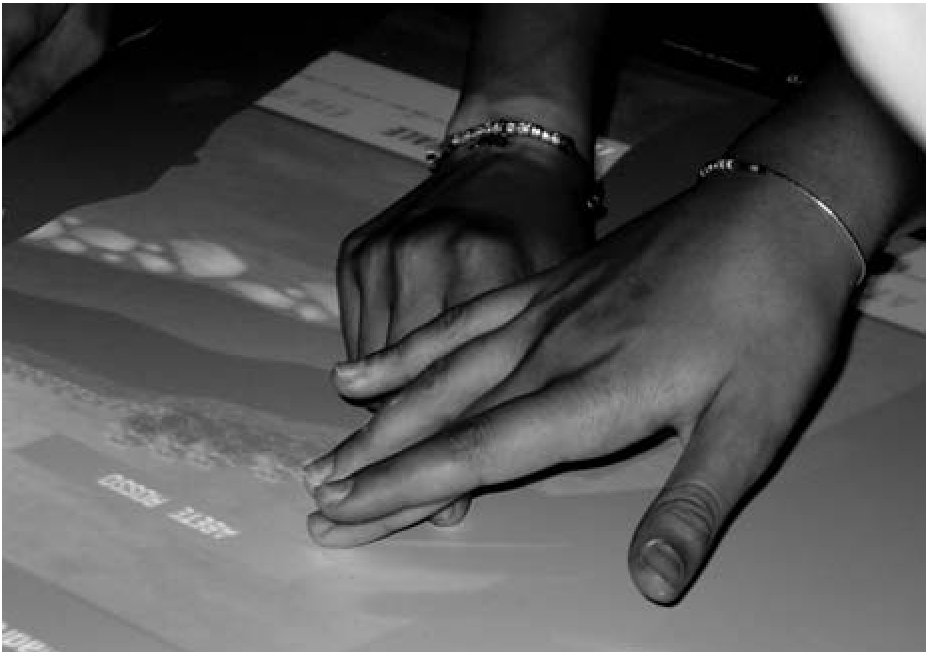 Figure 2: Children engaging in social discovery at the Research Table.
Critical Analysis: Why This Matters Today
While this study was conducted in 2006/2007, its findings on Contextual Affordances (how the color of walls and the volume of audio cues drive visitor flow) are more relevant than ever in the age of "Immersive Experiences" (like TeamLab or Van Gogh exhibits).
Strengths:
- Tangible Interface Persistence: The use of acoustic wave tracking was ahead of its time, turning low-cost panels into smart surfaces.
- Holistic Design: It didn't just design the software; it designed the room (black walls, LEDs, spatial audio).
Limitations: The study notes a "Disorientation" factor. When the physical affordance was unclear (e.g., users didn't know they could touch the book), the experience stalled. This highlights the need for semiotic cues in hybrid spaces—signs that invite touch without breaking the immersion.
Conclusion: The Future of Hybrid Spaces
"The Fire and the Mountain" proves that when technology is embedded into the environment's physical fabric, it encourages active and shared learning. For future designers, the takeaway is clear: Design the interaction, not the interface. To create truly engaging public spaces, we must exploit the human desire to touch, hear, and collaborate.
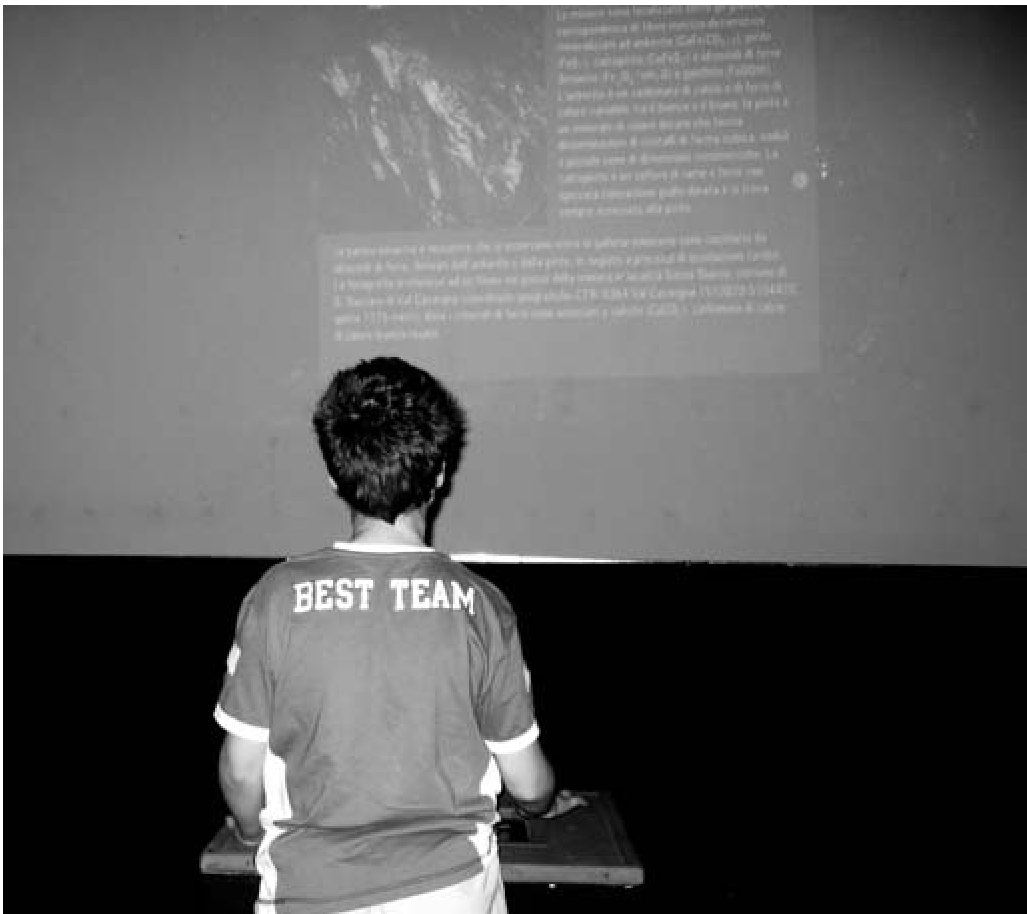 Figure 3: Exploring the Virtual Coal Cave using tangible, surface-based interaction.