
Vesta: Scaling Hierarchical Summarization for Spatiotemporal Social Streams
Interactive hierarchical tag clouds for summarizing spatiotemporal social contents
The paper introduces Vesta, a visual exploration system for spatiotemporal social network data that generates Hierarchical Tag Clouds. It utilizes a novel biclustering approach based on Formal Concept Analysis (FCA) to summarize contents and a Partition-and-Merge (PM) scheme to handle large-scale streaming data with interactive performance.
TL;DR
The explosion of geo-tagged social media content presents a "needle in a haystack" problem for researchers and analysts. This paper proposes Vesta, a system that transforms millions of tweets into Interactive Hierarchical Tag Clouds. By combining a fast biclustering method based on Formal Concept Analysis (FCA) with a scalable Partition-and-Merge architecture, Vesta allows users to zoom from high-level topics (e.g., "Olympics") to specific details (e.g., "Bolt," "Ticket Prices") in real-time.
The Scalability Wall in Topic Modeling
Most researchers turn to Latent Dirichlet Allocation (LDA) or its hierarchical variant (hLDA) for text summarization. However, these models rely on iterative MCMC algorithms like Gibbs sampling. For a stream of 400 million tweets a day, hLDA is computationally prohibitive—it simply cannot converge fast enough to be "interactive."
Furthermore, standard tag clouds are "flat." They display a sea of keywords where frequency is the only metric, providing no semantic structure or progressive disclosure of information.
Methodology: The Partition-and-Merge (PM) Innovation
Vesta’s core innovation lies in its hybrid approach to data processing:
1. Biclustering via Formal Concept Analysis (FCA)
Rather than grouping only documents or only words, Vesta uses biclustering to find groups of tags and contents simultaneously. By leveraging FCA, the system identifies "Formal Concepts"—submatrices where every tag appears in every content. This provides a "full-density" summary that is far more semantically consistent than standard clustering.
2. The Two-Phase PM Scheme
To achieve interactive performance, Vesta splits the problem into two parts:
- Offline Partitioning: The world is divided into spatial grid cells and 24-hour time slices. In each slice, the system pre-computes local biclusters and topic hierarchies.
- Online Merging: When a user selects a region (e.g., California) and a time range on a map, Vesta pulls the pre-computed "mini-hierarchies" and merges them using a probabilistic algorithm.
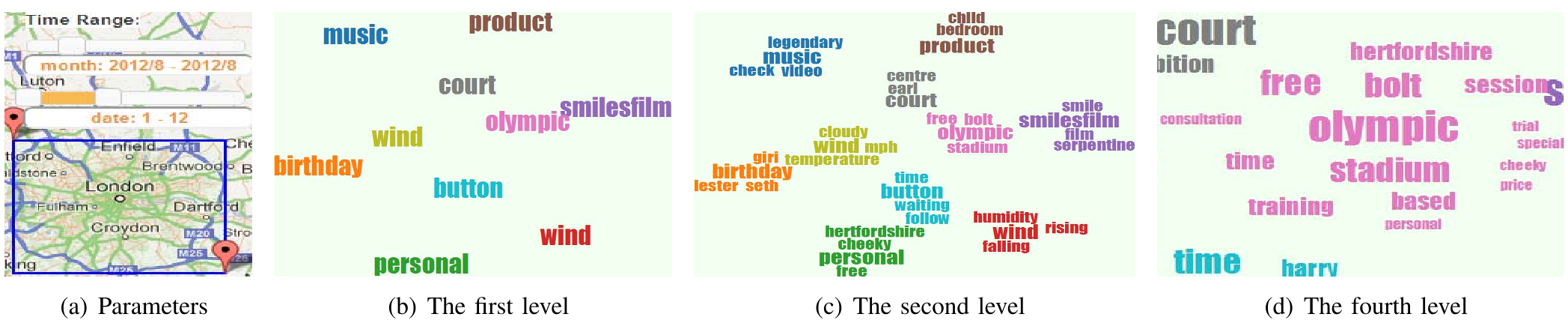 Figure 1: The visual progression from general level-1 tags to specific level-4 tags.
Why It Works: Semantic "Zooming"
The system doesn't just show more tags when you zoom in—it shows more specific tags.
- Level 1: General category (e.g., "Obama," "Romney").
- Level 2-4: Contextual details (e.g., "Campaign," "Voter," "Strategy").
Vesta ensures that as the summary grows, the density of the relationships remains high, preventing the "topic drift" common in large-scale LDA deployments.
Performance Benchmarks
In a head-to-head comparison with ParallelLDA, Vesta’s biclustering (Ours-Tag) was significantly faster while maintaining higher precision and recall for detected topics.
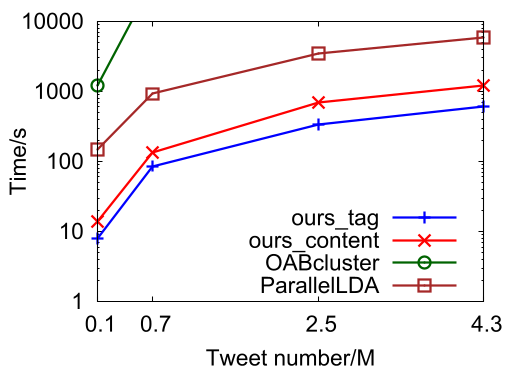 Figure 2: Execution time across different data scales. Note the nearly linear scalability of Vesta compared to traditional methods.
Even with 4.3 million Daily Active Tweets, the system was able to process an entire day of data in under an hour through parallelization—a critical requirement for any production-ready social monitoring tool.
Critical Insight: The Mismatch Problem
A unique contribution of the paper is the analysis of the "Mismatch Problem." When you partition space into boxes, a user's query might only partially cover a box. Vesta introduces a mismatch rate metric to adaptively adjust partition sizes, ensuring that the "summaries" the user sees are actually representative of the specific coordinates they selected.
Summary & Future Outlook
Vesta acts as a bridge between high-speed data engineering and sophisticated semantic modeling. By moving the heavy lifting (hLDA) to the offline partition phase and using efficient FCA for summary generation, it achieves what many topic models cannot: scalability without sacrificing hierarchy.
Limitations: Currently, there is a one-day latency due to daily partitioning. Future improvements in incremental updates could make this a truly real-time "Social Radar."