
NAO as a Social Bridge: Integrating BDI and Motivated Learning for Autism Therapy
10464_Interactive robots as social partner for communication care.
This paper introduces an interactive robotic system using a NAO humanoid robot designed as a social partner for children with Autism Spectrum Disorder (ASD). By integrating a Belief-Desire-Intention (BDI) model with a specialized Motivated Learning (ML) framework, the system facilitates therapeutic interventions like the "Sally Anne Task" and "Simon Says" to improve social communication.
TL;DR
Researchers have developed a robotic intervention system utilizing the NAO humanoid robot to assist children with Autism Spectrum Disorder (ASD). By combining the Belief-Desire-Intention (BDI) cognitive model with a novel Supervised Reinforcement Learning framework, the robot can act as a social partner that reduces patient anxiety while teaching critical skills like empathy and joint attention.
Problem & Motivation: The "Therapeutic Wall"
Children with ASD often find human social interaction unpredictable and overwhelming. This leads to two major clinical hurdles:
- Anxiety: One-on-one sessions with therapists can be intrusive for socially withdrawn individuals.
- Generalization: Skills learned in a clinical setting often stay in the clinic.
The authors' insight is grounded in the fact that children with ASD are often preferentially drawn to technology. Robots provide a predictable, repeatable, and low-pressure environment where children can practice social "scripts" before attempting them with human peers.
Methodology: The Cognitive Engine
The paper moves beyond simple remote-controlled toys by introducing a sophisticated internal architecture.
1. The BDI Model
To make the robot "believable," the system uses a BDI (Belief, Desire, Intention) architecture. It separates Knowledge (static facts) from Beliefs (dynamic states the robot can revise). By merging "desire" and "intention," the robot targets specific therapeutic goals—such as initiating a conversation or responding to a child's lack of eye contact.
2. Supervised Reinforcement Learning + GCS
Standard Reinforcement Learning (RL) is too slow for real-world therapy. The authors utilize Supervised RL, where a therapist provides "correct" training examples via remote control. These examples are then used for off-line training using the SARSA algorithm.
- Goal Creation System (GCS): This allows the robot to dynamically switch between goals based on "pains" (e.g., if a child stops looking at the robot, the "Lack of Interaction" pain increases, triggering a dance or a greeting).
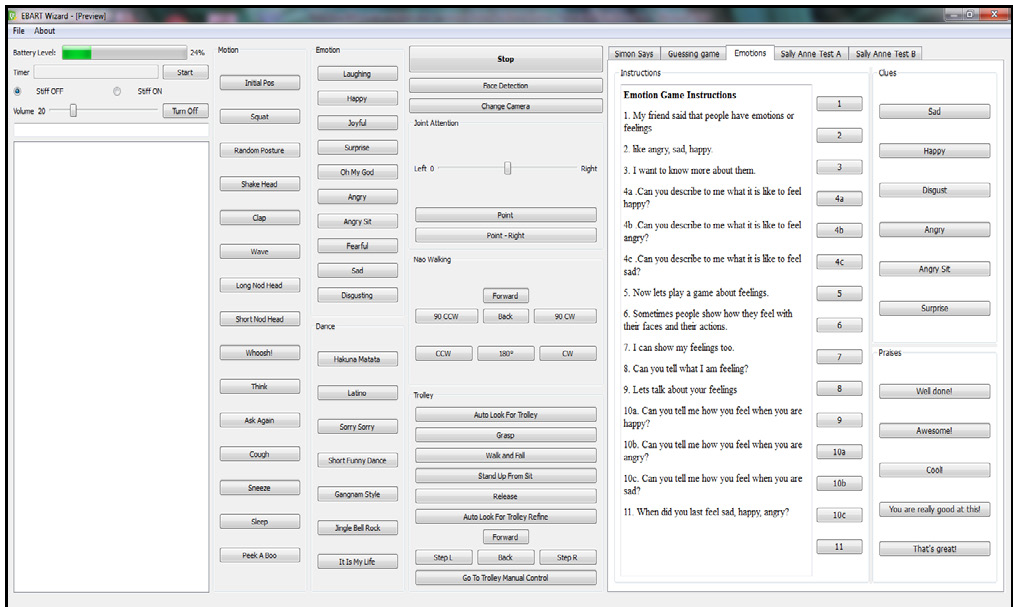 Fig 1: The EBART interface used by therapists to transition between autonomous and supervised modes.
Experiments: Measuring "Sense of Achievement"
The robot’s primary internal drive is a "Sense of Achievement," gained when it successfully reduces its "pains" (clinical deficits in the child).
Key Tasks:
- The Sally Anne Task: Testing for false belief and theory of mind.
- Simon Says: Encouraging imitation skills.
- Trolley Task: Observing empathy when the robot "accidently" falls.
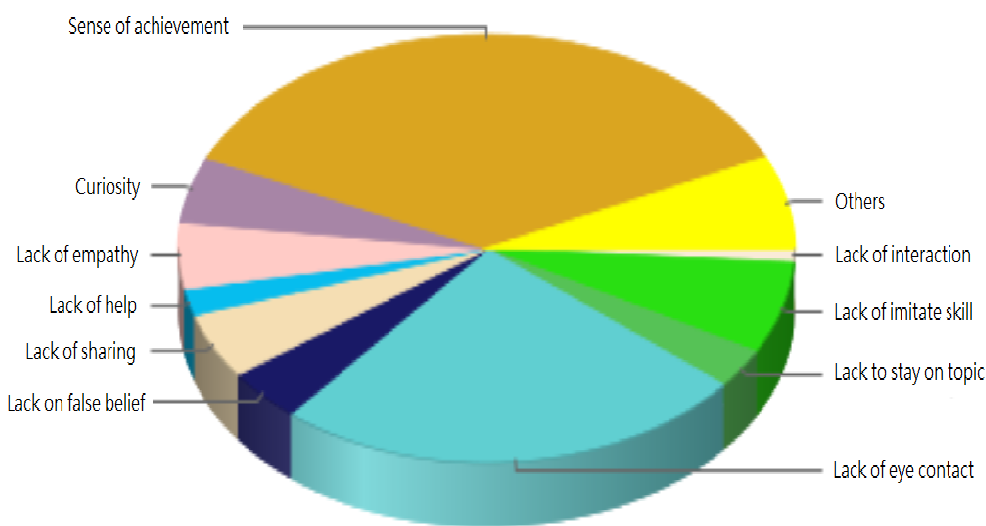 Fig 2: Learning progress showing a significant decrease in "wrong" or "useless" actions as iterations increase (20,000 cycles).
The data indicates that over time, the robot learns a Goal Map. Initially, the robot makes many redundant movements (useless actions), but by the end of the simulation, valid goals—those that actually reduce therapeutic "pains"—become the dominant behavior.
Critical Analysis & Conclusion
Takeaway
The integration of GCS and BDI allows the robot to be more than just a puppet; it becomes an autonomous agent capable of "understanding" the therapeutic objective. This reduces the cognitive load on the therapist and provides a more consistent experience for the child.
Limitations
While the simulation results are strong, the paper highlights that real-world stochasticity (highly unpredictable child behavior) still poses a challenge. The current system relies on a "Wizard of Oz" (unseen operator) for complex nuances, meaning full autonomy in an unconstrained environment is still on the horizon.
Future Outlook
The authors suggest this framework isn't limited to NAO or ASD. It could be ported to other humanoid platforms to assist children with Social Anxiety or other communication disorders, bridging the gap between clinical intervention and community-based home care.