
DGE: Bridging Heterogeneous Graphs and Real-Time Social Recommendations
International Journal of Human - Computer Studies
This paper introduces the Dynamic Graph-based Embedding (DGE) model for real-time social recommendation. By constructing an incrementally updated Heterogeneous User-Item (HUI) network and leveraging asynchronous parallel learning, DGE achieves SOTA performance in recommending both friends and items.
TL;DR
In the fast-paced world of social media, user preferences change in milliseconds. Traditional recommendation engines often lag behind, struggling with the "cold-start" of new users and the sheer complexity of heterogeneous social networks. This paper presents DGE (Dynamic Graph-based Embedding), a framework that models users and items as nodes in an evolving graph. By using incremental learning and an optimized search algorithm, DGE provides accurate, real-time recommendations for both friends and content, outperforming classical Matrix Factorization and static embedding methods.
1. The Bottleneck: Static Models in a Dynamic World
Most recommendation systems (like Collaborative Filtering) treat the user-item matrix as a static snapshot. However, social networks are heterogeneous and dynamic:
- Heterogeneity: A single link might represent a "follow" (social), a "click" (behavioral), or a shared "hashtag" (semantic).
- Temporal Latency: Re-training a massive model every time a user tweets is computationally impossible.
- The Cold Start: When a new user joins, there’s no historical data to power the recommendation engine.
Authors of this paper argue that to solve these, we need a model that can update "on the fly" without losing the global context of the network.
2. Methodology: The Architecture of DGE
The DGE model operates in three distinct phases: Network Construction, Incremental Embedding, and Efficient Retrieval.
2.1 The HUI Network
DGE constructs a Heterogeneous User-Item (HUI) Network. Unlike standard graphs, the transition probability matrix is meticulously designed to balance three factors:
- User Behavior Sequential Patterns ()
- Social Relationships ()
- Semantic Effects ()
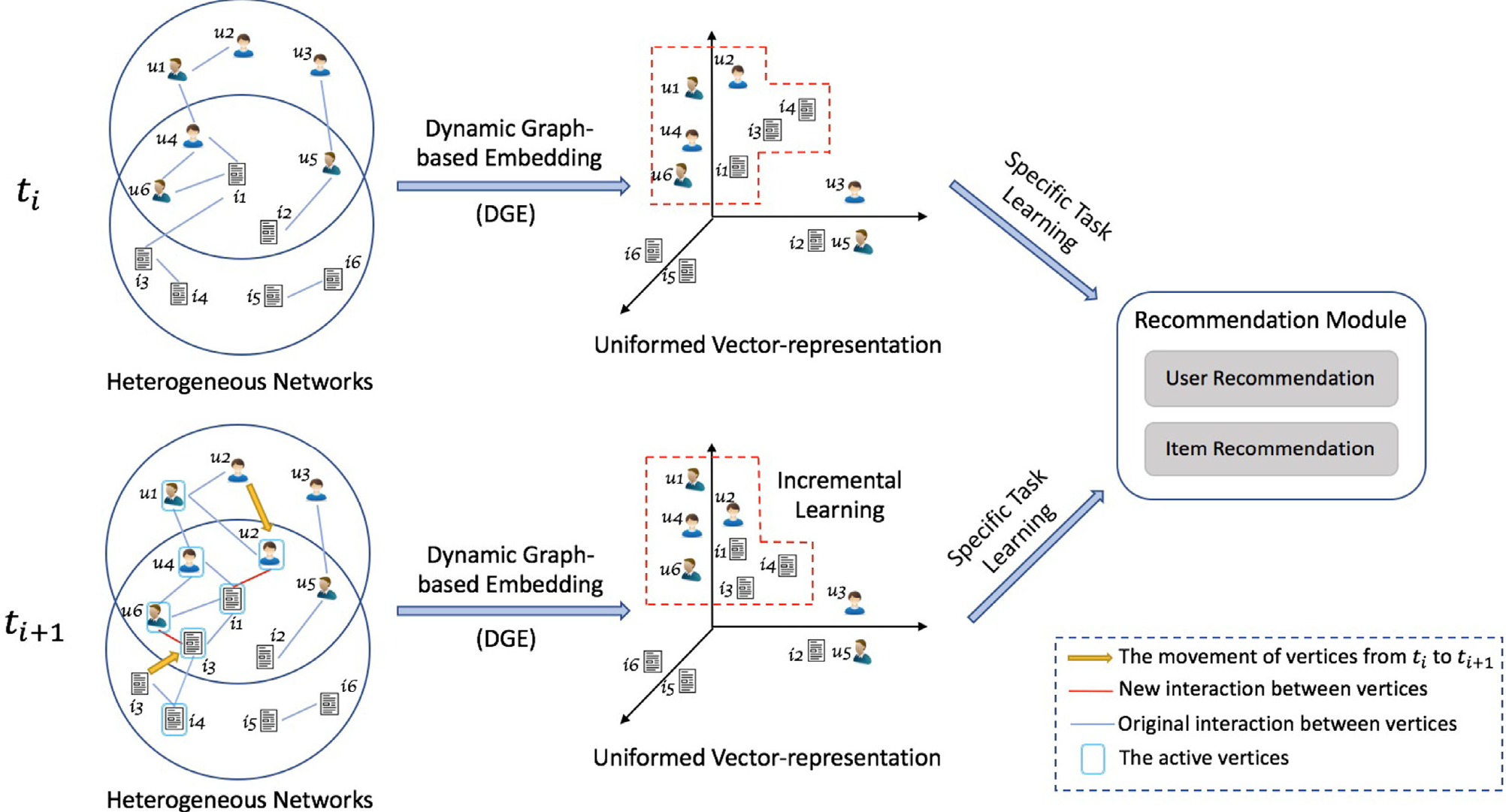 Fig 1: The flowchart of the DGE framework, showing the loop from live social streams to real-time embedding updates.
2.2 Incremental Learning via ASGD
Rather than retraining from scratch, DGE identifies active nodes—those involved in recent interactions. It performs Heterogeneous Random Walks starting from these nodes and updates their low-dimensional vectors using Asynchronous Stochastic Gradient Descent (ASGD). This "lock-free" approach allows the model to scale horizontally across multiple CPU threads without performance loss.
3. Real-Time Retrieval: The Threshold Algorithm (TA)
Even with perfect embeddings, calculating the similarity between one user and millions of candidates is slow. The authors extended the Threshold Algorithm (TA). By maintaining sorted lists for each embedding dimension, the system can stop searching as soon as the "threshold score" (the maximum possible score of unexamined items) drops below the score of the current -th best candidate.
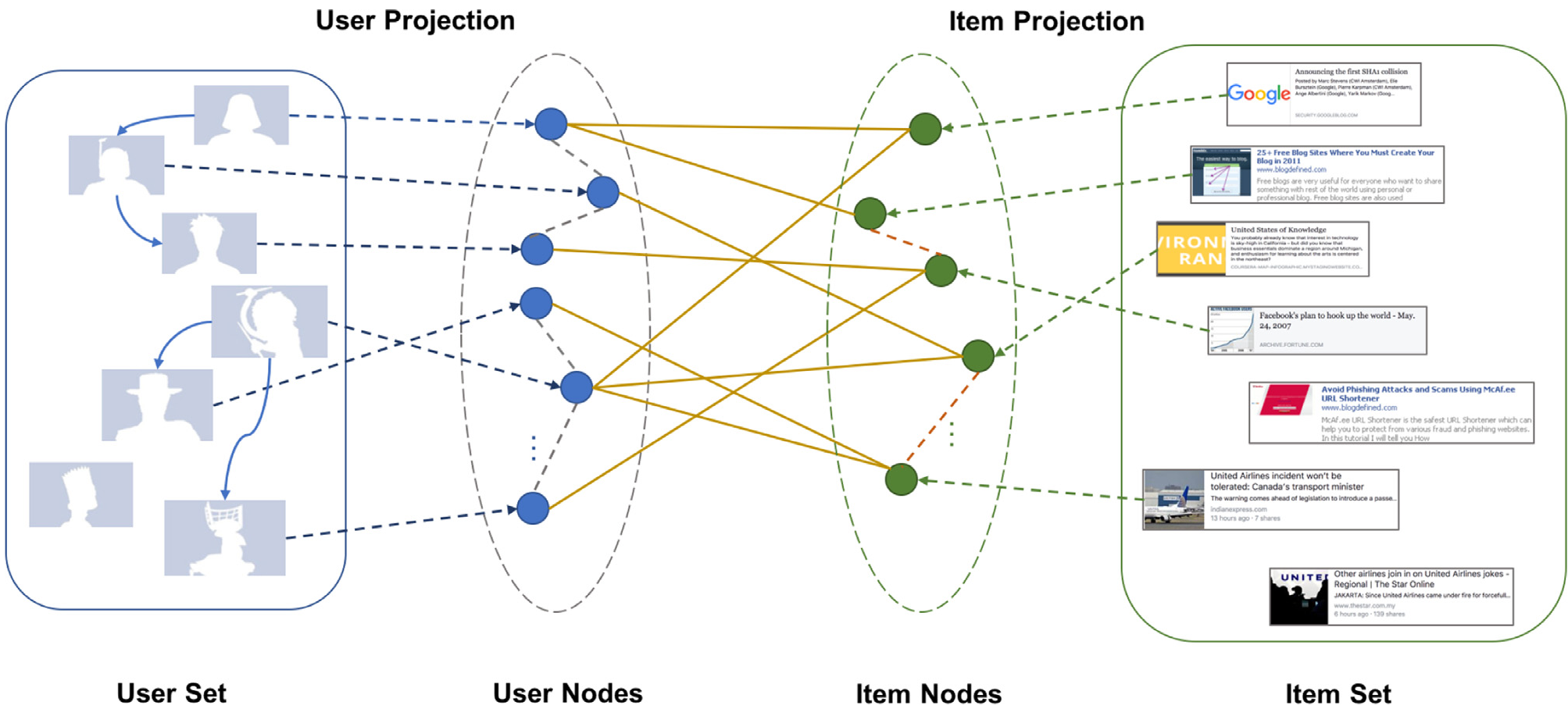 Fig 2: Visualization of the HUI network, integrating social links (dashed) and interaction links (solid).
4. Experimental Results & Insights
The model was tested on massive datasets from Twitter (87k users, 7.8M items) and Last.fm.
4.1 Superior Performance
DGE consistently beat state-of-the-art baselines like LINE and DeepWalk. In item recommendation (Recall@10), DGE achieved 0.481 on Twitter, significantly higher than WRMF's 0.314.
4.2 Solving Cold Start
In "cold-start" scenarios (users with <20 interactions), traditional CF models often fail. DGE maintains high performance by "borrowing" strength from the semantic and social links in the HUI network. Even if a user hasn't clicked anything, their social ties or the content of their few posts provide enough embedding context for a relevant recommendation.
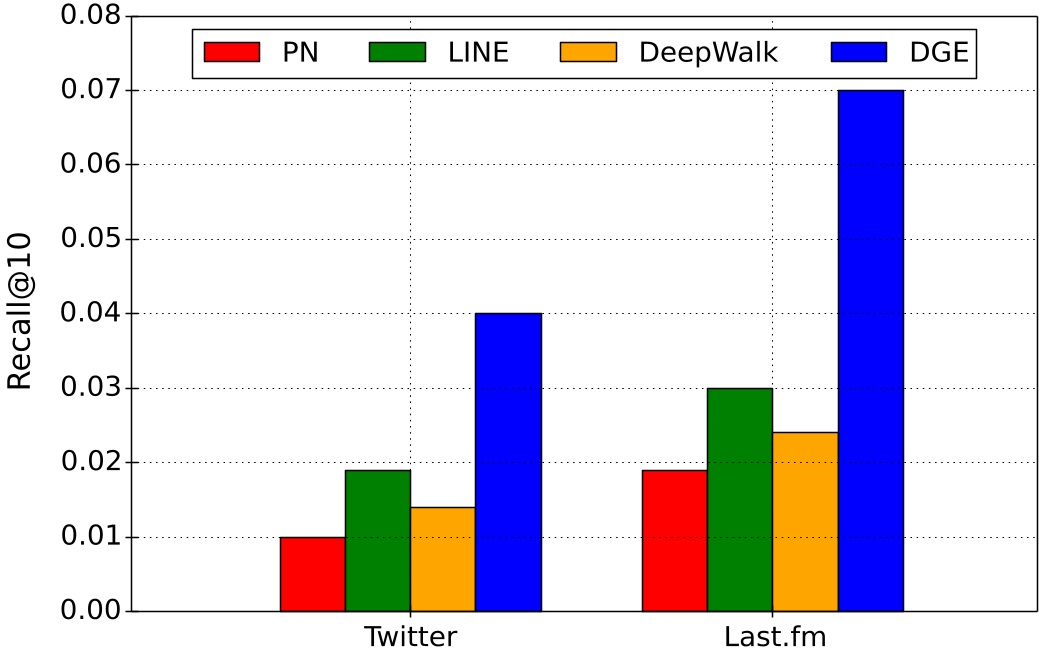 Fig 3: Recommendation performance regarding Average Reciprocal Hit-Rank (ARHR) across different values of K.
5. Conclusion & Future Outlook
DGE proves that graph representation learning is not just for static analysis—it is a viable engine for real-time production systems. By treating recommendation as a dynamic embedding problem, the authors managed to:
- Lower latency to sub-50ms levels.
- Integrate multi-source data (social + semantic) seamlessly.
- Maintain accuracy as the network scales.
Future Work: The authors suggest moving beyond local neighborhood context to incorporate global community structures and exploring deep architectures like CNNs for even richer feature extraction.
Editor's Note: This work is a seminal example of how to combine classical graph theory (Random Walks/Threshold Algorithms) with modern Distributed Representation Learning to solve real-world engineering constraints in high-load environments.