
Twitter-Based Weighted Reputation: Solving the Trust Crisis in Online Shopping
The International Symposium on Advances in Transaction Processing A Twitter-Based Weighted Reputation system
The paper proposes a Twitter-based weighted reputation system that integrates Online Social Networks (OSNs) with e-commerce marketplaces. By leveraging Twitter relationship data (followers/following), it generates a personalized trust score for sellers based on the viewer's social proximity to previous reviewers.
TL;DR
Trust is the currency of the digital economy. This paper introduces a personalized reputation system that integrates Twitter’s social graph into e-commerce. Instead of a generic star rating, it weights reviews based on your relationship with the reviewer—prioritizing your friends' opinions over total strangers.
Context Alignment: This work identifies the transition from "Centralized Trust" (ratings managed by the platform) to "Social Trust" (ratings validated by your community).
The Problem: The "Anonymity Gap" in Online Reviews
Why do we trust a 4.5-star product only to find it's a scam? The paper identifies a fundamental flaw in current systems like eBay and Amazon: The Lack of Direct Communication.
- Prior Work Failure: Traditional systems treat all ratings equally. This allows for manipulation (shill bidding or review bombing).
- Data Evidence: The authors' survey revealed that only 11.1% of people trust reviews from anonymous buyers, whereas nearly 60% trust people they have a bidirectional relationship with on social media.
Methodology: High-Weighting Your Inner Circle
The core innovation is the Weighted Reputation Score. The system assumes that if you follow someone and they follow you back, their review of a seller is more valuable to you than a random user's.
The Relationship Hierarchy
The authors define three distinct categories of reviewers for any buyer looking at seller :
- (Bidirectional): Close mutual connections ().
- (Unidirectional): People you follow, like influencers or experts ().
- (Anonymous): Strangers with no social link ().
The Formula
The reputation score is calculated as: Constraint:
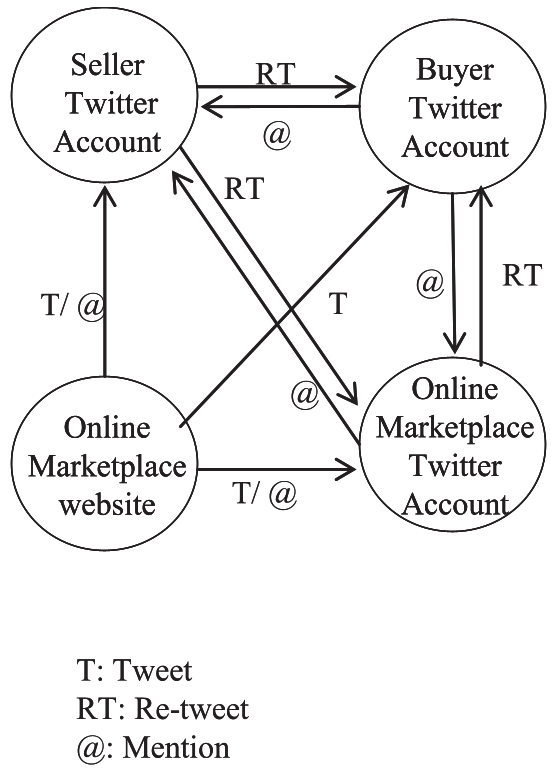 Figure: The interaction between the Marketplace, Twitter API, and the Users.
Why This Matters: From Feedback to Marketing
The paper doesn't just stop at a formula; it describes an incentive loop:
- Transparency: Buyers can post reviews directly to their Twitter feed.
- Social Proof: Marketplaces can "Retweet" (RT) positive public reviews from reputable users, turning a simple rating into a verified testimonial.
- Privacy: Users can choose "Private" reviews, visible only to their social circle, protecting their shopping habits from the general public while still helping friends.
Experimental Insights
The survey conducted by the authors (N=103) acts as the primary validation for their "Social Trust" hypothesis:
- 86.4% confirm that reputation systems are critical for purchase decisions.
- 58.8% of users explicitly trust bidirectional relations more than any other group.
- 41.7% stated that such an integrated system would directly increase their purchase frequency.
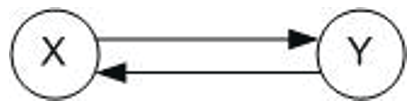 Figure: Unidirectional vs. Bidirectional social links used to determine weightings.
Critical Analysis & Conclusion
Takeaway
The paper successfully demonstrates that Social Graph Integration is a powerful antidote to review manipulation. By weighting known quantities higher, the system naturally filters out "noise" from low-trust anonymous accounts.
Limitations
- Cold Start Problem: If a buyer has no Twitter friends who have purchased from a specific seller, the system defaults back to the (less trusted) anonymous weights.
- Platform Dependency: The system relies heavily on the Twitter API, making it vulnerable to changes in social media data policies.
Future Outlook
The next step for this research is the implementation of SWTrust frameworks, which use graph-based algorithms to automatically generate the weights , , and based on the "distance" between nodes in the network, rather than using fixed constants.