
Connecting the Unconnected: Leveraging TV White Spaces and Mesh Networks in Rural South Africa
Building an Argument for Internet Expansion in Dwesa - an Under-Serviced Rural Community in South Africa
This paper investigates the expansion of the Siyakhula Living Lab (SLL) community network in Dwesa, a rural South African region, utilizing Wi-Fi mesh and Television White Space (TVWS) technologies. The study successfully identifies critical expansion nodes including clinics and "ICT champions" to bridge the digital divide in under-serviced areas.
TL;DR
In the rural Dwesa region of South Africa, traditional internet infrastructure is non-existent. This paper explores the expansion of the Siyakhula Living Lab (SLL) through a hybrid approach using Wi-Fi mesh and Television White Space (TVWS) technologies. By shifting from a school-only focus to a community-wide mesh (including clinics and households), the authors provide a blueprint for high-impact, low-cost rural connectivity.
Background & Motivation: The Rural Connectivity Gap
While mobile penetration in Africa grows at 6% annually, fixed-broadband remains stuck below 1% in rural areas. In communities like Dwesa, the lack of internet isn't just a matter of convenience—it affects the quality of education and the efficiency of healthcare. The Siyakhula Living Lab (SLL) project was established to address this, but initial iterations faced a lack of redundancy and limited range. The authors recognized that for the network to be truly resilient and impactful, it needed to evolve beyond "broadband islands" into a cohesive, redundant mesh.
Problem Analysis: Beyond the Physical Cable
The paper identifies that the challenge is three-fold:
- Technical: Mountainous terrain and sparse populations make traditional 2.4/5GHz Wi-Fi insufficient for long-distance backhaul.
- Managerial: Without access control and digital literacy, limited 3GB VSAT caps are exhausted instantly by unintentional misuse (e.g., massive media downloads).
- Societal: Traditional beliefs and a lack of "technological know-how" can lead to a backlash against technology if it is perceived as a source of negative cultural influence.
Methodology: The Technical Blueprint
The study proposes a sophisticated network expansion that balances technical robustness with social reality.
1. TV White Space (TVWS) for Long-Range Backhaul
The core innovation is the use of TV White Spaces—unused portions of the UHF TV spectrum (760-780 MHz). Because lower frequencies penetrate obstacles better than high-frequency Wi-Fi, the authors propose a 10km link between Badi and Ngwane schools using WiBack (Wireless Backhaul) technology.
2. Redundancy and Multi-hop 5GHz Mesh
By creating parallel links, the network avoids a "single point of failure." If a satellite link fails at one school, the mesh can reroute traffic to an active node.
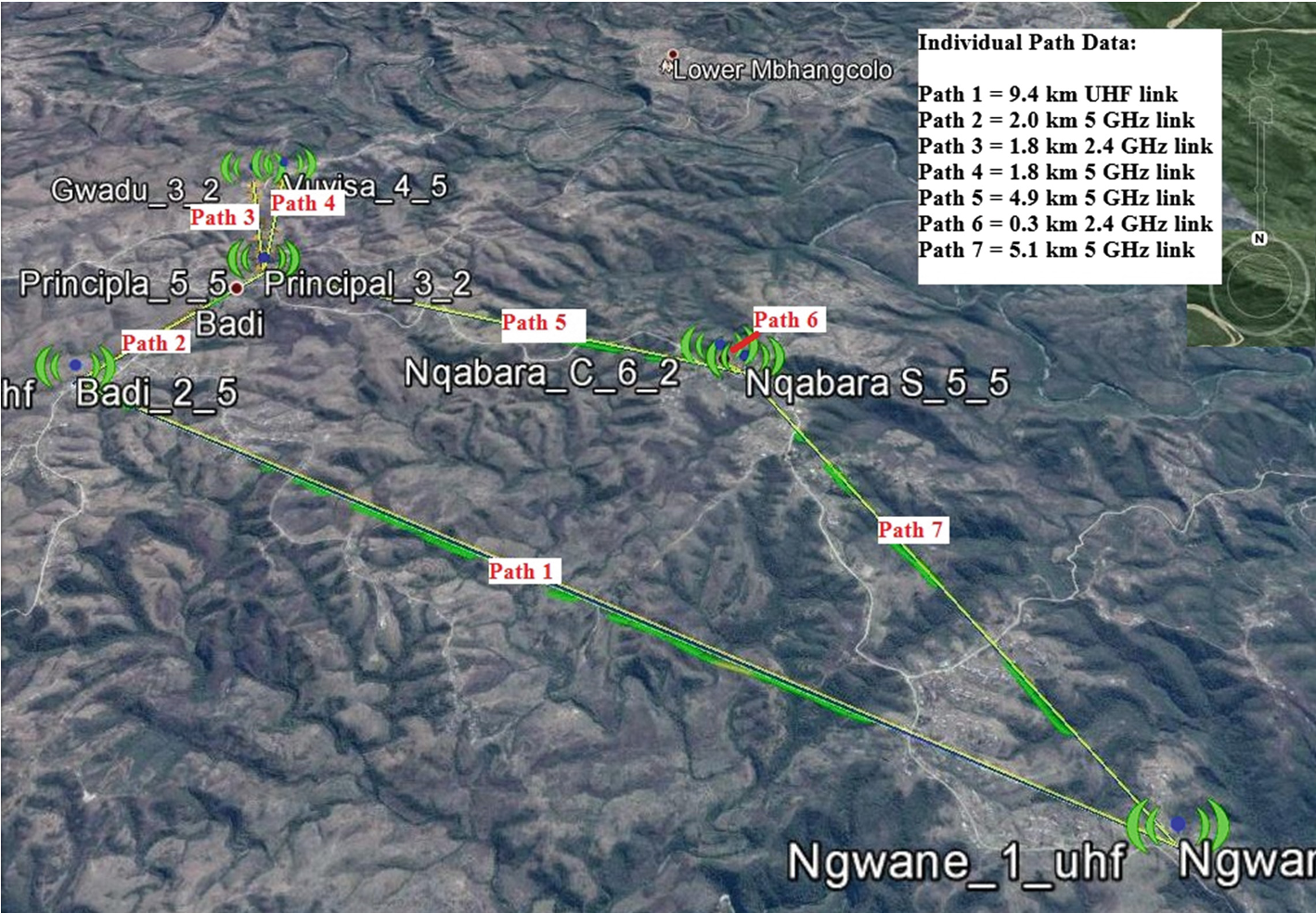 Figure 1: The proposed SLL expansion showing redundant links and the integration of clinics and households.
3. Local Cloud Storage
Recognizing that many users have mobile phones but no backup solutions, the authors suggest a Local Cloud. This allows community members to store photos and school data without consuming expensive international bandwidth, syncing to the "Global Cloud" only during off-peak hours.
Insights from the Field: The Human Element
The ethnographic portion of the study revealed that clinics were the most underserved yet high-impact targets. Nurses currently use personal airtime to call doctors and manual paper records to track patient statistics.
- The Solution: VoIP phones integrated into the mesh network, allowing free communication between clinics and hospitals.
- The "Champion" Strategy: Instead of random distribution, the authors suggest connecting the homes of "ICT Champions" and local chiefs. This creates a sustainable ownership model and avoids societal friction regarding selection criteria.
Results & Critical Analysis
The paper effectively argues that technical solutions in rural areas are inseparable from social engineering.
- Successes: The identification of TVWS as a viable 10km backhaul solves the geographical problem of Dwesa’s terrain. The "Broadband Island" concept transitions into a resilient network grid.
- Limitations: The study identifies a "demon possession" incident—a local cultural interpretation of the negative impacts of the internet—which highlights that technical deployment must be accompanied by ethical and digital literacy training. Without it, the network risks being rejected by the very community it aims to serve.
Conclusion: A Model for the Future
This research demonstrates that the future of rural internet in Africa lies in Opportunistic Spectrum Access. By utilizing TVWS and low-cost wireless mesh technology, we can create carrier-grade services in regions that were previously "off the grid." The Siyakhula Living Lab serves as a crucial reminder that technology must be "co-created" with the community to survive.
Key Takeaway for Researchers:
Redundancy isn't just a technical requirement for uptime; in rural contexts, it is a socio-economic requirement for trust.