
Bridging the Gap: Achieving Data and Knowledge Interoperability in Distributed Healthcare
Interoperability of Data and Knowledge in Distributed Health Care Systems
The paper proposes a novel knowledge management framework for distributed healthcare systems, integrating data mining with clinical decision support. It utilizes HL7 CDA for data interoperability and PMML for knowledge interoperability, achieving a unified environment for evidence-based clinical guidelines.
TL;DR
This research introduces a framework that enables heterogeneous healthcare institutions to share not just patient records, but also the "intelligence" derived from them. By combining HL7 CDA for data and PMML for data mining models, the authors create a system where a diagnostic model trained in one hospital can be seamlessly executed in another through standardized clinical guidelines.
Context & Motivation: The Heterogeneity Problem
In the modern healthcare landscape, information is abundant but siloed. Medical errors remain a leading cause of death, costing billions annually. While Clinical Decision Support Systems (CDSS) have shown promise, they face two massive hurdles:
- Data Silos: Different hospitals use different Electronic Medical Record (EMR) formats.
- Knowledge Silos: Insightful patterns discovered via data mining (e.g., a specific symptom-disease correlation) usually stay within the institution that performed the research.
The authors argue that true interoperability requires a dual-track approach: Data Interoperability (sharing the What) and Knowledge Interoperability (sharing the How).
Methodology: The Three-Phase Framework
The core innovation lies in a three-phase architecture that bridges off-line data science with on-line clinical practice.
1. Knowledge Preparation (Off-line)
Data is anonymized and processed using mining techniques (Classification, Association, Clustering). This converts raw patient data into statistical models.
2. Knowledge Interoperation (Standardization)
This is the "translation" layer.
- Patient Data is encoded into HL7 Clinical Document Architecture (CDA).
- Mined Patterns are encoded into Predictive Model Markup Language (PMML). This ensures that the "logic" is independent of any specific vendor's software.
3. Knowledge Interpretation (On-line)
At the point of care, a Logic Module acts as an interpreter. It pulls data from the CDA, applies the rules from the PMML, and directs the physician through a GLIF (Guideline Interchange Format) flowchart.
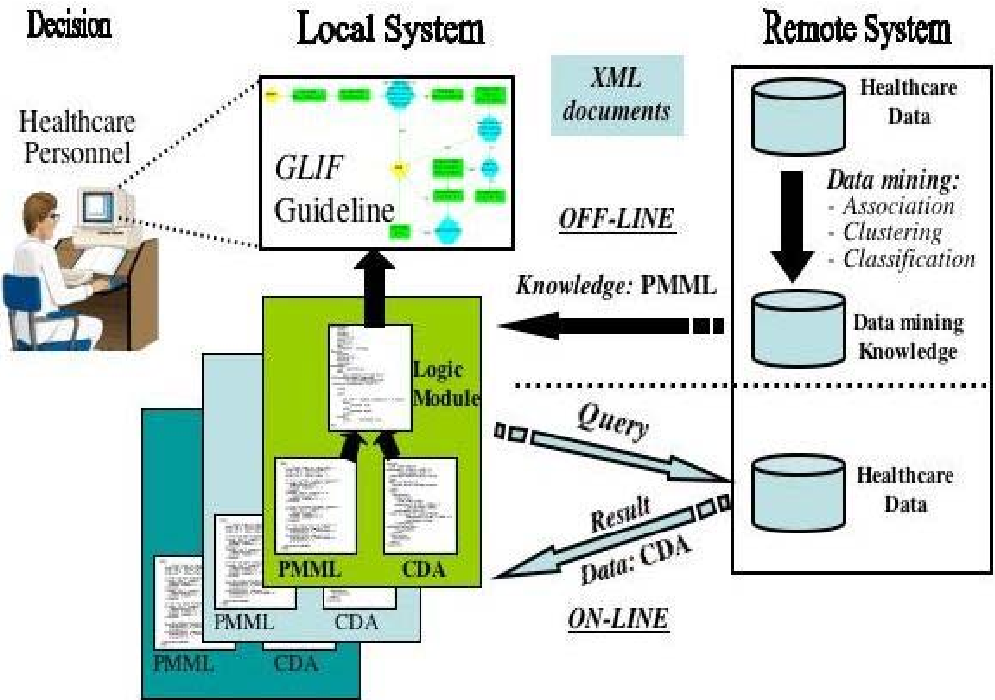 Figure 1: The proposed decision support environment integrating distributed data and mined knowledge.
Real-World Validation: Case Studies
The paper proves the framework's versatility across three distinct medical challenges:
- Melanoma Diagnosis (Classification): Using decision trees to classify skin lesions based on numerical and categorical inputs, integrated directly into a clinical guideline.
- Heart Disease (Association Rules): Identifying hidden correlations (e.g., perfusion measurements vs. arterial blockage) and surfacing these "rules" to doctors when specific symptoms are present.
- Prostate Cancer (Clustering): Grouping patients into risk categories (Low, Intermediate, High) to determine the aggressiveness of the treatment path.
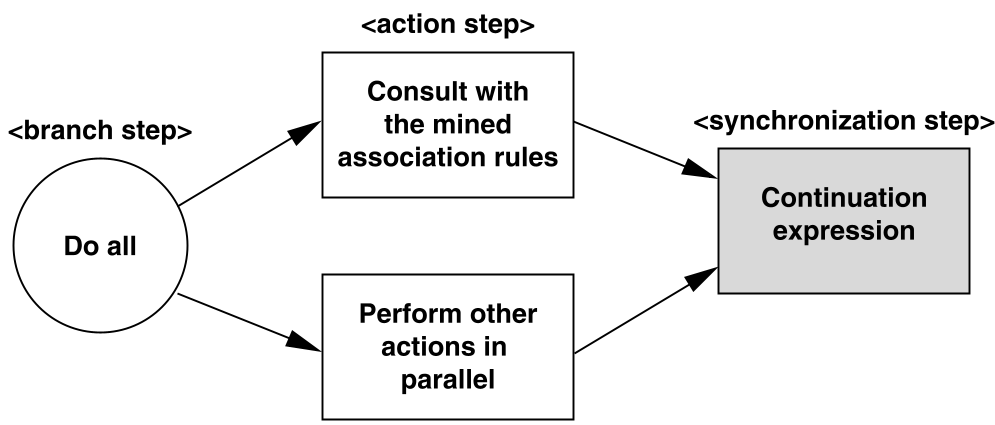 Figure 2: Example of a GLIF action step consulting the PMML-encoded knowledge base.
Critical Analysis & Conclusion
The strength of this work is its reliance on industry standards (HL7, PMML, GLIF). Instead of building a proprietary "AI Box," the researchers built a protocol for intelligence exchange.
Limitations
- Model Aging: The paper focuses on the transfer of knowledge but doesn't detail how to handle "concept drift" (when a model becomes less accurate over time as medical practices change).
- Privacy: While anonymization is mentioned, the framework relies heavily on centralized mining; a more modern approach might involve Federated Learning to keep data local.
Future Outlook
This framework lays the groundwork for "Collaborative Medicine." In the future, we can envision a global network where a rare disease pattern identified in a clinic in Canada can trigger a diagnostic alert for a doctor in a remote rural area, instantly elevating the global standard of care.
Takeaway: Interoperability is no longer just about moving data; it's about moving the capability to understand that data.