
Deciphering Criminal Evolution: A Temporal Graph Approach to Co-Offending Networks
10773_Investigating Organized Crime Groups A Social Network Analysis Perspective.
The paper introduces a temporal graph analysis framework for tracking criminal network evolution. By leveraging community detection and overlapping metrics, it identifies dynamic patterns in co-offending networks, specifically targeting the stability and "seriousness" of criminal organizations over time.
TL;DR
Law enforcement agencies often struggle to keep pace with the fluid nature of criminal gangs. This paper presents a sophisticated temporal graph framework designed to track how criminal communities evolve. By introducing a mathematical "matching" mechanism for overlapping communities and a weighted "Seriousness Index," the authors provide a toolkit for identifying which criminal associations are the most stable and dangerous over time.
Problem & Motivation: The Fluidity of Crime
Most criminal network analysis is a "snapshot" of a specific moment. However, crime is dynamic: members are arrested, new recruits join, and groups merge or fracture. Static analysis ignores the temporal persistence of these groups. The core challenge is: How do we identify if 'Gang A' in 2024 is the same entity as 'Gang B' in 2025? Without a rigorous way to track these entities, police resources are often misallocated toward transient groups rather than stable, high-threat organizations.
Methodology: Tracking the Pulse of the Network
The paper's innovation lies in its formalization of temporal community matching.
1. The Overlap Metric
To determine if a community at time corresponds to one at , the authors define a bidirectional overlap function: This ensures that if a small group is subsumed by a larger one, or a large group splits, the relationship is still captured if the intersection is significant enough.
2. Quantifying Seriousness
The authors don't treat all crimes equally. They establish a hierarchy where specific offenses carry different weights (). The total seriousness of a community is the average of its members' offense weights:
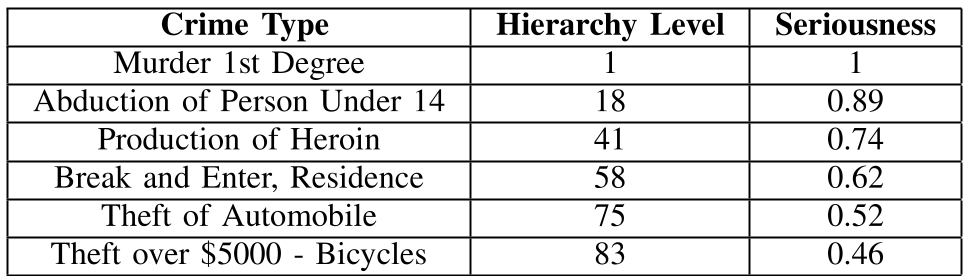 Table 1: Crime categorization and assigned seriousness scores.
3. Community Matching Logic
The framework uses a matching function that identifies the most likely successor of a community based on the condition that the overlap must exceed a threshold .
Experiments & Results: Visualizing Criminal Stability
The researchers applied this model to real-world datasets, visualizing the "survival" of criminal groups.
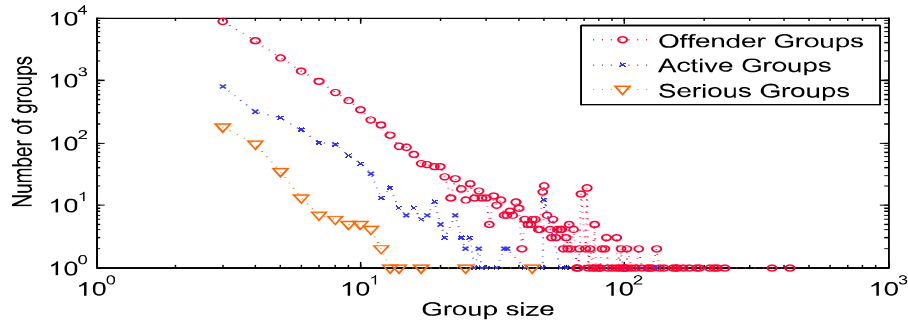 Figure 1: Evolution of nodes across temporal slices.
The results highlight a few "Hardcore" communities—groups that maintain high stability () over several years. These groups were found to be responsible for a disproportionate amount of high-seriousness crimes (Level 1-20 offenses), such as abduction and large-scale distribution.
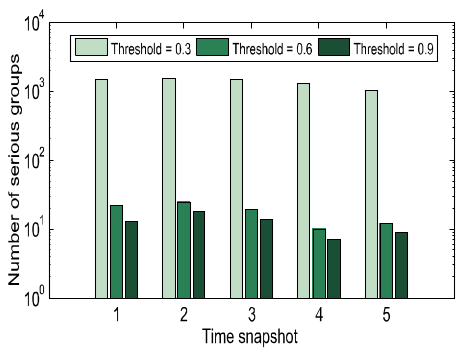 Figure 2: Statistical distribution of crime seriousness within identified clusters.
Critical Analysis & Conclusion
Takeaway
The "Persistence-Seriousness" matrix allows law enforcement to move beyond "most-wanted" individuals to "most-dangerous" networks. By focusing on communities with high (stability) and high (seriousness), authorities can target the structural backbone of organized crime.
Limitations
A potential pitfall is the reliance on "co-offending" as the only edge type. In reality, criminal networks are bolstered by familial or financial ties that don't always appear in arrest records. Furthermore, the threshold is a hyperparameter that significantly alters the "merging" vs. "splitting" results, requiring careful tuning for different jurisdictions.
Future Outlook
The next frontier is predictive evolution. Can we use the current trajectory of a community to predict who its next "matching" nodes will be before a crime occurs? Integrating this with Graph Neural Networks could revolutionize proactive intervention strategies.