
Mapping the Diaspora: How Academic Social Networks Reveal the Logic of Scientific Mobility
Investigating the Potential of Data from an Academic Social Network (GPS)
This paper investigates international scientific mobility through GPS (Global Portuguese Scientists), a specialized academic social network. Utilizing a dataset of nearly 4,000 research experiences from 1,700 users, the study achieves a granular characterization of the Portuguese research diaspora across 79 countries.
TL;DR
For decades, we have tracked "brain drain" using static surveys that arguably miss the full picture. This study shifts the paradigm by analyzing data from GPS (Global Portuguese Scientists), a dedicated social network. It reveals that scientific mobility isn't random; it follows a strict logic of career maturity and geographic distance, showing that while the UK attracts the majority of young Portuguese talent, the USA remains the final destination for established scientific leaders.
Background Positioning
In the landscape of academic research, this work acts as a methodological bridge. It moves away from the "snapshot" approach of surveys like the European Commission’s MORE and moves toward a dynamic, longitudinal monitoring system. By utilizing a specialized social network, the authors provide a SOTA (State-of-the-Art) analysis of how a small, developing scientific system (Portugal) interacts with the global "knowledge core."
The Problem: The "Representative" Fallacy
The authors argue that current mobility studies are fundamentally flawed. Why? Because you cannot sample a population (mobile researchers) whose total size and boundaries are unknown. Traditional surveys offer a filtered view, often missing those who have completely left the domestic system. There is a critical need for a passive or self-updating data gathering system—which is where the GPS platform comes in.
Methodology: The CV-Based Insight
The core innovation lies in the use of CV-based research. Instead of asking researchers to recall their history in a survey, the study analyzes the structured career paths entered into the GPS platform.
- Spatial Analysis: Calculating the distance from Lisbon to various global research hubs.
- Inferential Testing: Using non-parametric tests to see if "Scientist A" (Female, PhD Student) is statistically more likely to be in Germany than "Scientist B" (Male, Lab Head) is to be in the USA.
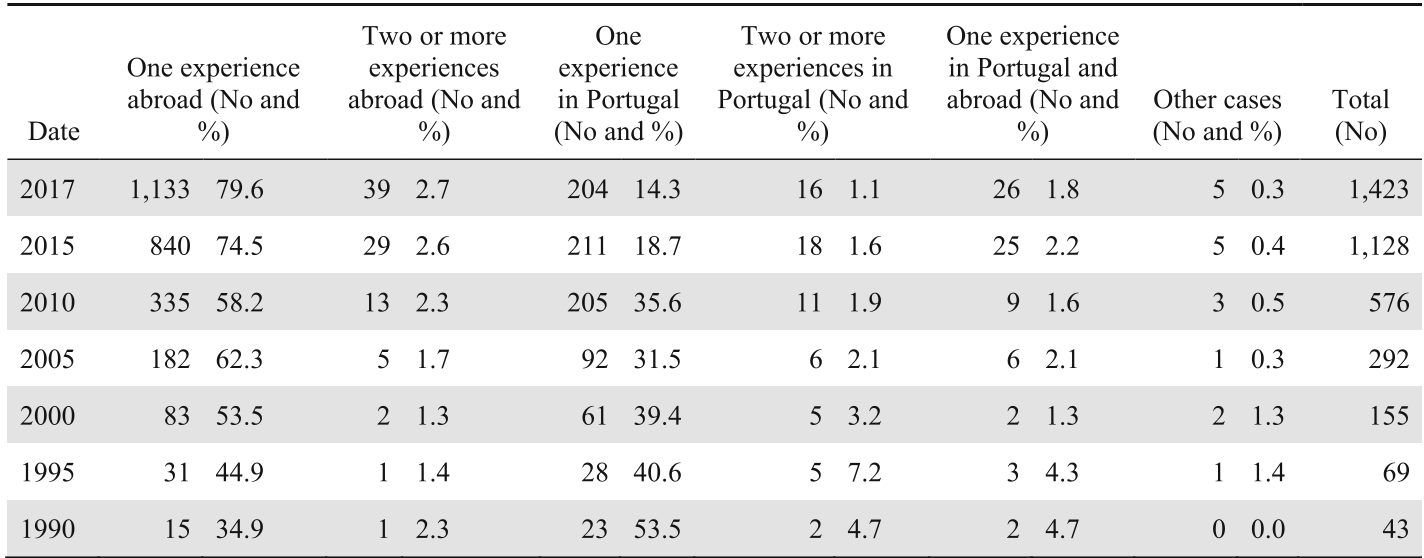 Table 1: The steady increase of Portuguese research experiences abroad over the last 30 years.
Key Findings: Distance, Gender, and Maturity
The results paint a vivid picture of the "Academic Diaspora."
- The UK Dominance: The UK is the top destination (20% of experiences), largely due to language and proximity.
- The "Maturity Gap": There is a clear correlation between career stage and distance. Early-career researchers (PhD students) stay closer to home in Europe. As scientists mature into Visiting Professors or Leadership roles, they move significantly further away, primarily to North America.
- The Gendered Map: Europe sees a higher concentration of female mobile researchers (54%), whereas North America and Asia attract a higher proportion of males.
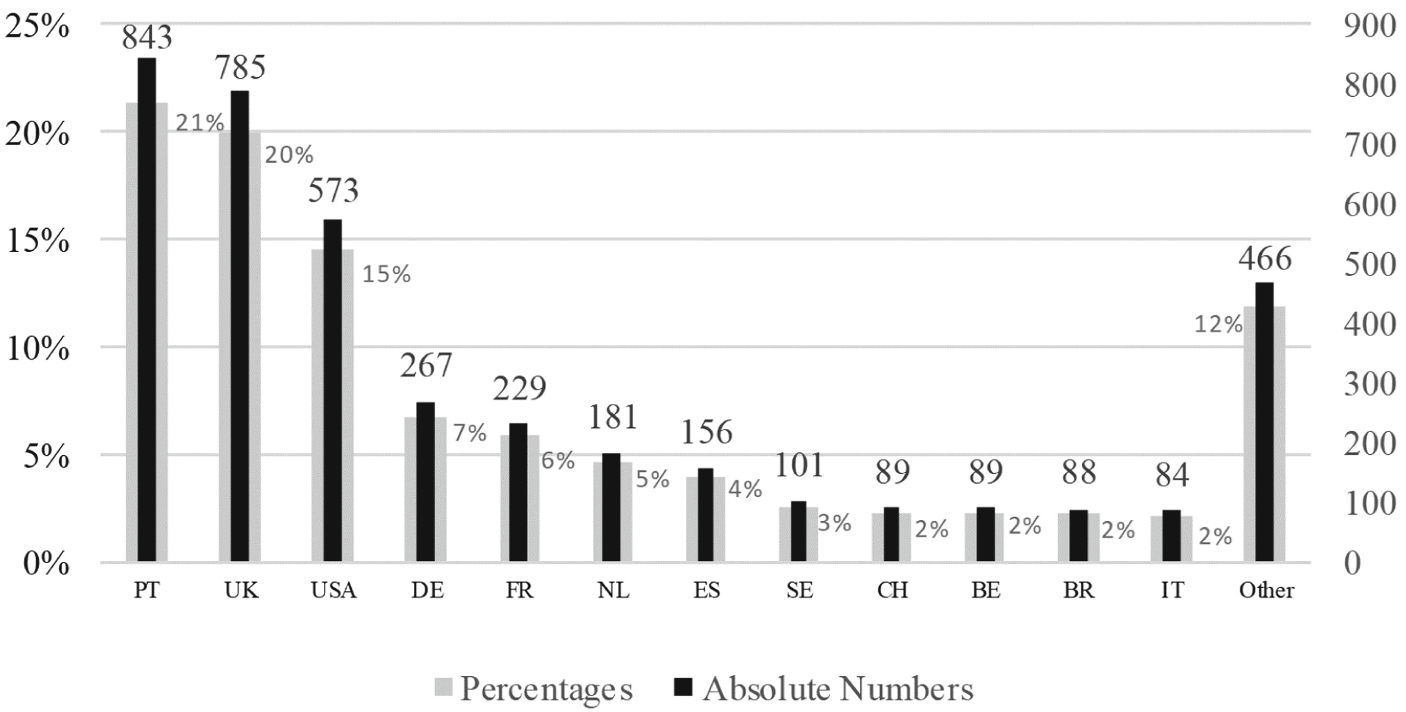 Figure 1: Heatmap showing the global footprint of Portuguese scientists.
Critical Analysis & Conclusion
This study proves that an Academic Social Network is more than a networking tool—it is a live laboratory for science policy.
Takeaway: To stop "brain drain," governments must understand that mobility drivers change with age. Young researchers move for training; senior researchers move for resources and leadership.
Limitations: The study is limited by "self-selection bias"—only researchers who care to join a social network are counted. Future work should integrate this data with ORCID or bibliometric databases (like Scopus/Web of Science) to correlate mobility with actual scientific output (citations and impact).
Ultimately, the GPS platform serves as a blueprint for how other nations can track and eventually "re-attract" their most valuable resource: human intelligence.