
Beyond the Personal Assistant: Reimagining AI Speakers for Family Cohesion
Investigating User Expectations on the Roles of Family-shared AI Speakers
This paper investigates the roles of AI speakers (e.g., Amazon Echo, Google Home) within the family unit, moving beyond individual-centric use cases. Through a one-week participatory design study with 8 families, the authors identify "co-ownership" as the fundamental requirement for family-oriented AI and categorize user expectations into seven distinct domains of family cohesion.
TL;DR
While AI speakers like Amazon Echo are ubiquitous in homes, they often function as little more than voice-activated weather stations. This paper from CHI '20 argues that the missing link is co-ownership. By treating the AI as a shared family entity rather than a multi-user tool, designers can unlock roles ranging from "family ritual organizer" to "emotional listener," ultimately driving family cohesion.
The "Stagnation" Problem: Why We Abandon Our Smart Speakers
The researchers point out a critical flaw in the current VUI (Voice User Interface) landscape: most AI assistants are just smartphone IPAs (Intelligent Personal Assistants) put into a box. They are designed for individuals. In a family home—a complex social ecosystem—this individualistic approach leads to "abandonment." If a device doesn't understand the ritual of "Friday Movie Night" or the nuances of who took out the trash last, it remains an outsider.
Methodology: Co-Imagining a Family Member
To bypass the limitations of current technology, the authors conducted a 7-day participatory study. Instead of giving families a Google Home, they gave them toolkits to "build" their own imagined AI.
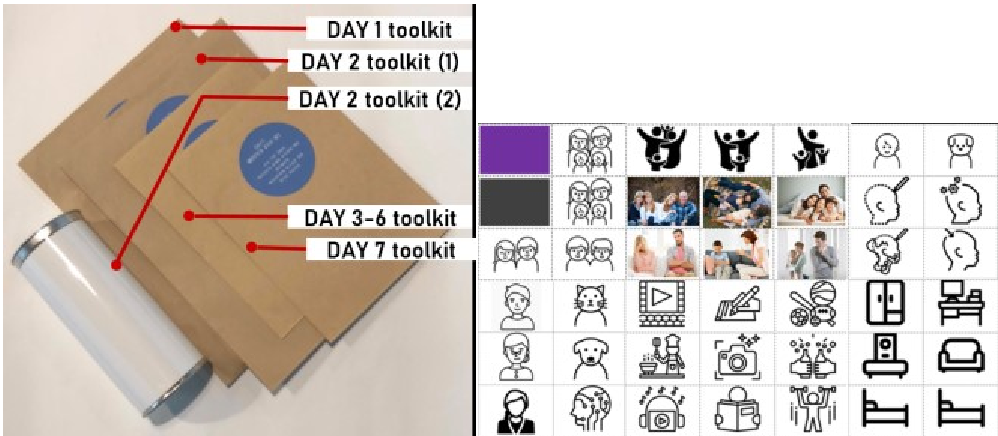
The study transitioned from "Expressing thoughts about family" to "Positioning the AI in everyday life" and finally "Living with and reflecting on the AI." This helped participants see the AI not as a machine, but as a co-owned presence.
Core Insight: The Seven Domains of Family Cohesion
The researchers discovered that when families co-own a device, their expectations shift toward Family Cohesion. They identified seven key roles:
- Safety & Presence: Using a human-like voice (e.g., a deep male voice at night) to provide a sense of security.
- Quotidian Engagement: Facilitating conversations or educational play between parents and children.
- Co-resting Rituals: Proactively preparing the home for "rest time" (ordering food, dimming lights, finding the right Netflix show).
- Shared Reminiscence: A shared interface for photos and memories, moving away from "siloed" smartphone viewing.
- Chore Management: Acting as an impartial logger of household tasks to reduce friction.
- Social Connectivity: Managing schedules to find time when everyone can be together.
- Emotional Support: Acting as a "trustworthy listener" that keeps family secrets while helping members process conflicts.
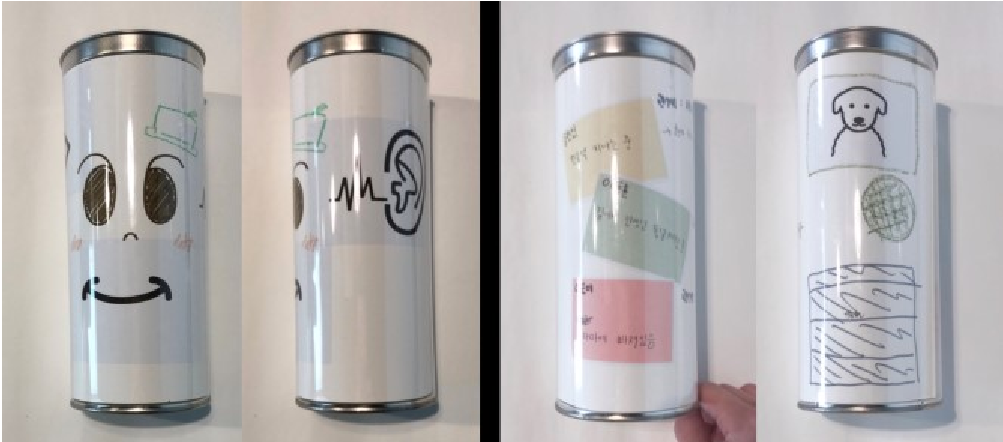 Figure: Examples of AI speakers created by participants (F2 and F6), showing personalized identities and names.
The Privacy Paradox
A fascinating finding was the tension between shared support and inter-member privacy. While families wanted the AI to know everything about "us," they were wary of it revealing personal secrets (like a "girls' night out" or private messages) in a shared space like the living room.
The paper suggests that AI must become context-aware:
- In Shared Spaces: Focus on group recommendations and "co-owned" data.
- In Personal Spaces: Shift to customized, private support.
Critical Analysis & Future Outlook
This work provides a vital roadmap for the next generation of LLM-powered home agents. The move from Reactive Commands ("Alexa, play music") to Proactive Ritual Support ("I see the twins are asleep, should I start the 'Parents' Rest' routine?") is essential for long-term utility.
Limitations: The study was conducted with Korean families (a collectivist culture), which might emphasize cohesion more than individualistic western cultures. Additionally, the technical implementation of "reading between the lines" (understanding "We're tired" as a command to order pizza and open Netflix) remains a high bar for current NLP.
Takeaway for Designers: Stop building "assistants" and start building "mediators." The goal of home AI shouldn't just be to save time, but to create meaningful moments between the people who live there.