
Intelligent Investment: Revolutionizing Oil Sector Strategy via System Dynamics
Investments Decision Making on the Basis of System Dynamics
The paper proposes a dynamic decision-making model for oil companies based on System Dynamics (SD). It integrates causal loop diagrams and mathematical sub-models to forecast the scale and structure of investments across exploration, production, and logistics to maximize profit and mitigate risks.
TL;DR
This research addresses the volatility of the oil industry by shifting from static data processing to Intellectual Information Systems. By leveraging System Dynamics (SD), the authors provide a mathematical framework to simulate how exploration costs, transport logistics, and equipment maintenance interact over time to dictate optimal investment scales.
Background & Positioning
In the high-stakes world of oil and gas, investment decisions involve billions of dollars and decades-long horizons. This paper sits at the intersection of Operations Research and Strategic Management, moving beyond simple "database-rule-inference" systems toward a holistic, feedback-driven simulation model. It positions System Dynamics as the superior tool for modeling "circular causality"—where today’s investment changes tomorrow’s resource costs, which in turn dictates future investment capacity.
Problem & Motivation: The Complexity of "Circular" Thinking
The authors argue that oil companies are drowning in information but starving for intelligence. Previous models often treated exploration, logistics, and finance as isolated "silos." However, the oil industry is characterized by:
- Long Delays: Investment in a well today doesn't yield oil for years.
- Non-linearity: Production complexity increases as fields age (the coefficient).
- Feedback Loops: High maintenance costs () drain profits (), reducing the capital available for the next exploration cycle.
Methodology: The Architecture of a Dynamic Company
The paper breaks down the company into a structural hierarchy. The core innovation lies in the mathematical formalization of four specific sub-systems:
1. The Exploration Sub-system
The authors use a differential equation to describe the cost of proven reserves (): This captures the "Relative Capital Investment"—essentially the price paid for every barrel discovered, adjusted for the complexity of the field ().
2. Logistics and Maintenance
Unlike static models, the logistics sub-system () factors in the cost of orders versus the cost of storage over time. Similarly, the maintenance model distinguishes between current repairs (urgent) and overhauls (strategic upgrades), both of which are fueled by a share of the total profit ().
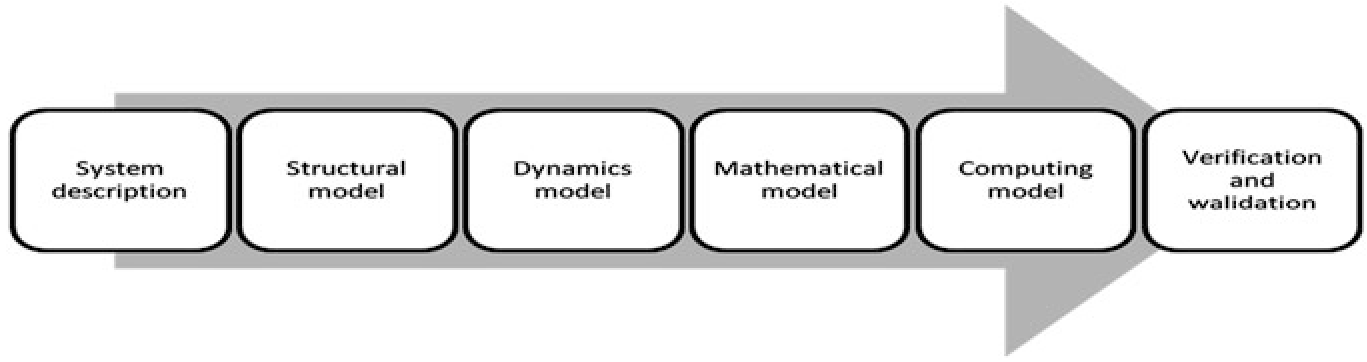 Figure 1: The conceptual flow from information theory to decision-making logic.
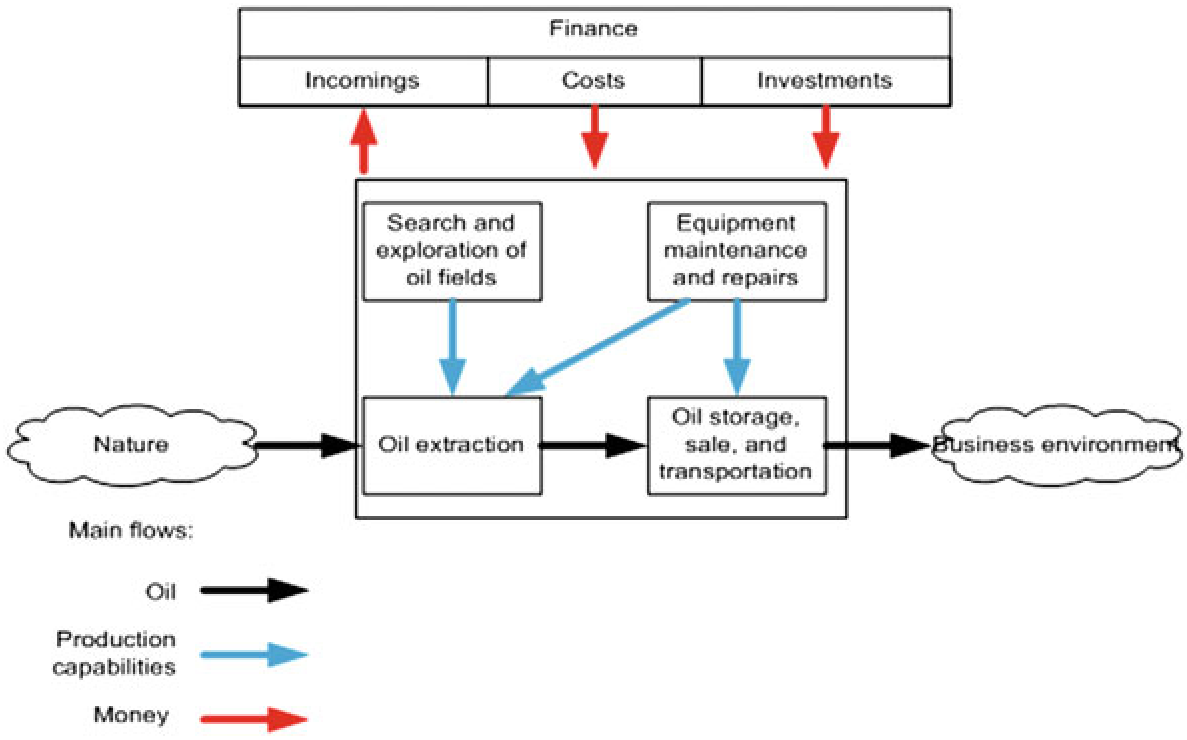 Figure 2: Causal relationship mapping between logistics, resources, and profit.
Experiments & Results: Mapping the Feedback
By implementing these equations in environments like Stella or Vensim, the authors demonstrate how cash flows (, ) are not just expenses but "converters" that determine the health of the system.
The study reveals that:
- Investment must be balanced between Exploration, Development, and Operational Services.
- The "Intelligence" of the system comes from its ability to build an access path to data files automatically based on user queries, solving the "data extraction" bottleneck in large-scale intellectual systems.
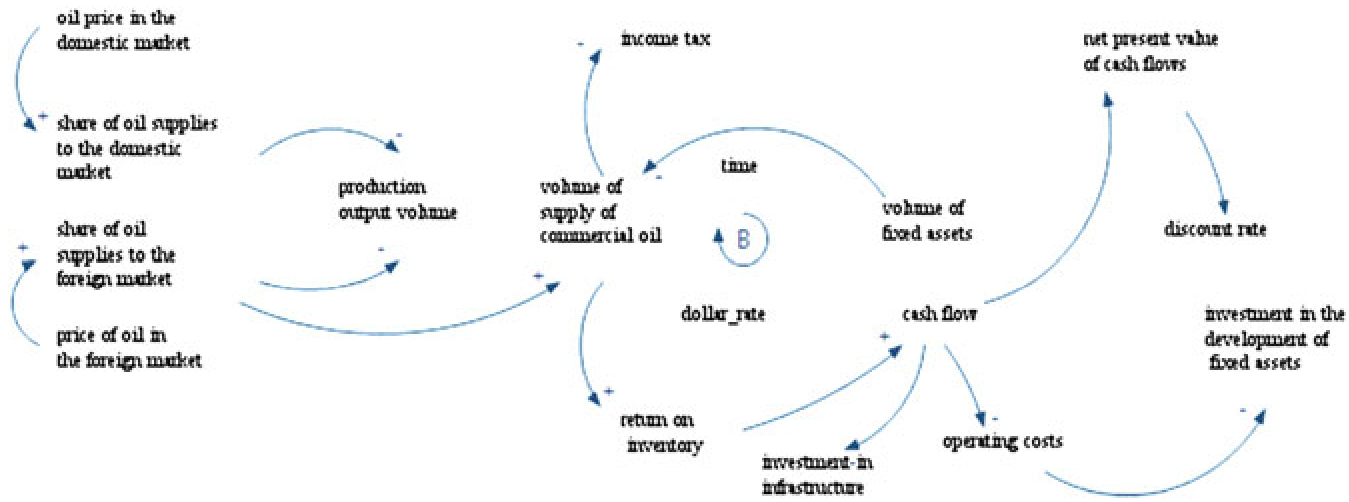 Figure 3: System Dynamics flow diagram for financial capital and resource transformation.
Critical Analysis & Conclusion
Takeaway
The true value of this work is the shift from descriptive analytics (what happened?) to generative strategy (what happens if we change the investment structure?). By treating an oil company as a living organism with interconnected "organs" (sub-systems), managers can simulate "crisis management" scenarios before they occur.
Limitations & Future Work
While the mathematical framework is robust, the paper remains at a high level of abstraction. The authors acknowledge that the next phase involves:
- Defining specific criteria for each subsystem.
- Identifying the exact components of a diversified oil investment portfolio.
- Improving Natural Language Query interfaces for non-technical decision-makers to interact with the underlying Knowledge Base.
In conclusion, the integration of System Dynamics into Intellectual Information Systems marks a significant step toward "Scientific Management" in the volatile energy market.