
The Smart Wheelchair: Bridging the Gap Between Mobility and Telemedicine
Iot-Based Smart Wheelchair for Elderly Healthcare Monitoring
The paper presents a prototype for an IoT-based Smart Wheelchair designed for elderly healthcare monitoring, integrating biophysical sensors (SPO2, blood pressure, temperature) and an autonomous navigation system. It utilizes an Arduino-based data acquisition unit to transmit real-time vital signs to a cloud platform (ThinkSpeak) for remote clinician analysis.
TL;DR
With a rapidly aging global population, the demand for assistive technologies is skyrocketing. This paper introduces a smart wheelchair prototype that doesn't just move—it monitors. By integrating IoT sensors for heart rate, blood pressure, and oxygen levels with autonomous navigation and cloud-based diagnostics, it transforms a simple mobility aid into a comprehensive healthcare workstation.
Background & Positioning
As chronic diseases like coronary heart disease and arthritis become more prevalent among the elderly, the strain on healthcare systems grows. This research addresses the intersection of Independent Mobility and Remote Health Monitoring. It positions itself as a modular solution, upgrading standard power wheelchairs with "add-on" intelligence to provide clinical-grade data to caregivers while allowing patients to navigate safely.
The Core Problem: The Complexity of Combined Impairments
Standard wheelchairs fail patients who suffer from both physical and cognitive disabilities. If a patient is deemed "unsafe" to drive a manual or basic electric chair, they are often relegated to being pushed by a caregiver, which studies show leads to emotional loss and reduced self-esteem. Furthermore, monitoring these patients usually requires separate, stationary equipment. The challenge is: How can we combine safe, autonomous navigation with continuous medical-grade monitoring in a power-efficient manner?
Methodology: Perception Meets Biometrics
The system architecture is divided into three critical layers: Sensing, Processing, and Cloud/User Interface.
1. The Sensing Layer
The chair uses a suite of MySignals biophysical sensors integrated directly into the handrails. This allows for non-invasive tracking of:
- Blood Oxygen (SPO2)
- Heart and Pulse Rate
- Body Temperature
- Blood Pressure (Systolic and Diastolic)
2. Navigation and Safety
For obstacle avoidance, the team implemented an RPLiDAR system. Unlike ultrasonic sensors which can be inconsistent, LiDAR provides precise depth mapping.
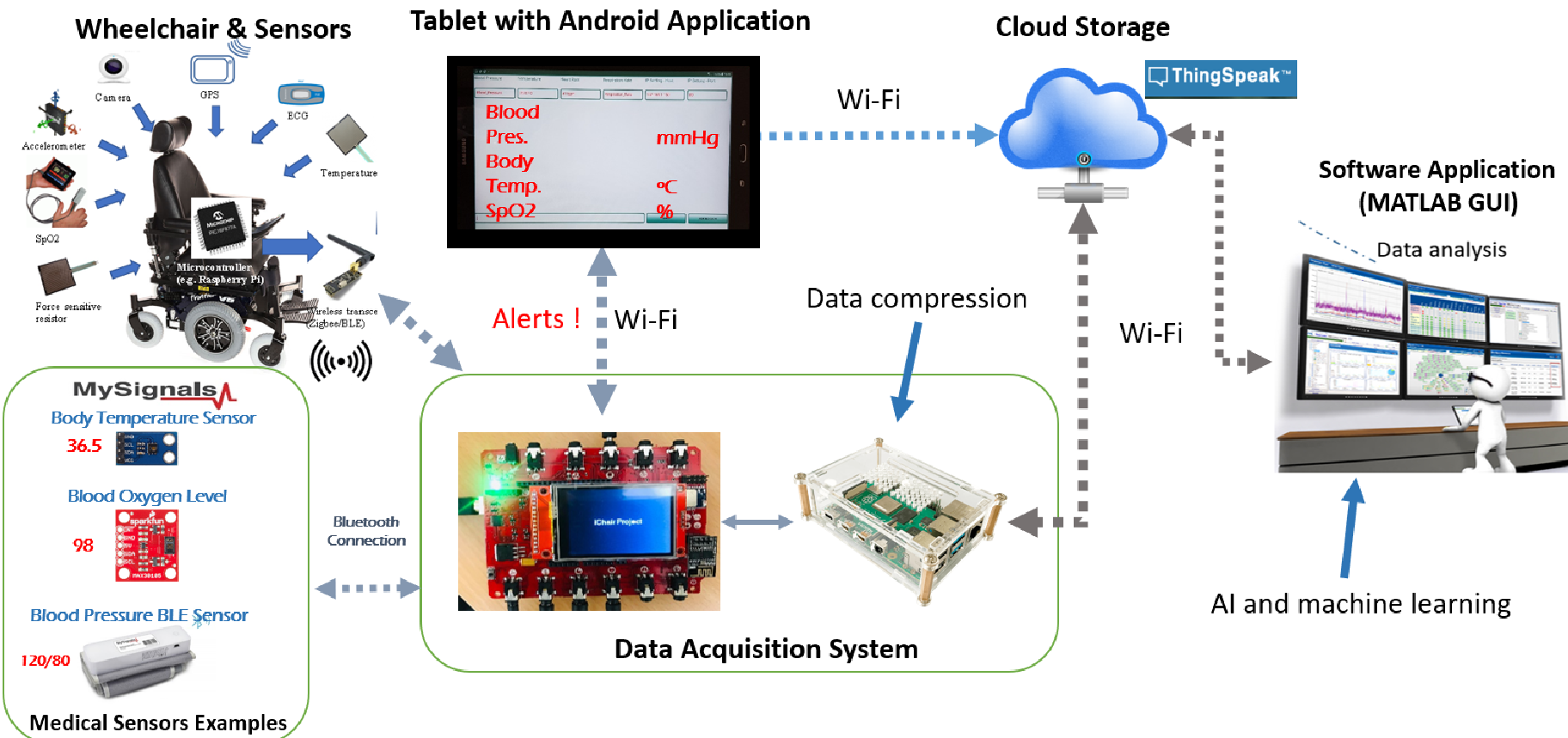 Fig 1: The architecture shows the flow from sensors to the Arduino acquisition unit, then via WiFi to the ThinkSpeak cloud.
3. Data Management
A critical technical hurdle was the "Data-Power" trade-off. As more sensors are added, memory and transmission power requirements spike. The authors utilized a data acquisition cycle of 10-second intervals and a MATLAB interface that sorts data into health states using a color-coded threshold system (Yellow for low-risk, Red for critical).
Experimental Insights
The system was validated through simulation and physical testing. The obstacle detection logic uses a zoned approach:
- Sensing Zone (Yellow): The chair slows down if an object is detected.
- Stop Zone (Red): The chair halts immediately.
- Selective Restriction: Crucially, the system only restricts movement in the direction of the obstacle, allowing the user to reverse or turn away—maintaining a sense of agency.
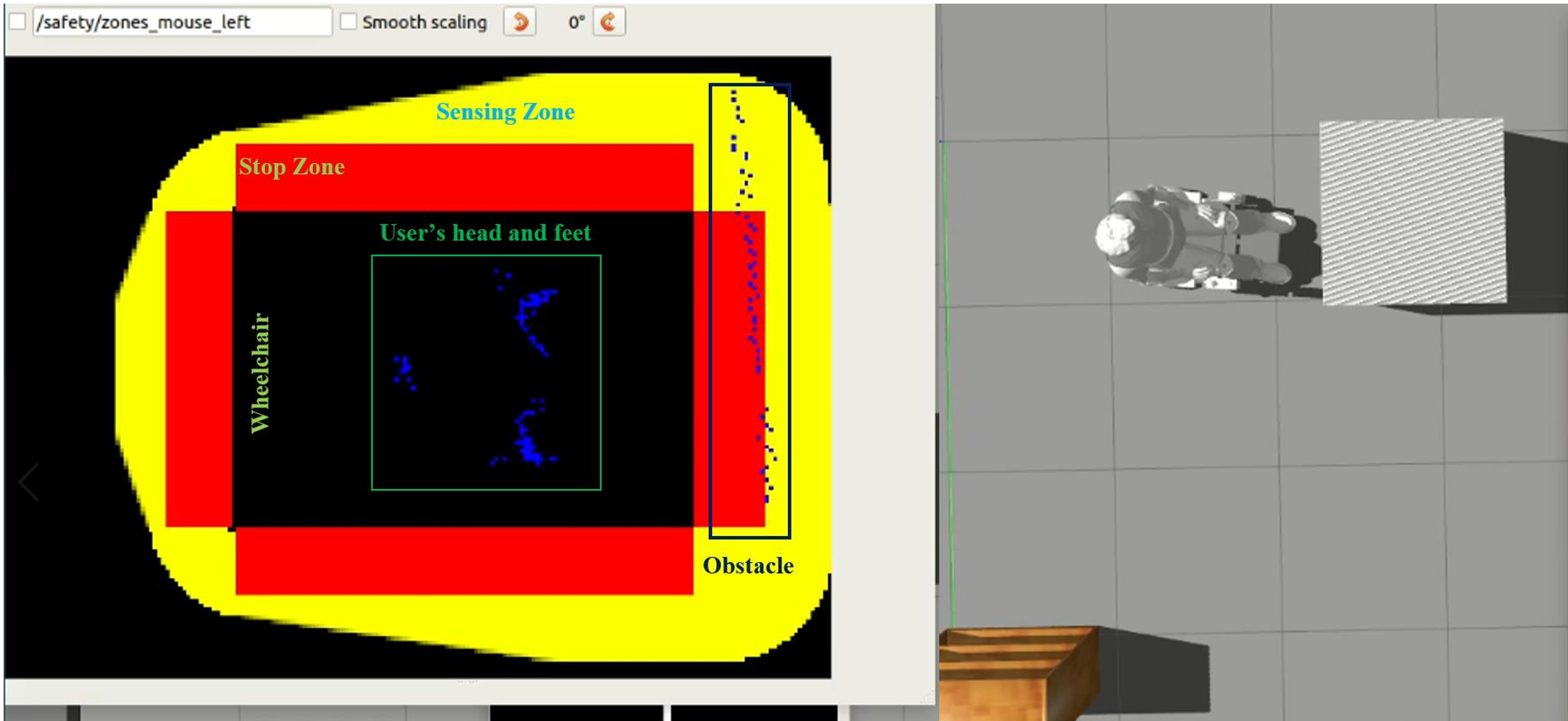 Fig 2: The simulation demonstrates the LiDAR coverage. The black box represents the patient, while blue dots indicate detected obstacles within the stop zone.
Critical Analysis & Future Outlook
Strengths: The modularity is the strongest point. It doesn't require a proprietary wheelchair, making it more accessible. The integration of a color-coded alert system simplifies complex medical data for non-clinical caregivers.
Limitations:
- Dead Zones: The current LiDAR setup has "blind spots" at the four corners of the chair.
- Hardware Incompatibility: The researchers noted issues between Arduino and MySignals MAC address detection for Bluetooth blood pressure monitors.
- Power Consumption: Using dual microcontrollers to separate sensing and uploading processes improved reliability but significantly shortened battery life.
The Future: The next logical step is moving from "Obstacle Avoidance" to "Full Path Planning." By creating a heat map of an enclosed area (like a care home), the wheelchair could become a truly autonomous vehicle, where a user simply selects a destination on their smartphone.
Conclusion
This work demonstrates that the next generation of assistive technology will not just be about mechanical support, but about Biophysical Intelligence. By turning the wheelchair into a moving node in the Internet of Medical Things (IoMT), we can provide the elderly with both the freedom of movement and the safety of 24/7 clinical monitoring.