
Hybrid Intelligence in Healthcare: Fusing IoT Sensors, Neuro-Fuzzy Logic, and Deep Learning for Disease Prediction
IOT based wearable sensor for diseases prediction and symptom analysis in healthcare sector
This paper proposes an integrated healthcare framework for disease prediction, specifically targeting colorectal cancer, by combining Wearable IoT sensors with Big Data analytics. The core methodology employs a Generalized Approximate Reasoning based Intelligence Control (GARIC) architecture for data processing and a Boltzmann Belief Network (Deep Learning) for disease classification, achieving a SOTA accuracy of 96.33%.
TL;DR
The paper introduces an IoT-based wearable sensor framework designed for early disease detection, with a focus on colorectal cancer. By integrating GARIC (Generalized Approximate Reasoning based Intelligence Control) with Boltzmann Belief Networks, the system bridges the gap between raw sensor data and clinical decision-making, achieving a remarkable 96.33% accuracy.
Problem & Motivation: The "Big Data" Healthcare Bottleneck
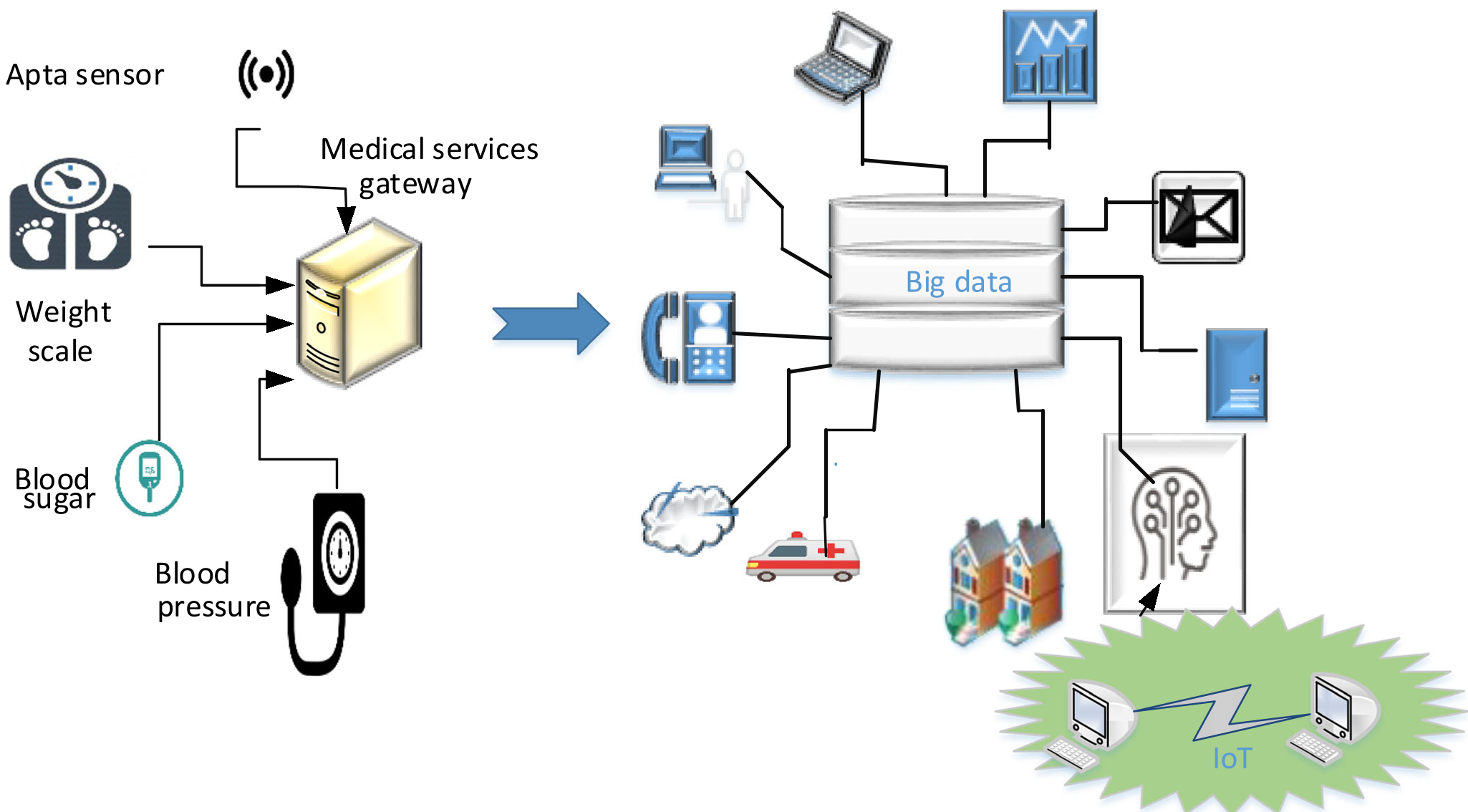
Modern medicine is shifting from reactive hospital visits to proactive, at-home monitoring. However, this transition is hindered by the Velocity, Volume, and Variety of data generated by wearable sensors. Traditional systems struggle with:
- Inconsistency: Sensor noise and data redundancies lead to misdiagnosis.
- Delayed Response: Lack of automated, real-time analysis means treatments are often only administered after symptoms become severe.
- Complexity: Identifying chronic diseases like colorectal cancer requires analyzing subtle genetic variations (SNPs) and physiological signs simultaneously.
The authors' insight was to create a "pipeline" that uses fuzzy logic to handle the uncertainty of sensor inputs and deep learning to model the underlying biological complexities.
Methodology: The Core Architecture
The proposed framework follows a sophisticated path from data acquisition to clinical alert.
1. The GARIC Neuro-Fuzzy System
The system processes information using the GARIC architecture, which consists of three distinct networks:
- Action Selection Network (ASN): Uses five layers of fuzzy inference to map input vectors into suggested actions.
- Action Evaluation Network (AEN): An adaptive evaluator that predicts future reinforcement based on physical state variables.
- Stochastic Action Modifier (SAM): Optimizes the learning process by introducing controlled perturbations to explore the state space more effectively.
2. Boltzmann Belief Network (Deep Learning)
Once the data is pre-processed, it is fed into a Boltzmann Belief Network. Unlike standard feed-forward nets, this generative graphical model learns internal representations through a Contrastive Divergence (CD) algorithm. This allows the system to "train" on the complex features of colorectal cancer markers (such as DNA changes in stool or blood samples) effectively.
3. Regularized GWAS
To handle genetic data, the authors use a Regularized Genome-Wide Association Study. By adding a penalty term to the loss function, they prevent "overfitting," ensuring that the model generalizes well to new patients rather than just memorizing the training noise.
Experiments & Results: SOTA Performance
The methodology was validated against existing techniques such as Support Vector Machines (SVM) and Lnc (RNAs) analysis.
Quantitative Benchmarks:
- Accuracy: 96.33% (Significant improvement over Semiconductor nanostructure and SVM).
- Sensitivity (TPR): 92.33%.
- Specificity (TNR): 92.20%.
- Precision: 96%.
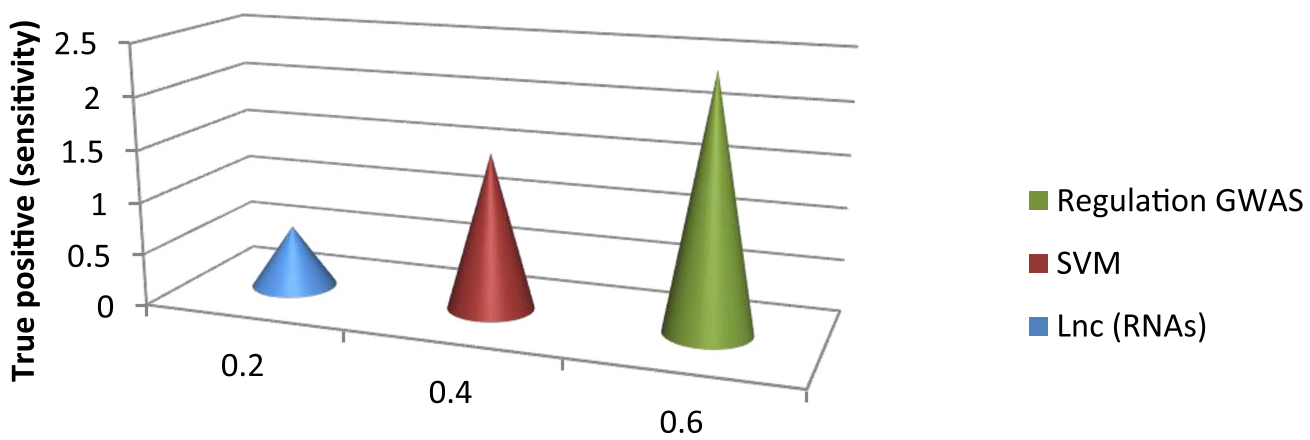
The results indicate that the Regularization_GWAS approach successfully balances the trade-off between Sensitivity and Specificity, which is often the "Achilles' heel" of medical diagnostic AI.
Critical Analysis & Conclusion
Takeaway
The integration of Rule-based Fuzzy Logic (GARIC) and Probabilistic Deep Learning (Boltzmann) offers a robust solution for IoT healthcare. It provides the interpretability of rules (Fuzzy) with the power of feature extraction (Deep Learning).
Limitations & Future Work
While the accuracy is high, the paper's dependency on the Boltzmann Belief Network—a somewhat older deep learning architecture—suggests that replacing this module with modern Geometric Deep Learning or Vision Transformers could further enhance its ability to analyze complex medical imaging or protein structures. Additionally, the real-world latency of the SMS/Email alert system in areas with poor IoT connectivity remains a deployment challenge.
In conclusion, this work paves the way for a "self-monitoring" human body, where wearable sensors act as a first line of defense against life-threatening chronic conditions.