
AITRA: Harmonizing the "Internet of Agriculture" Through Standardized Reference Architectures
Laying the Foundations for an IoT Reference Architecture for Agricultural Application Domain
This paper proposes AITRA (Agricultural IoT Reference Architecture), a domain-specific, three-tier framework (Device, Cloud, Business) designed to standardize IoT applications in agriculture. It provides a comprehensive methodology for generating reference architectures through deep ecosystem analysis, achieving interoperability and cross-layer efficiency.
TL;DR
The Agricultural IoT (AIoT) landscape is fragmented by proprietary systems that cannot talk to one another. This paper introduces AITRA (Agricultural IoT Reference Architecture), a transformative framework that moves beyond generic IoT models. By defining specific device tiers, a structured cloud messaging hierarchy (Topic Trees), and a modular business layer, AITRA provides a blueprint for interoperable, plug-and-play agricultural solutions.
The Motivation: Breaking Vertical Silos
Most current IoT products are "Vertical Solutions"—they solve a specific problem (like soil moisture monitoring for one farm) but exist in a vacuum. Integrating a sensor from Company A with a tractor from Company B is currently a technical nightmare.
The authors argue that the missing link is a Domain-Specific Reference Architecture. Generic architectures (like WSO2 or IoT-A) are too broad, while proprietary solutions are too narrow. AITRA strikes a balance by providing a "Common Vocabulary" and "Reusable Designs" specifically for farmers, agronomists, and developers.
Methodology: The AITRA Blueprint
The core innovation of AITRA lies in its dual-ecosystem analysis. The researchers didn't just look at technology; they mapped out the physical realities of farming—from subsistence to commercial scales.
1. The Three-Tier Structure
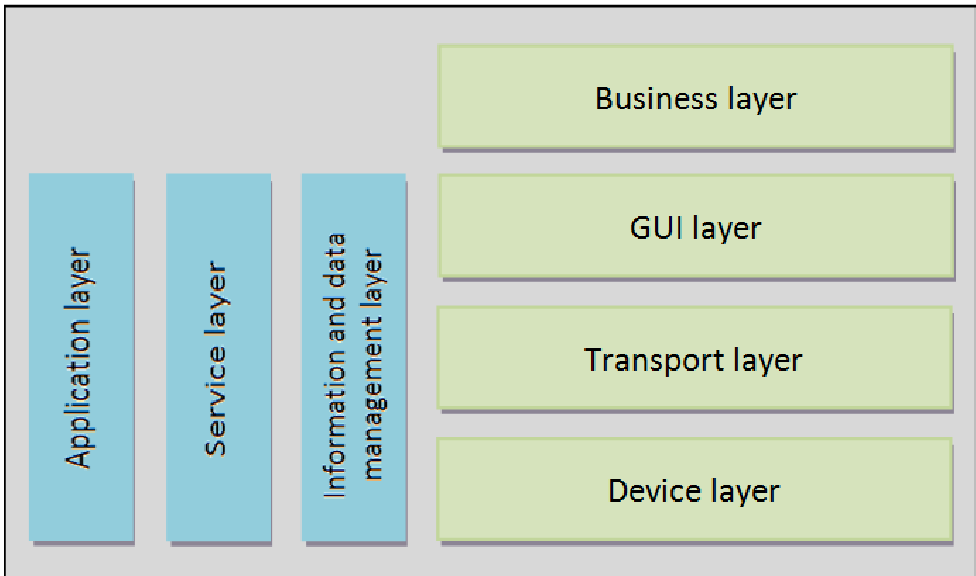
AITRA organizes the technological stack into three distinct tiers:
- Device Tier: Includes Gateways (and Edge Gateways for real-time processing) and Smart Devices (Standalone or Embedded).
- Cloud Tier: The "brain," featuring a modular Application Layer that includes everything from crop simulation models to yield prediction.
- Business Tier: The user-facing interface where stakeholders can build custom web applications using pre-configured modules.
2. Standardized Communication
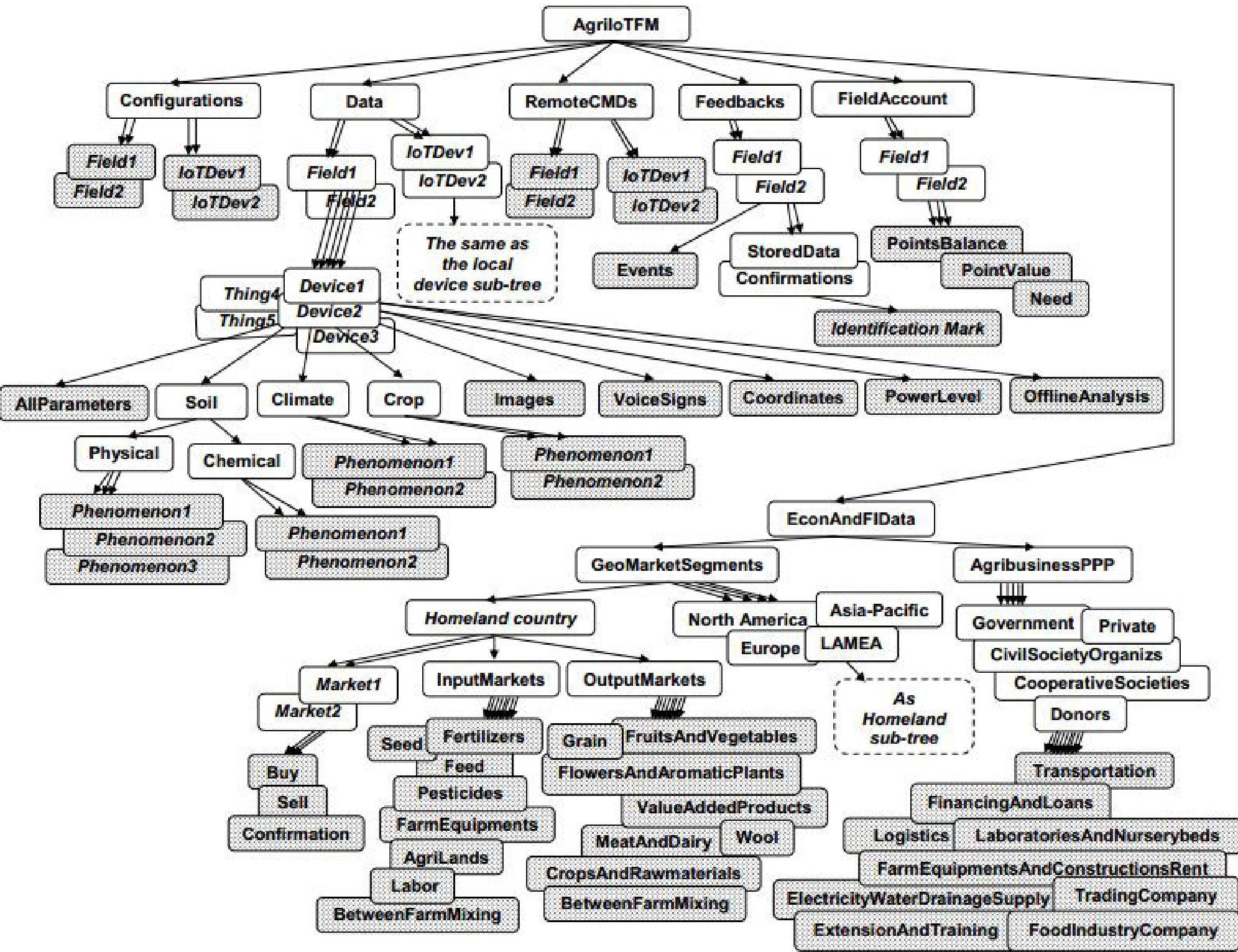
To solve the interoperability crisis, AITRA mandates a specific Topic Tree Structure for Publish/Subscribe (MQTT) messaging. Instead of random data streams, every packet follows a strict hierarchy (e.g., AgriIoTFM/Configurations/Identifier). This allows heterogeneous devices to be instantly recognized by the cloud tier.
Experiments: From Days to Minutes
The authors conducted a Proof-of-Concept for a hypothetical "AlexoCity." They demonstrated a scenario where a city authority centralizes management for multiple farms.
Key results included:
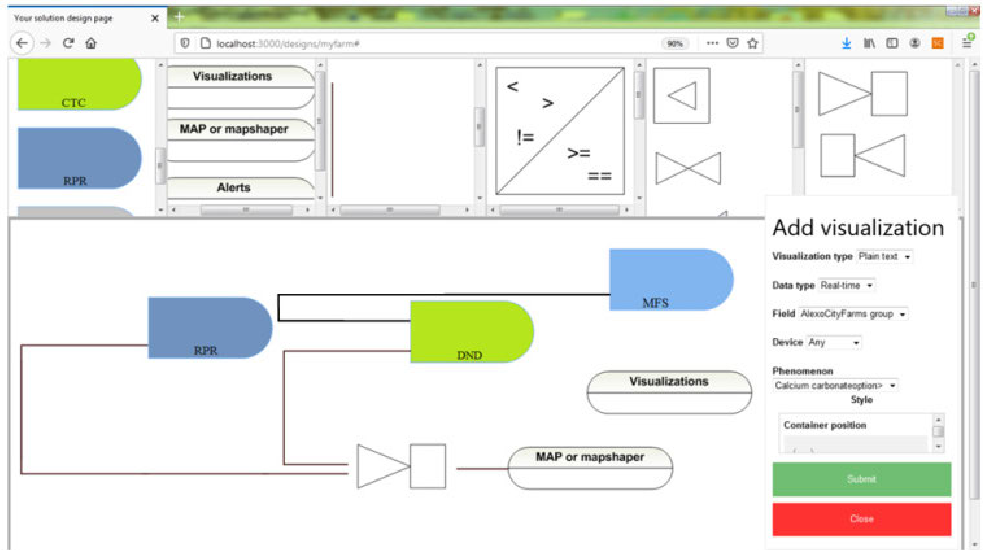
- Automated Registration: Using the "MFS" module, farms could register themselves and their device topologies via a simple passcode, appearing instantly on the city’s map.
- Closed-Loop Control: A weather station (WSF module) detected high wind speeds, which automatically triggered a command to all registered farm gateways to start organic matter spraying to prevent erosion.
- User Empowerment: Through a drag-and-drop design wizard, complex IoT workflows that usually require days of specialized coding were assembled in minutes.
Strategic Insight: Why This Matters
AITRA is not just a technical stack; it is an Economic Framework. By including "Financial Inclusion" and "Field Account" modules, the architecture envisions a world where farms can automatically advertise their yields or request loans based on verified IoT data.
Limitations & Future Work
While AITRA is comprehensive, the authors admit it is a "research proposal" requiring more real-world stress testing. Future iterations need deeper security audits and a more finalized list of "Primitives" (the specific commands used between layers).
Conclusion
AITRA represents a shift toward Semantic Interoperability. By ensuring that every "thing" in the field shares a common language and structural logic, we move closer to a truly global, standardized "Internet of Agriculture."