
Bridging the Museum Gap: How iPad Mini-Games and Social Networking Extend the Learning Lifecycle
iPad mini-games connected to an educational social networking website
This paper presents a multi-platform edutainment system developed for the California Academy of Sciences, featuring five iPad-based mini-games linked to an educational social networking website. The system employs a "Museum-to-Home" loop, where visitors accumulate points through on-site gaming to unlock avatar customizations and social features online.
TL;DR
The California Academy of Sciences has pioneered an integrated "Edutainment Ecosystem" that uses iPad-based mini-games to bridge the gap between a physical museum visit and home-based learning. By linking on-site gaming performance to a social networking website via a point-redemption system, the project transforms a fleeting exhibit interaction into a sustained educational journey.
Strategic Position: This work is a seminal exploration into multi-platform educational engagement, shifting the focus from "isolated kiosks" to "connected ecosystems."
The Engagement Gap: Why Museums Lose Visitors at the Exit
The primary challenge in museum curation isn't just attracting visitors—it's maintaining their intellectual curiosity after they leave. Most interactive exhibits act as "island experiences"; they are engaging for five minutes but offer no continuity. The authors identified that without a mechanism to carry the experience home, the "Inductive Bias" for learning is quickly extinguished by the distractions of the outside world.
Methodology: The "Play-Earn-Redeem" Loop
The researchers at Carnegie Mellon University developed a three-stage engagement model:
- Pre-Visit Identity: Users create an account on the museum's website, establishing a digital presence through a customizable avatar.
- On-Site Interaction: Using iPads (which were cutting-edge hardware at the time of publication), visitors play five specialized mini-games:
- Climate Change & Evolution: Thematic games designed for the middle-school demographic.
- Data Synchronization: Points are credited directly to the user's centralized account.
- Post-Visit Socialization: At home, users log in to the social networking site. The "game points" become a currency used to buy higher-tier clothing and attributes for their avatars, while leaderboard mechanics encourage peer competition.
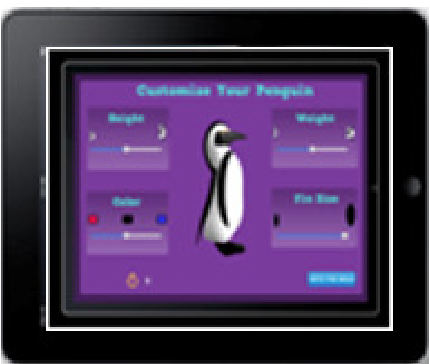 Figure 1: Conceptual visualization of the iPad-based educational games and the associated social interface.
Evidence of Impact: Beyond Just "Fun"
The study efficacy was measured through a cohort of 50 target-age students. The results were categorized into two metrics: Engagement Intent and Knowledge Retention.
- Social Motivation: 72% of students were motivated enough by the game mechanics to want to continue the experience at home. This high percentage suggests that the "Avatar Economy" is a powerful driver for middle-schoolers.
- Educational Success: Evaluation of the "Camouflage" game showed that 67% of players could articulate specific biological facts learned during gameplay. This indicates that the cognitive load of the game mechanics did not overshadow the educational content.
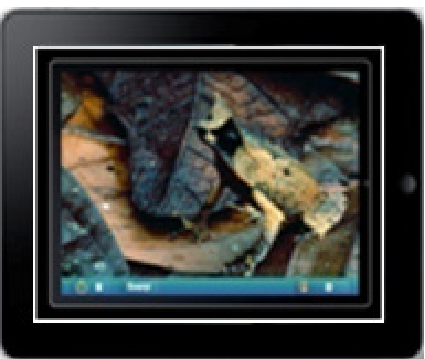 Figure 2: Examples of the mini-game interfaces covering themes like Astronomy and Evolution.
Critical Insights & Future Directions
The brilliance of this project lies not in the games themselves, but in the feedback loop. By treating the museum visit as a "data collection event" and the home website as the "social reward hub," the researchers created a primitive but effective "Metaverse" for education.
Limitations
- Device Reliance: The study was conducted when iPads were novel; in today's world of ubiquitous smartphones, the "kiosk" model might be redundant.
- Sample Size: While 50 students provide a solid baseline, longitudinal data on how many students actually logged in from home (rather than just saying they would) is needed to confirm the long-term effectiveness.
Conclusion
This paper serves as a blueprint for modern interactive design. It teaches us that to maximize the "Educational ROI" of a technology-driven exhibit, we must look beyond the screen and focus on the social and temporal connections that bind different parts of a user's experience together.